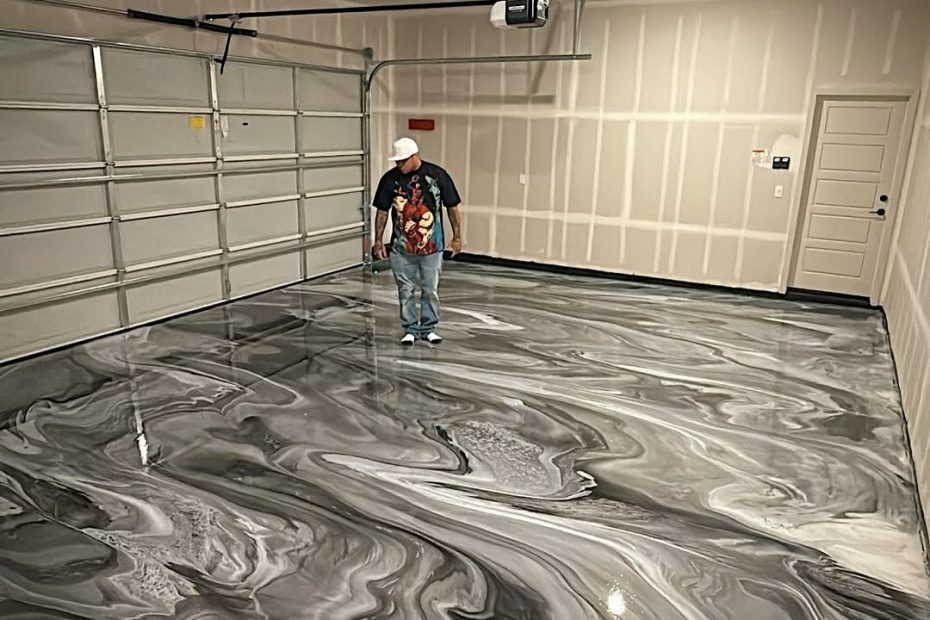
Your Modesto Garage Slab Is Hotter Than You Think
Concrete holds heat long after the sun goes down, and that stored heat decides two separate things: how much working time a crew gets on install day, and whether your tires peel the floor up next August. Here is what the valley actually does to a garage floor, and how the schedule bends around it.
Ask around Modesto about garage floors and you will hear the same complaint from a dozen driveways: it looked great, then patches came up where the car parks. People blame the product. Usually the product was fine and the valley did the rest. A slab here sits over ninety degrees well into the evening through a long summer, and that heat changes both the chemistry going down and the abuse the finished floor takes. Johnny plans for it rather than working around it after the fact.

Concrete Is a Heat Battery, and Nobody Warns You
A garage slab does not track the air temperature. It lags it. Through a 105-degree Modesto afternoon the concrete absorbs heat all day, and it releases that heat slowly through the evening, which is why a bay can feel warm at nine at night when the driveway has already cooled. For most of the year that is just an odd fact about your garage. On install day it is the single biggest variable in the job.
Resin does not cure on a clock, it cures on a chemical reaction, and heat drives that reaction hard. A base coat that gives a comfortable half hour of open time in a mild garage can drop to eighteen or twenty minutes on a July afternoon in this city. That is the difference between spreading material evenly across a two-car floor and chasing a product that is setting under the squeegee.
None of this means a summer install is a bad idea. It means the schedule has to answer to the slab. We start early, keep product cool until the moment it goes down, break a large floor into worked sections, and switch to a slower-setting formulation when the forecast calls for it. Adjusting is the job. Pushing through is how a floor ends up looking rushed permanently.
Hot Tire Pickup Is the Failure You Will Actually See
Here is the one that brings people to the phone. A tire that has been running Highway 99 in August comes home considerably hotter than your concrete. Park it, and that heat sits on one patch of coating for hours. A weak film softens under it. When you back out the next morning, the tire carries some of the floor with it, and you are left with bare crescents exactly where the wheels sat.
It is the most common failure we get called out to replace in this city, and it is almost always a thin water-based kit that never had a chance. Those products sit on the surface instead of keying into ground concrete, and softening under a hot tire is exactly the load they cannot take. One valley summer is usually enough to expose it.
What resists it is a topcoat that holds its hardness at temperature. That is why the money on a Modesto garage should go into the clear coats rather than into a thicker color layer nobody sees. A polyaspartic or high-solids urethane over a properly ground and primed slab handles the tire heat this climate produces. Full detail on the system lives on our Modesto garage coatings page.
Grinding Is Most of the Job, Especially on an Older Bay
Every failed floor we tear out in Modesto failed the same way. Nothing was ever truly bonded to the slab, because the slab was never properly opened. Diamond tooling takes the surface past oil, tire marks, old sealer, and whatever a previous owner rolled on, leaving open concrete the primer can key into. On a detached garage behind one of the older homes near Graceada Park, that grinding is most of the work in the job.
Those older slabs predate vapor barriers, carry decades of settlement cracking, and often hide an old sealer or tile mastic under whatever is on top today. Cracks and spalled areas get rebuilt rigid while the slab is open, because anything left soft telegraphs through the finish and reopens within a season. Newer garages east of Oakdale Road are cleaner but bring their own rule: a fresh pour needs roughly a month to release its initial moisture before it will accept a coating, and no amount of schedule pressure changes that.
Moisture testing is part of the walk rather than an add-on. A meter reading takes minutes and tells us whether this is a standard build or whether a moisture-tolerant primer has to go down first.
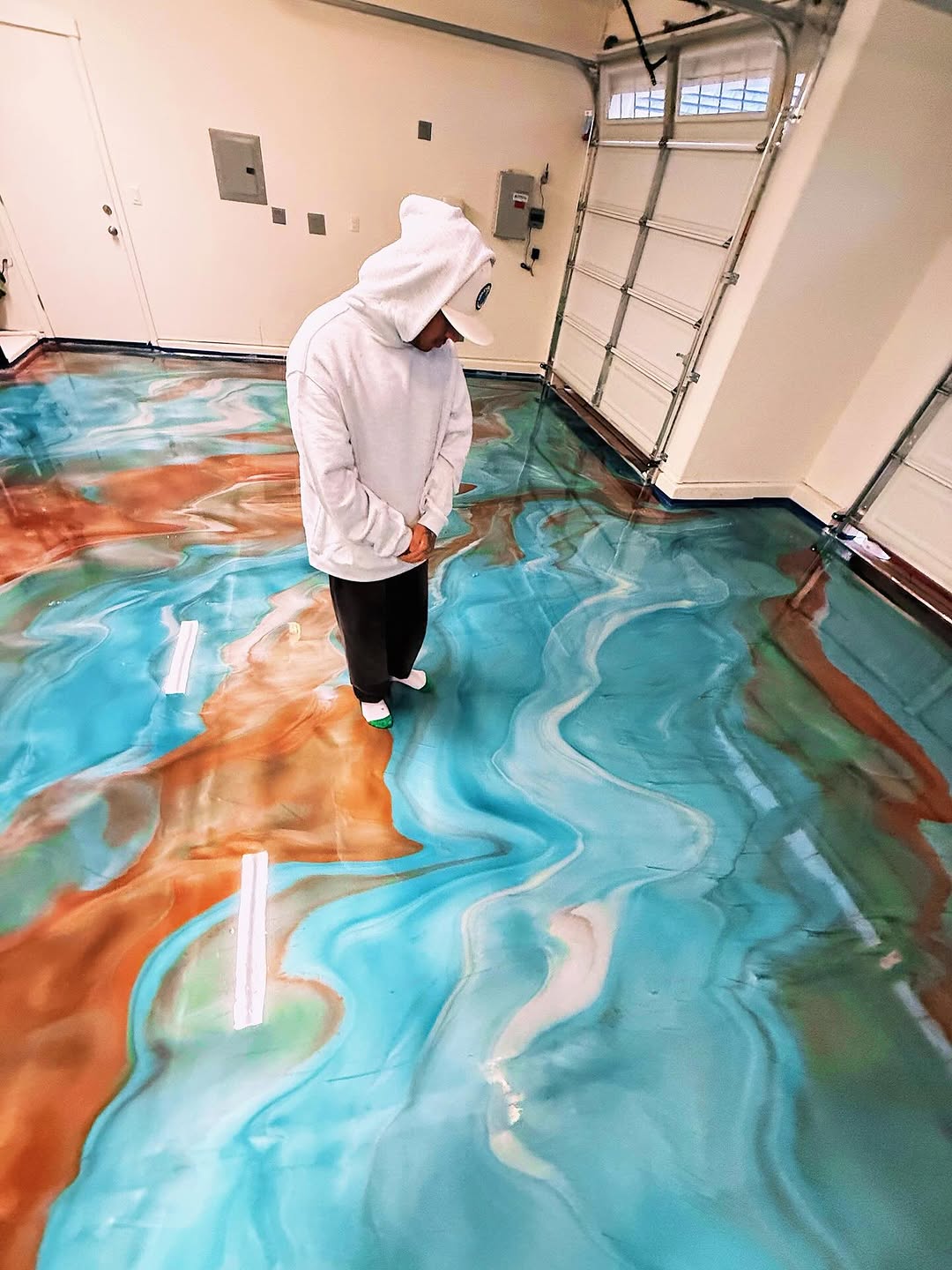
Valley Dust and Ag Traffic Change the Specification
Modesto air carries fine agricultural dust most of the year, and it settles on every floor whether the room is sealed or not. A solid color announces that daily, which is why we push most garages here toward a flake broadcast. The chip pattern absorbs settled dust visually, so the floor still looks right in year three when a plain surface looks tired. It also adds thickness and gives grip when a car comes in wet during a winter storm.
Plenty of Modesto properties also have a shop bay that sees equipment rather than cars. A shop off Yosemite Boulevard, an equipment barn at the edge of the almond ground, a mechanic’s bay near Crows Landing Road: those floors take steel wheels, dropped tooling, hydraulic fluid and diesel every day. Different loading, different chemical exposure, different specification entirely, and a full-refusal broadcast is what gives the surface enough thickness to absorb it.
One more local wrinkle. A lot of Modesto garages have a drain set into the slab. The floor falls toward it, water sits longest in that low area, and the coating has to be terminated properly at the drain rather than run to the edge and stopped. Done badly it lifts from the drain outward, and it is the first place we look on somebody else’s work. Browse finished bays in the gallery.
Timing the Job Around the Valley Calendar
Summer compresses the pour window, so those jobs start at first light and the material stays cool until it goes down. Winter flips the problem. Tule fog puts a cold slab under heavy damp air, and cure stretches well past the summer numbers. Foot traffic generally returns a day after the topcoat, and vehicles wait longer, because hot tires against an under-cured surface will lift it just as surely as heat will.
That is why we give you dates for your floor and that week of weather rather than a generic line off a brochure. Two to three working days is normal for a standard bay, foot traffic the next day, vehicles after about seventy-two hours. If a deadline is driving the job, that is a real conversation to have at the walkthrough, because a fast-cure system can compress it.
Modesto sits inside our 160-mile radius out of Hollister and we are in Stanislaus County often enough that scheduling is normal rather than a special trip. Walkthroughs generally book inside a week. Call (650) 797-3040 for a free look at the slab and a firm price.
Questions Modesto Homeowners Ask About Heat
Does summer heat wreck the install?
It shortens the working window rather than hurting the finished floor, as long as the crew plans for it. A hot slab makes resin gel faster than the datasheet suggests, so Johnny books Modesto summer pours early in the day or brings cooling into the bay. The crew that shows up at noon in August and opens the product anyway is how a garage floor goes wrong.
What exactly is hot tire pickup?
Tires heat up on the road and stay hot after you park. That heat softens a weak coating and the tire carries it away when the car next moves, leaving bare patches right where the wheels sat. A ground, primed and properly topcoated system resists it. A hardware store kit does not, and here the difference usually shows inside one summer.
How long before I can park on the new floor?
Foot traffic the next day, vehicles after about seventy-two hours. Valley heat actually helps cure times compared with a coastal job, but Johnny would still rather tell you three days and have you back early than promise two and be wrong. Winter tule fog runs the other way and stretches those dates.
Weighing systems? Compare a flake broadcast against polyaspartic, or send Johnny the details of your bay.
Build a Garage Floor That Survives August
Tell Johnny the size of the bay, whether it has ever been coated, and what happens in the room. He reads the slab before anything gets priced.
Call (650) 797-3040