Cupertino Flake Epoxy Floors That Age Well
Most Cupertino garages sit on concrete that has been patched, saw cut, or coated at least once since the house went up. A full broadcast flake floor buries all of that history under a solid layer of vinyl chip, then locks it down with a polyaspartic topcoat. You get grip underfoot, a surface that hides dust between sweeps, and a floor we can spot repair years from now instead of replace.
JP Resin Certified · Don Resin Certified · Serving Cupertino
ON A CUPERTINO SLAB
The housing stock here is mostly ranch and mid-century, with a good share of Eichlers and a steady run of tear-down rebuilds. The slabs under those homes have been drilled for shelving, cut for a drain or a subpanel, patched around a water heater, and in plenty of cases painted with a hardware-store coating that gave up after a few summers. None of that history goes away because you put resin over it. The only real question is whether the finish hides it or points at it.
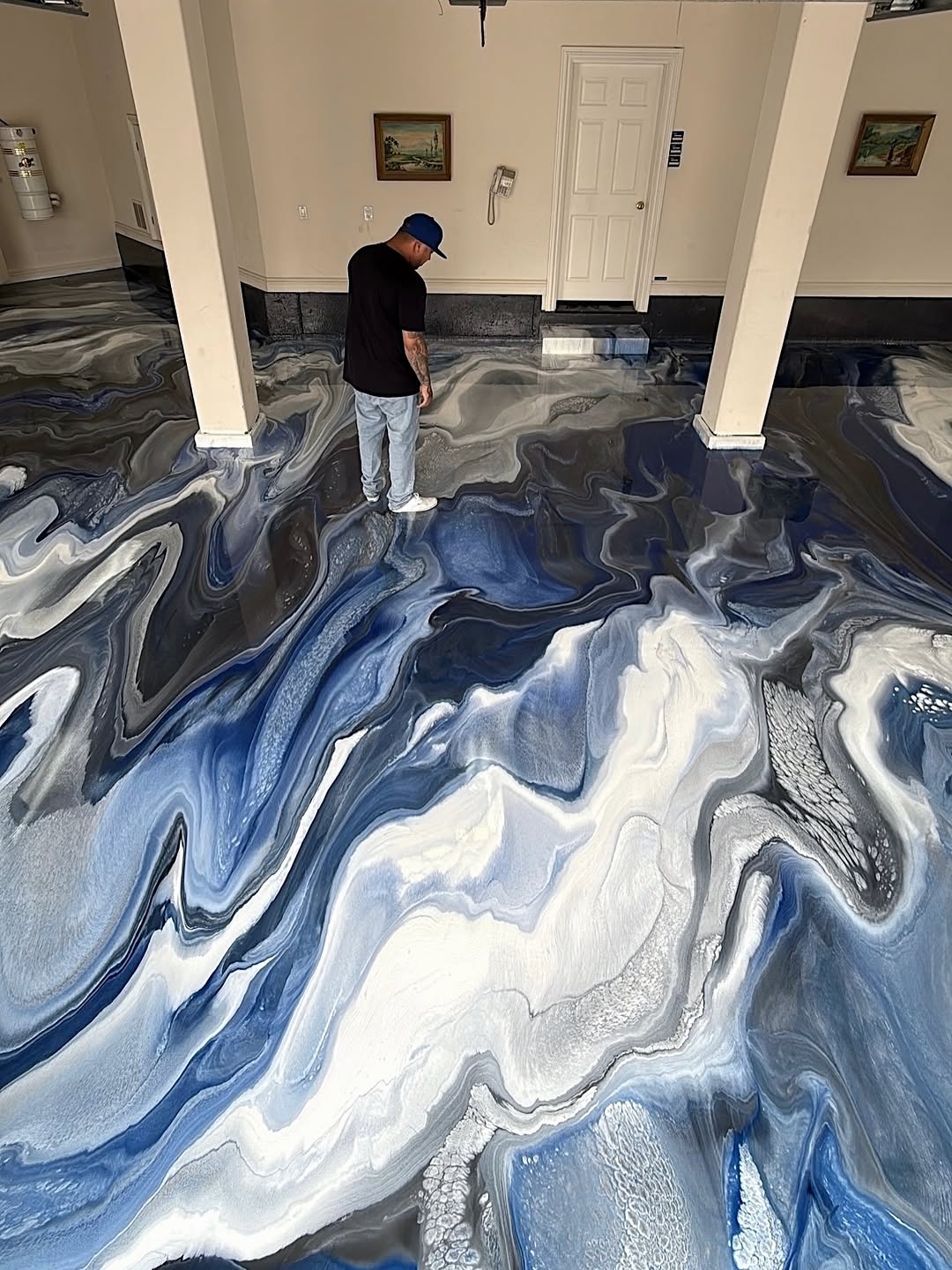
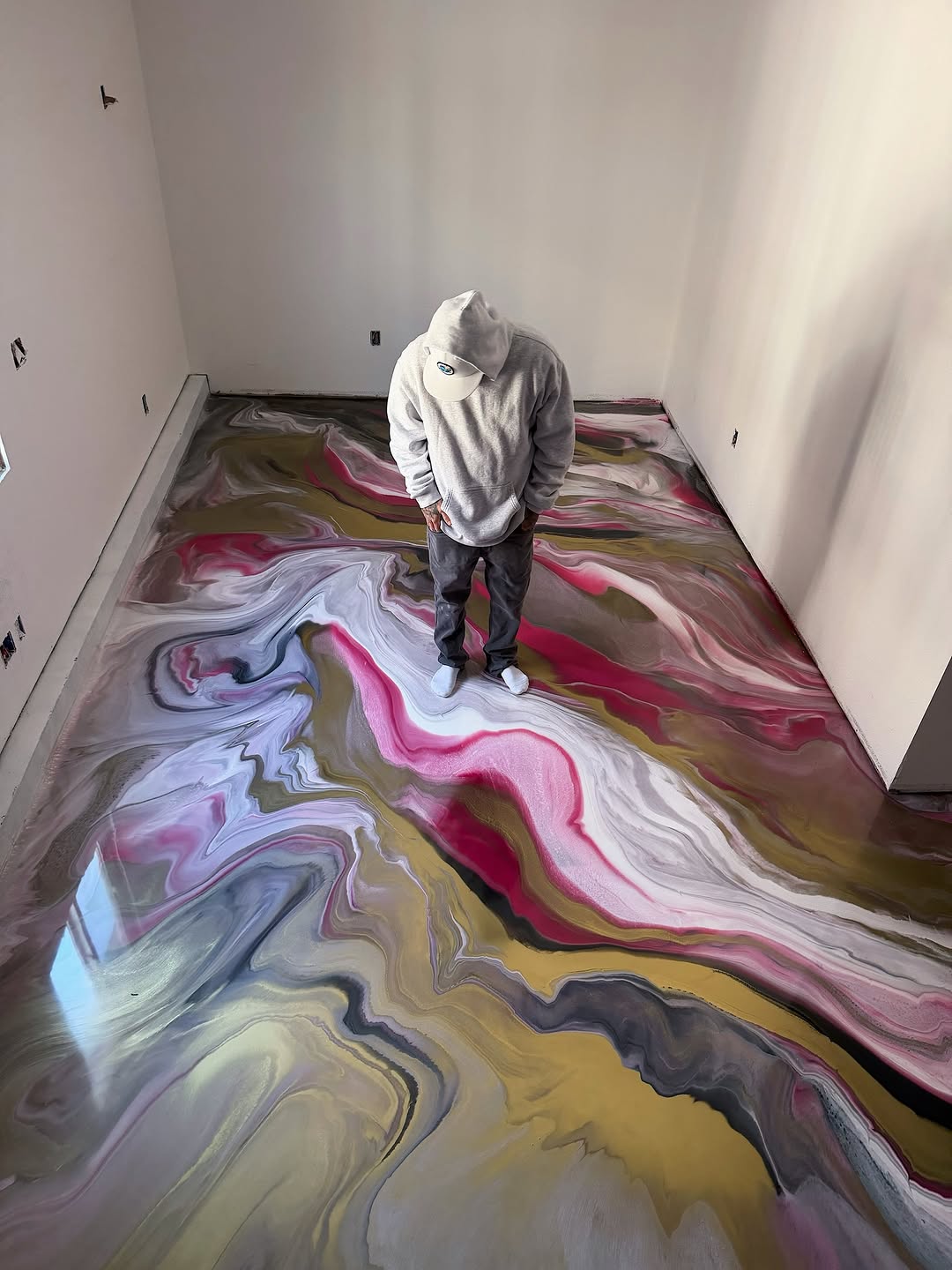
Full broadcast flake hides it. Chips go into the wet base until the base disappears, so the eye reads chip and never reaches the concrete. A metallic pour does the opposite. Metallic is a translucent film with movement in it, and movement follows whatever is underneath, so an old patch line or a saw cut tends to surface as a shadow you cannot stop seeing. On a clean new pour metallic is genuinely beautiful. On a 1962 garage slab it is a gamble, and we will say so.
Repair is the second argument, and for a lot of people it is the deciding one. Flake can be spot repaired. Metallic cannot. When the garage doubles as a gym, a shop, or the place two teenagers park, something eventually gets dropped, and the difference between a patch that vanishes and a floor you live with is worth more than the look of either system on day one. If you want the metallic look anyway, read our metallic epoxy page and then call us.
Chip Size and Color Do the Work
Cupertino clients tend to show up with a reference photo and a firm opinion, which we like. What usually gets missed is that the two biggest decisions are not color names. They are chip size and color temperature, and together they decide whether the floor reads as a considered surface or as a commercial afterthought someone dropped into a house.
Quarter inch chip reads fine grained and quiet, closer to terrazzo than to a warehouse. Half inch and larger reads bolder, and in a single narrow bay it will dominate everything else in the room. Temperature decides whether the floor sits with the house: cool grays with a white fleck sit naturally beside the beams and aggregate walkways on an Eichler, while warm tans and soft browns work better under the oak trim in the ranch belt.
So we bring physical chip samples and lay them on your own slab, with the door open and then closed. Garage light shifts a blend more than people expect, and the tube light over the workbench is not the light you will judge it in on a Saturday morning. That one visit settles most of the argument.

ON THE GROUND
A finished chip floor with the grout coat in and the topcoat set. More finishes in the project gallery.
PROCESS
Four stages, and the first one decides everything that follows.
Grind and Read
Diamond grinding lifts old coating, curing compound, and the sealed skin off the top, and cuts the profile the base coat holds onto. Before any product gets chosen we take a moisture read. Cupertino slabs from the fifties and sixties often went down with no vapor barrier under them, and that changes what belongs on top.
Repairs and Base
Cracks get chased and filled, joints get treated, and spalled areas get rebuilt so nothing telegraphs through later. Then the pigmented epoxy base goes down at proper thickness, tinted to sit inside the chip blend rather than fight it once the flake covers it.
Broadcast to Refusal
Chip goes into the wet base until the surface will not take any more, which is what full broadcast actually means. After the base sets we scrape and sweep the loose material off, then a grout coat fills the voids between chips so the whole layer locks together.
Topcoat and Texture
One or two coats of polyaspartic seal the chip and set the sheen. Texture gets decided here too: aggregate carried into the topcoat for a bay that gets hosed out or takes wet tires in the rain, or a smoother finish where the room stays dry.
“Our slab was a mess of old patches and I assumed we were stuck with it. The chip floor swallowed all of it, and the gym half of the garage finally looks like part of the house.”Cupertino Homeowner, Two-Car Garage
FAQ
Get Your Cupertino Floor Done Right
Call Johnny or send the form. We will walk the slab, take a moisture read, put real chip samples on the concrete, and give you an honest number for the system your floor actually needs.