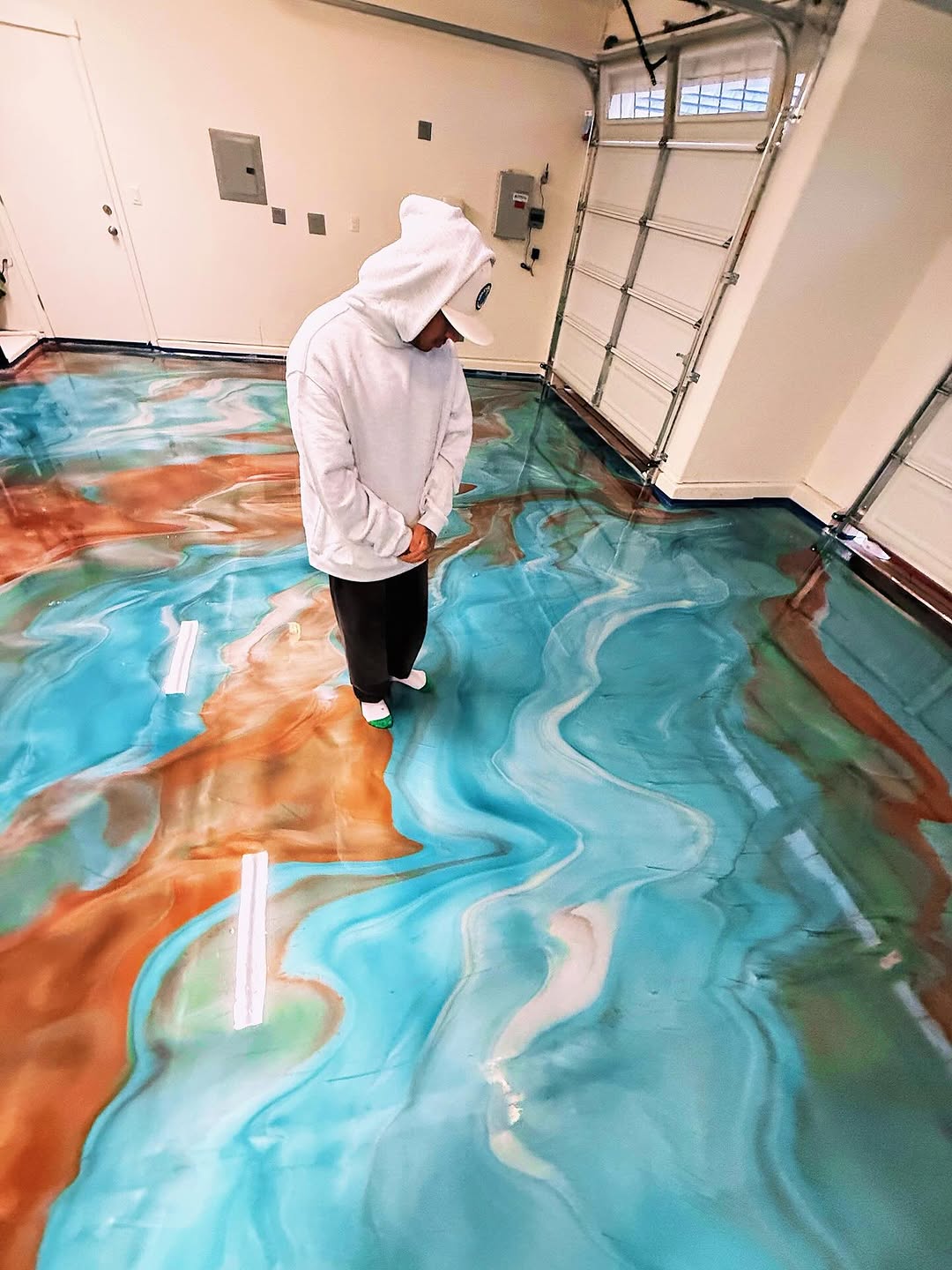
Polyaspartic Coatings, Same-Day Cure, Lifetime Performance
Polyaspartic coatings cure in hours instead of days, delivering a rock-hard, UV-stable, chemical-resistant surface that outperforms traditional epoxy in every measurable category. One-day installations that never yellow, never peel, and never slow down your schedule.
JP Resin Certified·Don Resin Certified·160-Mile Radius
What Are Polyaspartic Coatings
Polyaspartic coatings represent the next generation of epoxy floors protection. Developed originally by Bayer MaterialScience in the 1990s, polyaspartic polyurea technology was engineered to solve every limitation of traditional epoxy coatings. The chemistry allows for rapid curing even in extreme temperatures, full UV stability without yellowing, and a depth of clarity that makes decorative flake and metallic finishes look extraordinary.
Unlike standard epoxy that requires 24 to 72 hours of cure time between coats, polyaspartic coatings cure in as little as two to four hours per coat. This means a complete multi-coat system with decorative flake broadcasting can be applied and fully cured in a single day. Your garage, showroom, or commercial space is back in service the same evening rather than waiting days or even a full week.
The molecular structure of polyaspartic resin creates a coating that is significantly harder and more abrasion-resistant than standard epoxy. Hot tire pickup, the most common failure mode for garage floor coatings, is virtually eliminated because the polyaspartic film has superior heat resistance and flexibility. Chemical spills from oil, gasoline, brake fluid, and household cleaners wipe clean without staining or damaging the coating surface.
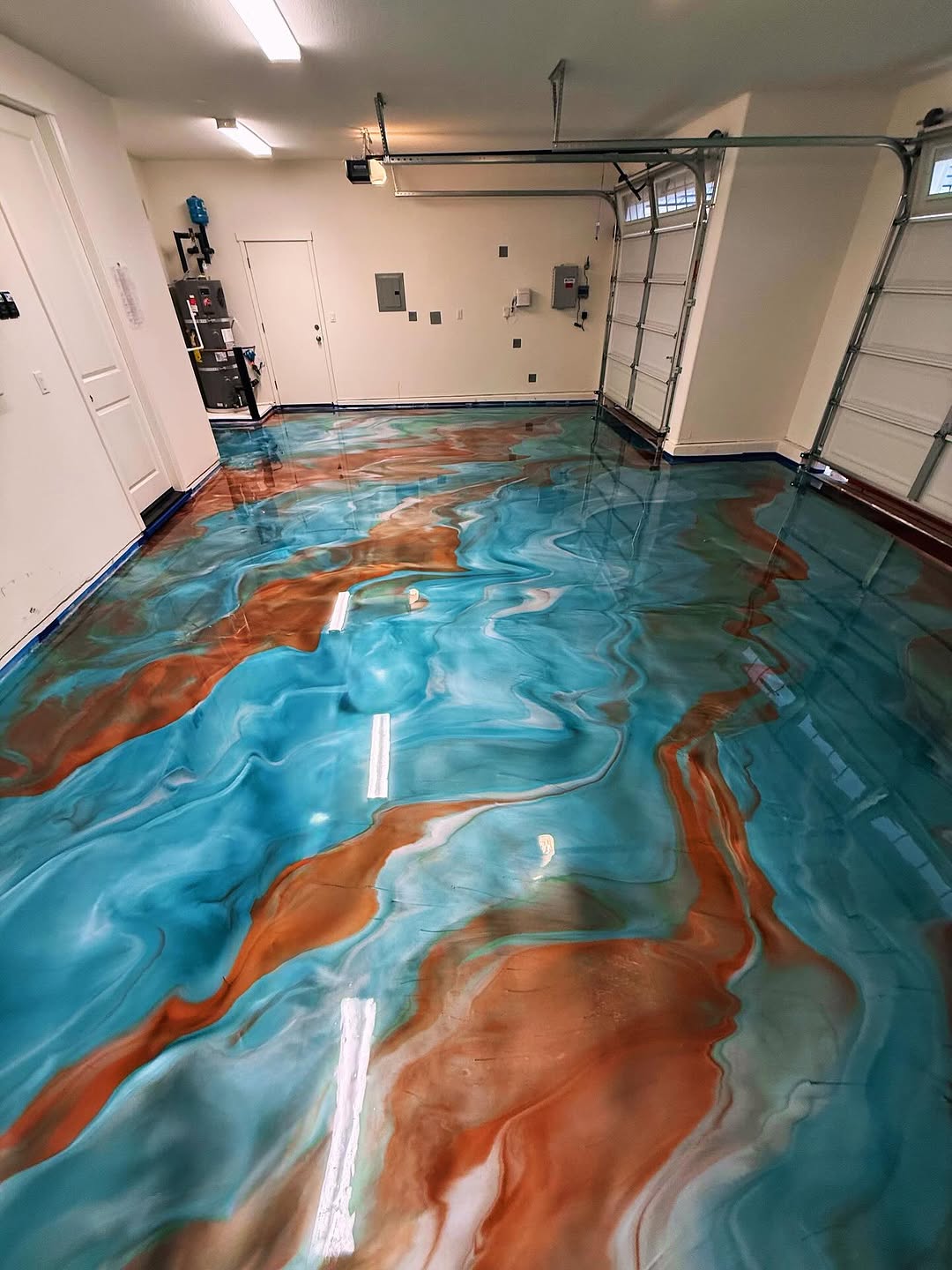
TRADITIONAL EPOXY
Polyaspartic technology solves every major limitation that causes traditional epoxy floors to fail prematurely.
| Performance Factor | Polyaspartic | Traditional Epoxy |
|---|---|---|
| Cure Time | 2-4 hours per coat | 24-72 hours per coat |
| Full Install | 1 day | 3-5 days |
| UV Stability | Full UV resistance | Yellows over time |
| Hot Tire Pickup | Resistant | Common failure point |
| Temperature Range | -30F to 140F application | 50F to 90F only |
| Abrasion Resistance | 4x harder than epoxy | Standard hardness |
| Chemical Resistance | Excellent | Moderate |
| Clarity / Gloss | Water-clear, no amber | Slight amber tint |
PROCESS
Every polyaspartic installation follows a precise four-stage process completed entirely within a single day.
Diamond Grinding
Industrial diamond grinders profile the slab to create an optimal bonding surface. All cracks, spalls, and imperfections are repaired with fast-cure polyurea filler. Moisture testing confirms the slab is ready for coating application.
Primer Coat
A penetrating polyaspartic primer bonds deeply into the slab pore structure. This critical layer creates the mechanical and chemical bond that prevents delamination. The primer cures in two hours, allowing same-day progression.
Broadcast Coat
The body coat is applied and decorative vinyl flake, quartz aggregate, or metallic pigment is broadcast into the wet resin. Full-chip broadcast creates a smooth, textured surface with excellent traction and visual depth.
Clear Top Coat
After scraping and vacuuming excess flake, a UV-stable polyaspartic clear coat locks in the decorative layer. This top coat provides the chemical resistance, abrasion protection, and high-gloss clarity that define the finished floor.
POLYASPARTIC
Polyaspartic coatings have a narrow working window that demands precision from the installer. Once mixed, the material begins curing immediately, and there is no room for hesitation or correction. The difference between a polyaspartic floor that performs for decades and one that fails within months comes down entirely to installer expertise and material quality.
Gold Coast Resin uses commercial-grade polyaspartic systems from trusted manufacturers, not the consumer-grade products sold at home improvement stores. Johnny brings certified training in polyaspartic application and understands the chemistry behind proper cure profiles, temperature adjustments, and humidity management that most contractors ignore.
The diamond grinding preparation is where most polyaspartic jobs are won or lost. Acid etching, the shortcut used by discount installers, creates an inferior bond profile that leads to peeling and delamination. Every Gold Coast Resin project begins with proper mechanical preparation using planetary diamond grinders that create a consistent floor surfaces profile of CSP-3 or higher.
Polyaspartic coatings are the ideal choice for homeowners and business owners across Central California who need minimal downtime. Whether you are coating a residential garage in Hollister, a commercial showroom in San Jose, or a restaurant kitchen in Monterey, the one-day installation timeline means your space is back in service immediately. Call (650) 797-3040 for a free polyaspartic consultation from a certified installer who understands the difference between professional-grade work and a weekend DIY job.
Every polyaspartic floor installed by Gold Coast Resin includes a written warranty and post-installation care guidance. The coating system is designed to last 15 to 20 years in residential applications and 10 to 15 years in commercial environments with proper maintenance. This is not a temporary fix but a long-term flooring investment that adds real value to your property.
FAQ
BETTER FLOOR
Ready for a floor coating that cures in hours instead of days? Call Johnny for a free polyaspartic consultation and same-week scheduling.
Ready to Get Started?
Contact Gold Coast Resin today for a free, no-obligation firm price. We look forward to working with you.