Cupertino Metallic Floors, Poured for the Room They Live In
A metallic pour is a design decision before it is a floor. It shifts as the light moves, it takes over whatever room it lands in, and once it is down it is down. Cupertino clients tend to know the difference between a material that belongs to a room and one that argues with it, so we start there. If metallic is right for your space we will pour you something worth looking at. If it is wrong, we will tell you that too.
JP Resin Certified · Don Resin Certified · Serving Cupertino
A STATEMENT FLOOR
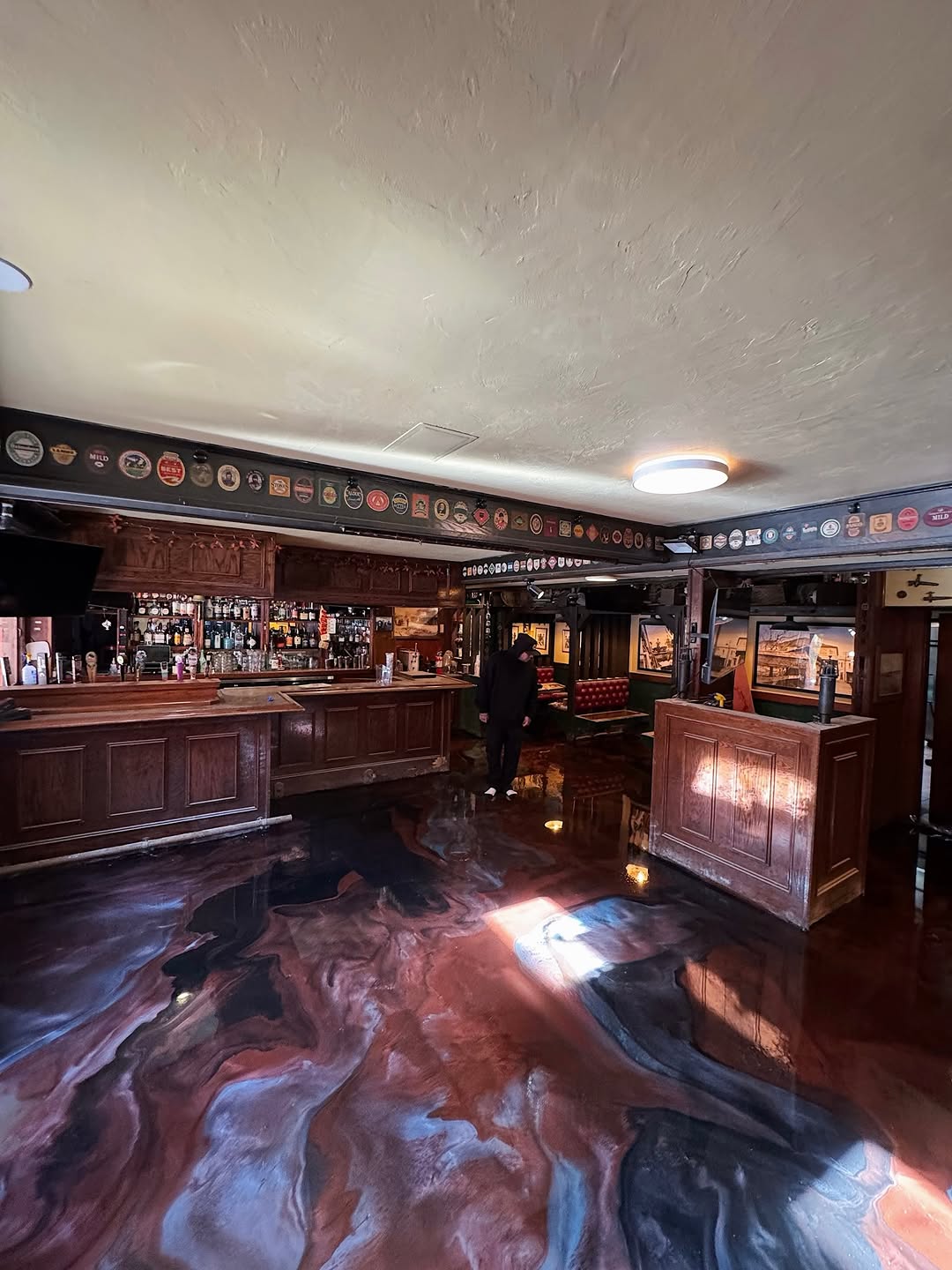
Design literacy runs high in this town. People here can name the architect of the house down the street, and they notice when a finish is doing too much. That makes metallic a sharper decision in Cupertino than it is almost anywhere else we work. A metallic floor is a statement. It either belongs to the room or it fights the room, and there is not much middle ground once it is cured.
In an Eichler it very often fights. Those houses run on a deliberately short material list, mahogany paneling, glass, painted block, beams left showing, and the floor was never meant to be the loudest thing in the space. Drop a swirling metallic into a post-and-beam living room and the architecture starts competing with the floor. In the ranch belt built through the fifties, sixties and seventies, and in the luxury rebuilds going up on tear-down lots, there is usually more room for a floor with opinions.
So we ask what the room is for before we talk color. Metallic belongs where the floor is allowed to be the subject. Somewhere it has to sit quietly under furniture and light, a flat pigmented system or a flake epoxy floor usually serves the house better and costs you less drama.
Daylight Changes Everything
Metallic pigment does not have one color. It has a range, and daylight decides where inside that range your floor lands. This matters more in Cupertino than in most places we pour, because Eichler glass walls and the newer rebuilds put an enormous amount of natural light on the slab, and it moves all day. A pearl base that reads warm and deep at nine in the morning can go thin and gray by late afternoon.
That is why we do not approve color from a photo, a showroom board or a sample seen under fluorescent tubes. Sample panels stay on your actual slab, in your actual room, and we ask you to walk past them at the hours you actually use the space. Mediterranean weather here means no freeze-thaw to design around, so light is the variable that decides the finish.
People often shift direction after two days of living with the samples. Cooler blues that looked right on a screen turn cold under that much glass, and a warmer bronze or graphite ends up carrying the room. It is a slow step, and it is the one that keeps a client happy a year later.
PROCESS
Four stages, and the first two decide whether the fourth one looks like anything.
Samples in the Room
Boards go down on your slab in your daylight, and they stay a couple of days. Color gets approved where the floor will live, at the hours you live in it, never off a screen.
Slab Correction
Diamond grinding takes the floor to clean concrete. Old coatings, cold joints, saw cuts and patch work all get addressed here, because metallic telegraphs whatever we leave behind.
Base and Pour
The base coat sets the mood, then pigment goes down in clear resin and gets worked with heat and blade while it is still open. Short window, no rehearsal, one shot at the pattern.
Topcoat and Cure
A clear wear layer locks the pigment under glass and takes the daily abuse. On radiant slabs the heat stays off through cure so the concrete holds a steady temperature.
Rooms That Can Carry It
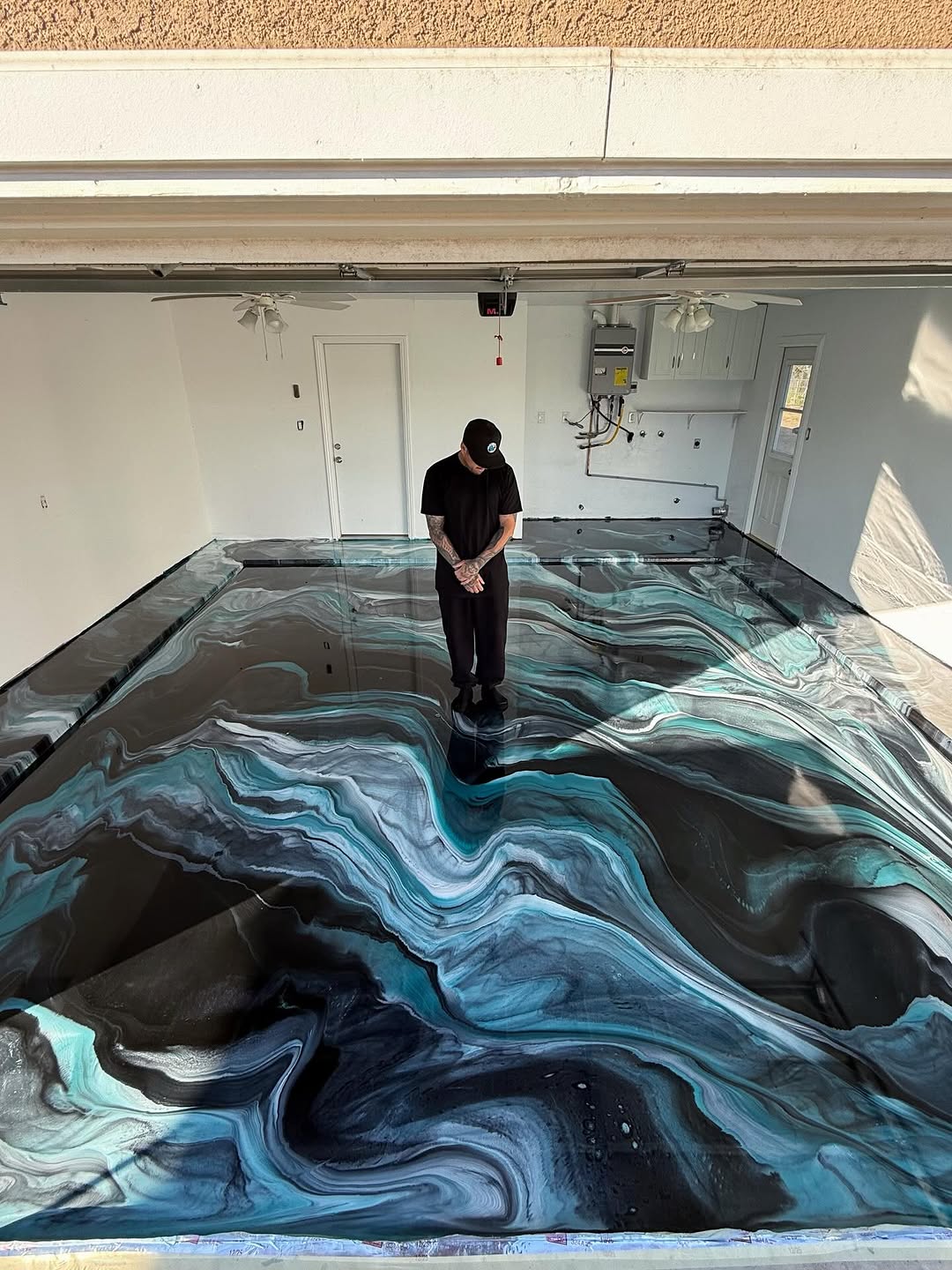
The metallic jobs we are proudest of around here are finished garages run as showrooms, wine rooms, and entries. All three have something in common: the floor is meant to be looked at, and the room is contained enough that a dramatic surface reads as intentional instead of loud. A garage built out for two cars and a lift is the most common one, and it usually pairs with a full garage coating scope.
The other thing to weigh is repairability. Flake can be ground open, refilled and blended until the repair disappears. A metallic pour is continuous, so a patch will always read as a patch, and the honest fix is recoating the room. For a working shop floor or a busy commercial space we normally steer people to polyaspartic coatings or a commercial system and save metallic for the room that deserves it. Recent pours are in the gallery.
“They told us metallic was wrong for the living room and right for the wine room. Nobody had turned down work in front of us before. They were correct on both counts.”Cupertino Homeowner, Wine Room Pour
FAQ
Start Your Cupertino Metallic Floor
Call and describe the room. We will tell you whether metallic belongs in it, what your slab is likely hiding, and what the pour week looks like. Honest read first, samples second.