Polished Floors, Raw Beauty, Refined Finish
Slab polishing reveals the natural beauty that already exists inside every slab. Instead of covering the surface with a coating, the slab itself is mechanically refined through progressive diamond grinding into a smooth, reflective surface with genuine depth and character.
JP Resin Certified·Don Resin Certified·160-Mile Radius
What Makes Polished Floors SPECIAL
Polished is fundamentally different from every other flooring option because it does not add anything to the surface. There are no coatings, no overlays. The floor itself is the finish. Through progressive diamond grinding, the surface is refined from rough to reflective, with each pass using finer abrasives.
The aesthetic appeal comes from honest materiality. Every slab has unique characteristics, from natural aggregate stones exposed during grinding to subtle color variations in the cement paste. These are features that give polished slab its distinctive character. In commercial environments, the clean, contemporary look has become the finish of choice.
The sustainability credentials are equally compelling. Polished uses the existing slab rather than requiring new materials. There are no volatile organic compounds, no adhesives, and no waste. The thermal mass of slab helps regulate indoor temperature, reducing energy costs.

PROCESS
Every polished floor follows a precise four-stage process that progressively refines the surface from rough to reflective.
Coarse Grinding
Industrial diamond grinders with aggressive tooling remove existing coatings and the top layer of slab to begin exposing the aggregate. Cracks and joints are filled with color-matched compounds.
Densification
A liquid chemical densifier penetrates and reacts with the slab, filling the pore structure and hardening the surface. This is the critical step that turns slab into a polishable material.
Progressive Polishing
Resin-bond diamond tooling in progressively finer grits refines the surface through multiple passes. Starting around 100 grit through 200, 400, 800, 1500, and potentially 3000 grit.
Guard and Burnish
A penetrating guard product protects the polished surface from staining. A final burnish pass with high-speed equipment brings the surface to peak reflectivity.
POLISHED FLOORS
Slab polishing looks deceptively simple, but producing an excellent polished floor requires understanding slab chemistry, diamond tooling science, and the mechanical behavior of different slab mixes. Every slab is different.
Gold Coast Resin brings deep slab knowledge to every project. The progressive diamond process uses premium tooling at every step. And the densification chemistry is matched to each specific slab rather than applying a one-size-fits-all product.
The result is a polished floor with consistent clarity, uniform reflectivity, and the kind of depth that makes people stop and ask whether it is stone. This is a core competency backed by certified training.
Reading the Slab Before the First Pass
Polishing is unforgiving in a way coatings are not. With a coating, a marginal slab can be corrected on the way up. With polishing, the slab you have is the floor you get, so the walkthrough matters more here than anywhere else in the trade. Johnny is looking at hardness, at how much aggregate sits near the surface, at whether the pour was finished evenly, and at what has been spilled on it over the years.
Aggregate depth decides the look. Cut shallow and you get a cream finish, a smooth field of cement paste with almost no stone showing. Cut a little deeper and you get salt and pepper, small flecks of aggregate scattered across the surface. Go deeper still and you expose full stone, big rounds of river rock reading like terrazzo. That choice has to be made before grinding starts, because you cannot put concrete back. Johnny grinds a test patch in an out-of-the-way corner and has you look at it in your own light before committing the room.
Stains are the other honest conversation. Oil that has soaked into unsealed slab does not grind out cleanly, and old adhesive or a previous coating adds passes. On a garage or a shop that has worked for decades, we say plainly whether polishing will give you the result you want or whether a coating is the better answer for that particular floor. Talking somebody into a polish their slab cannot support helps nobody.
Living With a Polished Floor
Maintenance is the reason people keep choosing this finish. There is no coating to wear through, so there is nothing to peel or delaminate. Day to day it is a dust mop and a damp mop with a neutral cleaner. What polished slab does not tolerate is acid, so vinegar, citrus cleaners, and anything harsh will etch the surface and dull the shine in that spot.
The guard product gets renewed periodically depending on traffic, and in a high-traffic commercial space a burnish pass brings the reflectivity back up without regrinding. A residential floor might go years between anything more than mopping. Johnny walks you through the actual routine for your gloss level before he leaves, because a 400-grit satin floor and a 3000-grit mirror do not ask the same things of you.
The other practical note is moisture. Polished slab breathes, which means a floor over damp ground can show dark patches when humidity swings. That is not damage and it is not a defect in the work, but you deserve to know before the grinders come out, so we test the slab and tell you what to expect. Ready to see what is inside your slab? Call (650) 797-3040 and Johnny will come take a free look and give you a firm price.
PROJECTS
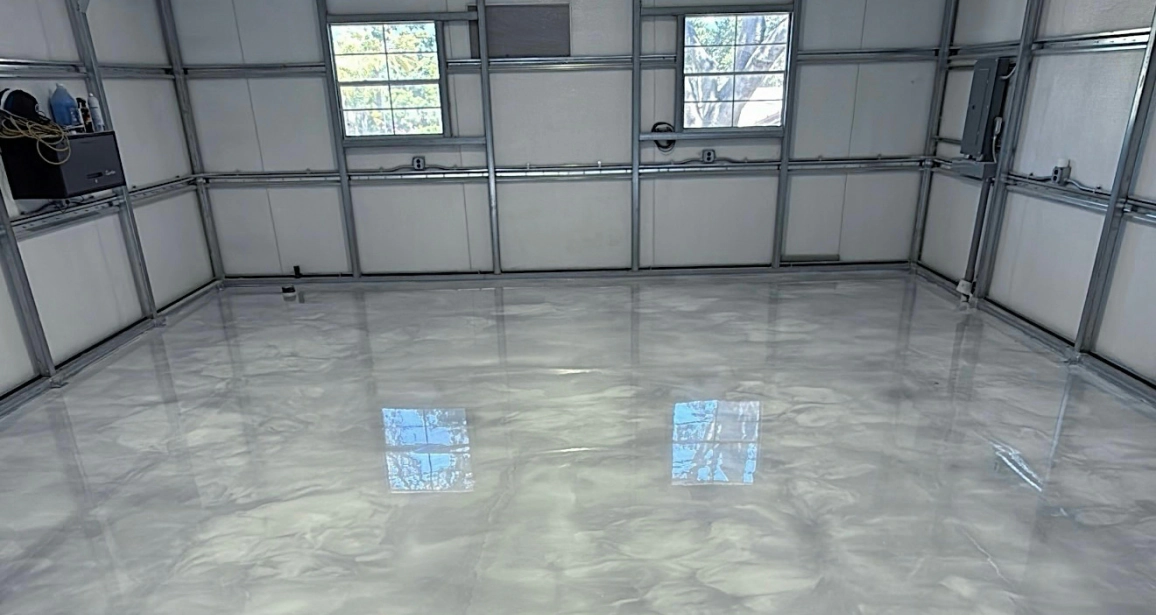
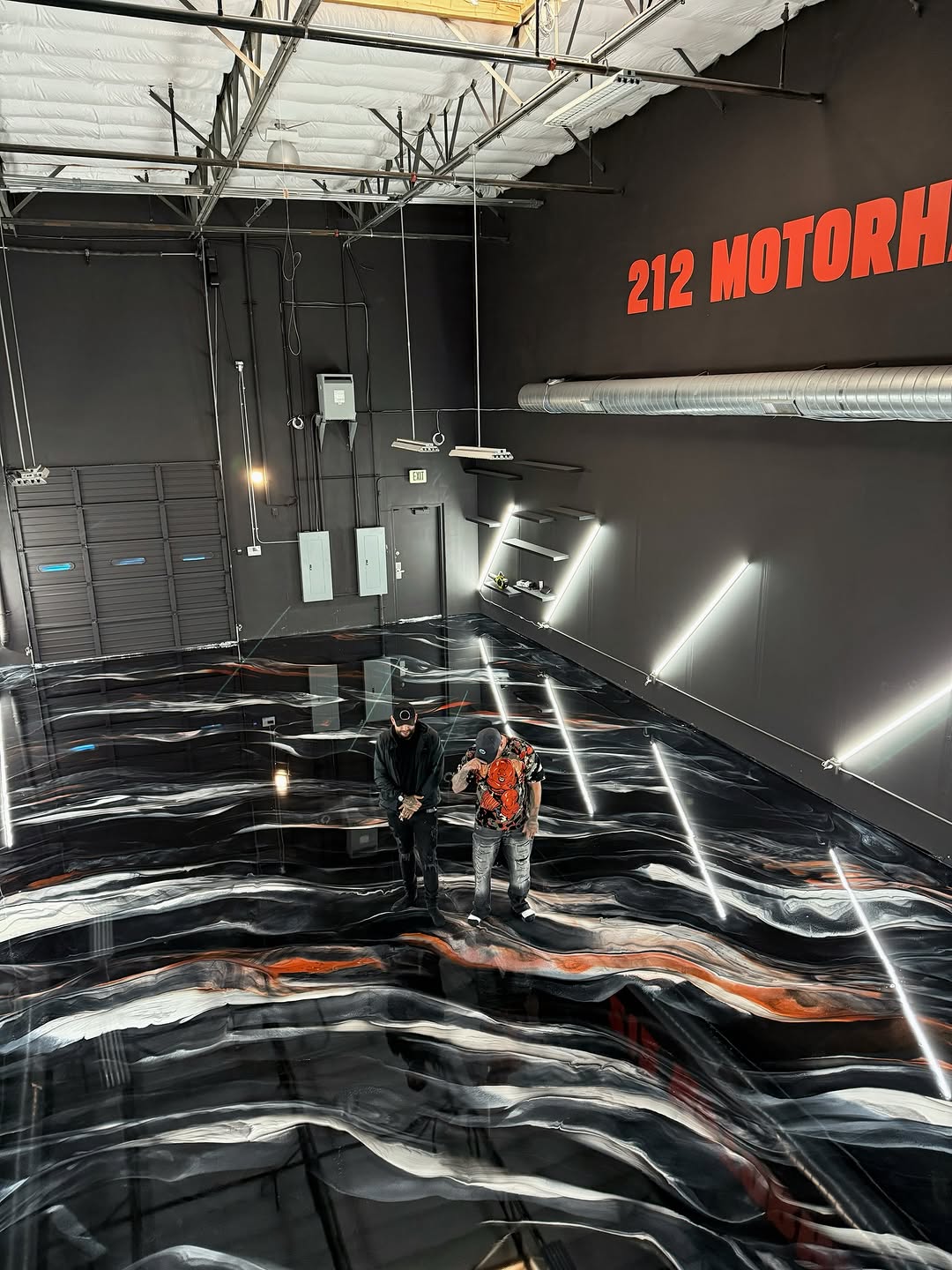
Every slab has its own character. Browse recent projects and visit our full project gallery.

“We wanted polished slab for our new restaurant and Johnny delivered a floor that looks like it belongs in a high-end gallery. The exposed aggregate has beautiful warm tones that complement our interior perfectly. Customers comment on the floor almost as much as the food.”Restaurant Owner, Hollister, CA
FAQ
POTENTIAL
Ready to discover the beauty hiding inside your existing floor slab? Call Johnny for a free polishing evaluation and quote.