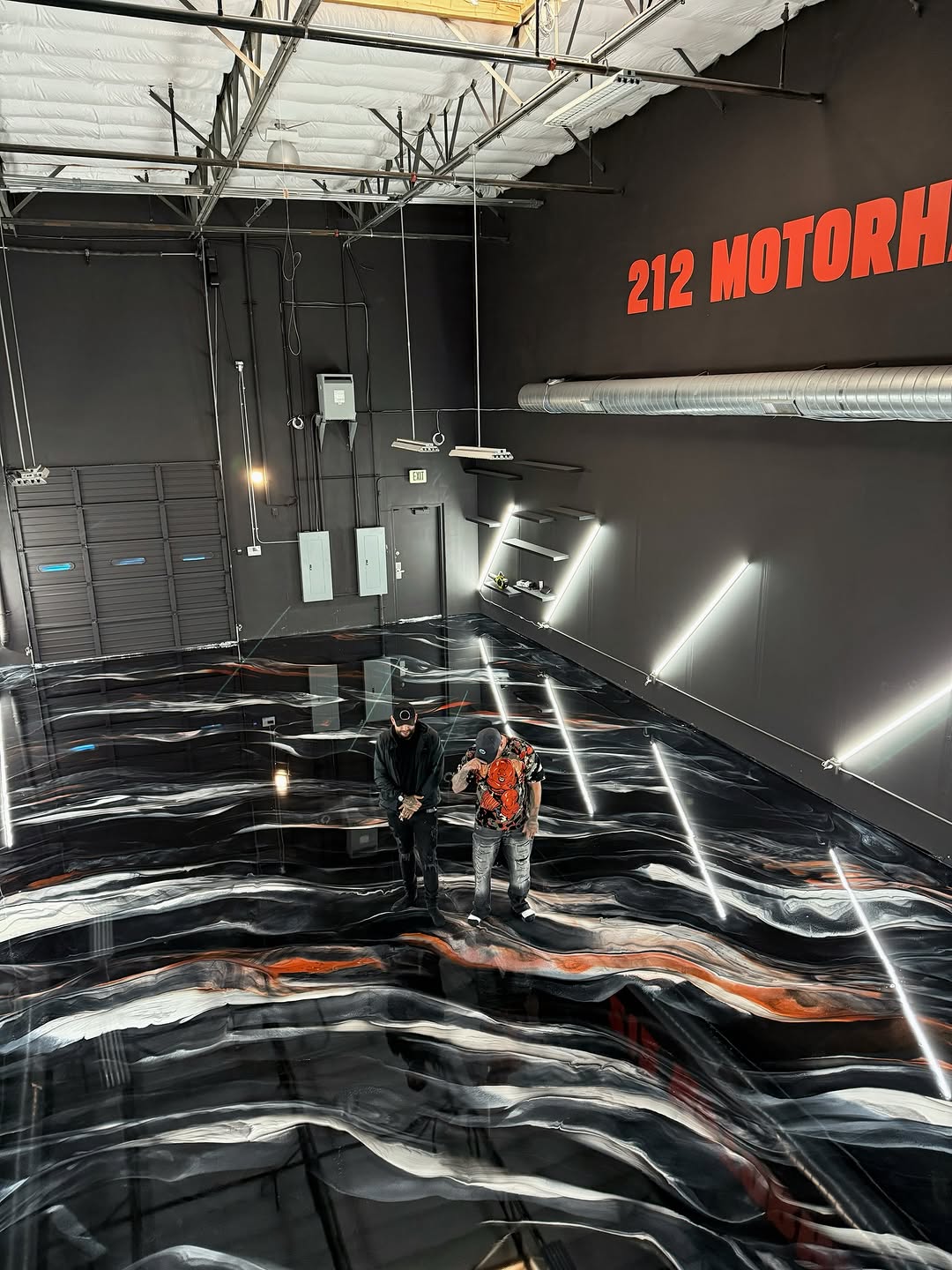
Industrial Floor Coatings That Perform Under Pressure
Industrial floor coatings protect your facility’s most critical surface from the forces that destroy an ordinary slab: chemical spills, forklift traffic, thermal shock, heavy impacts, and decades of continuous operation. Gold Coast Resin installs high-performance industrial coating systems across Central California.
JP Resin Certified·Don Resin Certified·160-Mile Radius
Understanding Industrial COATINGS
Industrial floor coatings are fundamentally different from decorative epoxy systems. While both use resin-based materials, industrial coatings are engineered specifically to resist the chemical, mechanical, and thermal stresses that would destroy a standard decorative coating within months. The formulations are denser, the build thicknesses are greater.
The range of industrial coating technologies is broad. Epoxy-based systems offer excellent chemical resistance at economical price points. Polyurethane systems add UV stability and abrasion resistance. Urethane cement systems provide thermal shock resistance for food processing. Polyaspartic systems cure rapidly for facilities that cannot afford extended downtime.
Gold Coast Resin does not sell a single industrial coating product to every customer. Johnny evaluates each facility individually, understanding the chemicals present, the traffic type and weight, the cleaning protocols, the temperature ranges, and the regulatory requirements that govern your operation.
PROCESS
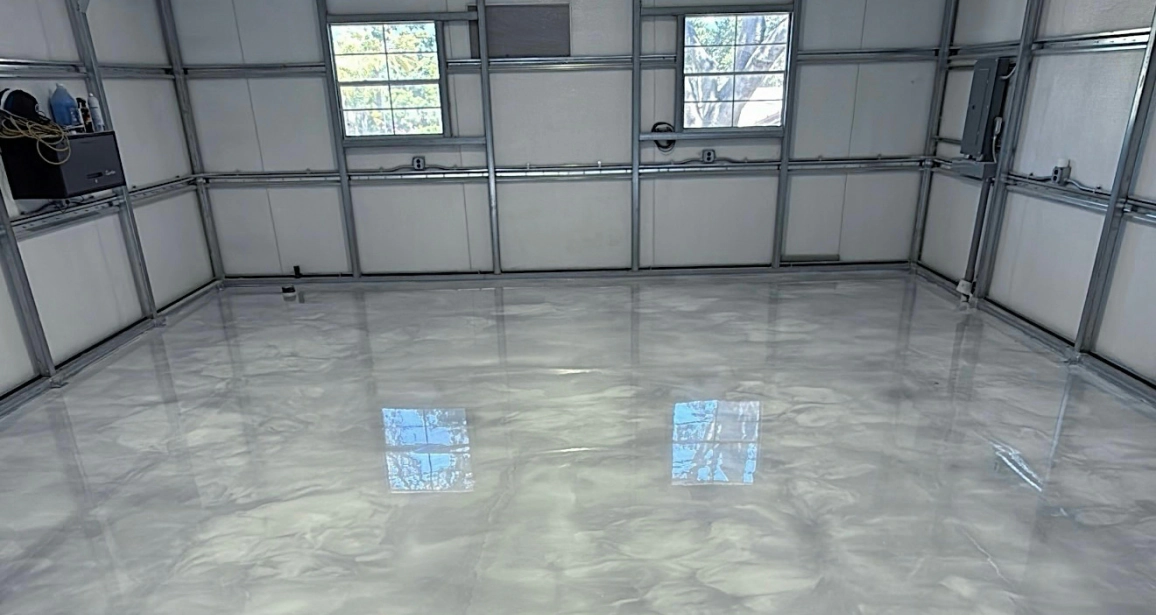
Every industrial floor begins with an engineering assessment and ends with documented performance verification. No guesswork, no shortcuts.
Facility Assessment
Johnny inspects your facility, documenting chemical exposure types, traffic patterns, thermal conditions, moisture levels, and current slab condition. This assessment drives the coating system specification.
Surface Preparation
Shot blasting, scarifying, or aggressive diamond grinding profiles the surface to the specific CSP required. Cracks are routed and filled with structural epoxy. Moisture barriers are installed where needed.
System Application
The specified coating system is applied in multiple layers at controlled thicknesses, verified by wet film gauges. Safety markings and anti-slip aggregates are incorporated during application.
Cure and Inspect
The completed coating cures under controlled conditions. Johnny inspects for thickness compliance, adhesion quality, and correct placement of safety markings before releasing the floor for traffic.
INDUSTRIAL FLOORS
Industrial coating failures are expensive. A floor that delaminates in a food processing plant means shutdown, emergency repair, and potential regulatory consequences. Choosing the right installer and system from the beginning costs a fraction of repairing a failed installation.
Every system is chemical-resistant and rated for specific chemicals in your facility. Coating systems are forklift-rated for your equipment, whether 5,000-pound warehouse forklifts or 20,000-pound loaded reach trucks. Gold Coast Resin offers fast-cure polyaspartic systems returning floors to service within 24 hours. Every installation includes safety markings and anti-slip treatments as standard.
Johnny treats every industrial floor as an engineered system, not a paint job. He specifies coating chemistries based on actual exposure data, documents system builds and application conditions, and stands behind every installation.
PROJECTS
Warehouses, manufacturing floors, and commercial facilities protected with engineered systems. See more in our project gallery.


“We had two previous floor coating jobs fail in our food processing area within eighteen months. Johnny came in, actually tested our chemicals against the coating samples, and specified a system that has been holding up perfectly for over three years now.”Plant Manager, Salinas Valley, CA
Matching the system to what the floor actually sees
The first question Johnny asks in a facility walk is not about color, it is about what hits the floor. A machine shop dealing with cutting fluid and steel chips needs abrasion resistance and a build thick enough to survive dropped tooling. A brewery washing down with caustic at temperature needs thermal shock resistance and chemical resistance that plain epoxy cannot supply. A distribution center running loaded reach trucks across the same aisle a thousand times a week needs compressive strength and a topcoat that will not scuff into a gray track. Those are three different systems, and specifying one product for all of them is how a contractor ends up back on site in eighteen months.
So the assessment is specific. Which chemicals, at what concentration, at what temperature, for how long before cleanup. What the wheels are made of and what they weigh loaded. Whether the floor sees steam, freezer cycling, or direct sun through a bay door. Whether an inspector is going to look at the wall transition. Johnny writes it down and the specification comes out of that data instead of a catalog default.
Prep is the whole game on an industrial slab
An industrial floor has been abused for years before anyone thinks about coating it. Oil and hydraulic fluid have soaked into the pores. Old coatings are peeling in the traffic lanes and welded down tight everywhere else. Slab joints have spalled at the edges where forklift wheels hammer them. Shot blasting handles most of it, throwing steel media at the surface to strip contamination and open an aggressive profile in one pass, with the abrasive and debris recovered as it goes so the plant stays workable. Where blasting cannot reach, along walls, around equipment pads, under racking, diamond grinding finishes the job by hand.
Then the repairs. Joints get routed and filled with a semi-rigid filler that supports the joint edge against wheel impact rather than a flexible caulk that lets the edge keep breaking down. Spalls and pop-outs get rebuilt. Moisture readings decide whether a vapor mitigation layer goes down before anything else. Every one of those steps is invisible in the finished floor and every one of them is why the finished floor is still there in a decade.
- Chemical, thermal, and load exposure documented before specification
- Shot blasting with recovery, diamond grinding at edges and obstructions
- Semi-rigid joint fill that supports the joint edge under wheel traffic
- Vapor mitigation when in-slab humidity readings call for it
- Wet film gauge checks through application to verify build thickness
Downtime, safety markings, and the handoff
Most facilities cannot stop, so the schedule is built backward from your shutdown window. Fast-cure polyaspartic systems can return a floor to light traffic in hours and full production inside a day, which is what makes a weekend installation realistic. Slower epoxy builds cost less per square foot and take longer to come back, and Johnny lays out that tradeoff honestly so the decision is yours rather than a surprise. Sectioning a large floor into phases is often the answer, coating half the plant while the other half runs.
Safety markings go in during application, not painted on afterward where they wear off. Aisle lines, equipment zones, and hazard areas get built into the system so they last as long as the floor does. Anti-slip aggregate is broadcast at the density your wet-floor conditions require, heavier in a wash-down bay, lighter where a smooth surface has to be cleanable. When the cure is complete Johnny walks the floor with your maintenance lead, covers cleaning chemistry, and tells you what to watch for. Call (650) 797-3040 and he will come out for a free look at the slab and a firm price.
FAQ
PROJECT
Protect your facility with an industrial coating system engineered for your specific conditions. Call Johnny for a free on-site assessment.