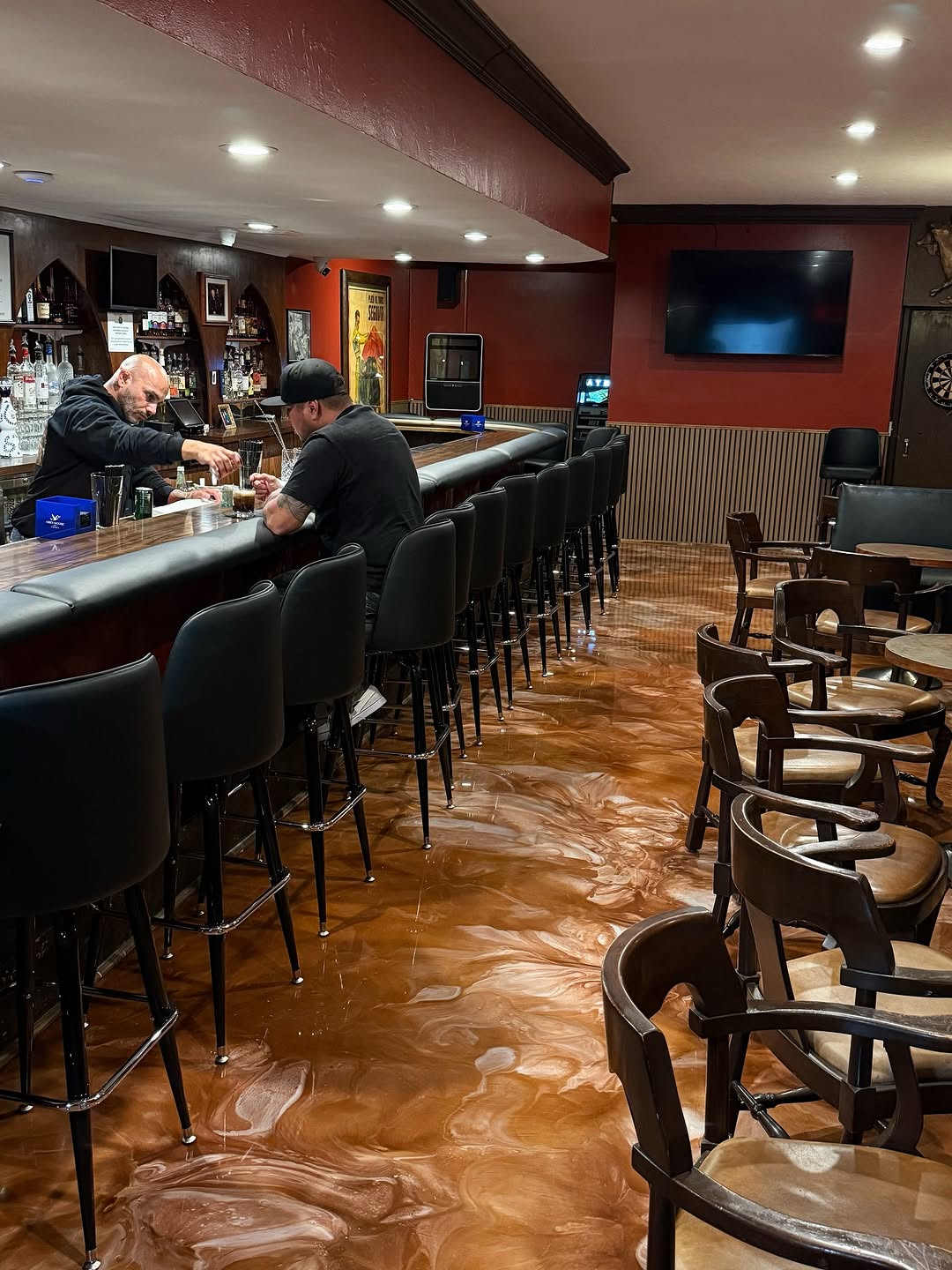
Cupertino Polyaspartic Coatings Down Fast. Built to Stay.
Around here the constraint is almost never money. It is the calendar. Most Cupertino households can give up the garage for a day. Giving it up for most of a week is a different conversation entirely. A polyaspartic build goes down and comes back into service in about a day, holds its color under strong afternoon sun, and takes abrasion the way any professional floor should. Gold Coast Resin runs it as a full system and as the topcoat over our epoxy and flake floors.
JP Resin Certified · Don Resin Certified · Serving Cupertino
Time, Not Money
Nearly every Cupertino garage we look at is doing four jobs at once. Two cars, the bikes, the second refrigerator, and whatever the kids are building. A standard epoxy build asks you to empty all of that out and leave it out while the coats stack and cure. That is the reason a lot of these floors go uncoated for years. Polyaspartic changes the shape of the ask: out in the morning, back the following day.
Here is the honest flip side, and we would rather say it than have you find it out. Fast cure chemistry hands the crew minutes per section instead of hours. There is no going back over a section that set up wrong. Who installs a polyaspartic floor matters more than on any other system we run, and a cheap polyaspartic job fails in ways a cheap epoxy job does not: hard edges where wet met dry, cloudy patches, a roller line frozen into the surface permanently.
So the speed is real, and it is only real with a crew that has run the material enough times to read it. Johnny prices the schedule honestly and will tell you when a slower build is the better answer for your floor.

HOLDS UP HERE
Most of what gets written about polyaspartic was written for cold states. The pitch is that it cures when a garage is near freezing, which is a genuine advantage in Denver and means nothing on the Santa Clara Valley floor. Our winters are mild and wet, our summers are hot and dry, and no slab in Cupertino is fighting freeze and thaw. Buy this system for the reasons that apply here.
UV stability is the durable one. Polyaspartic is aliphatic, so sunlight does not shift it amber the way it shifts a standard epoxy topcoat. Look at any Cupertino garage where the door stands open through a long afternoon and you can see the line: the coating inside the door line has drifted, and the shaded back half has not. A polyaspartic top layer keeps the floor one color end to end for years.
The second one is abrasion resistance, which is what a floor with bikes, jack stands, and a tool chest on casters actually needs. And moisture testing comes before any of it. Older slabs in the ranch belt were poured with thin or missing vapor barriers, and vapor pushing up from below will lift any coating regardless of what sits on top. We test rather than assume.
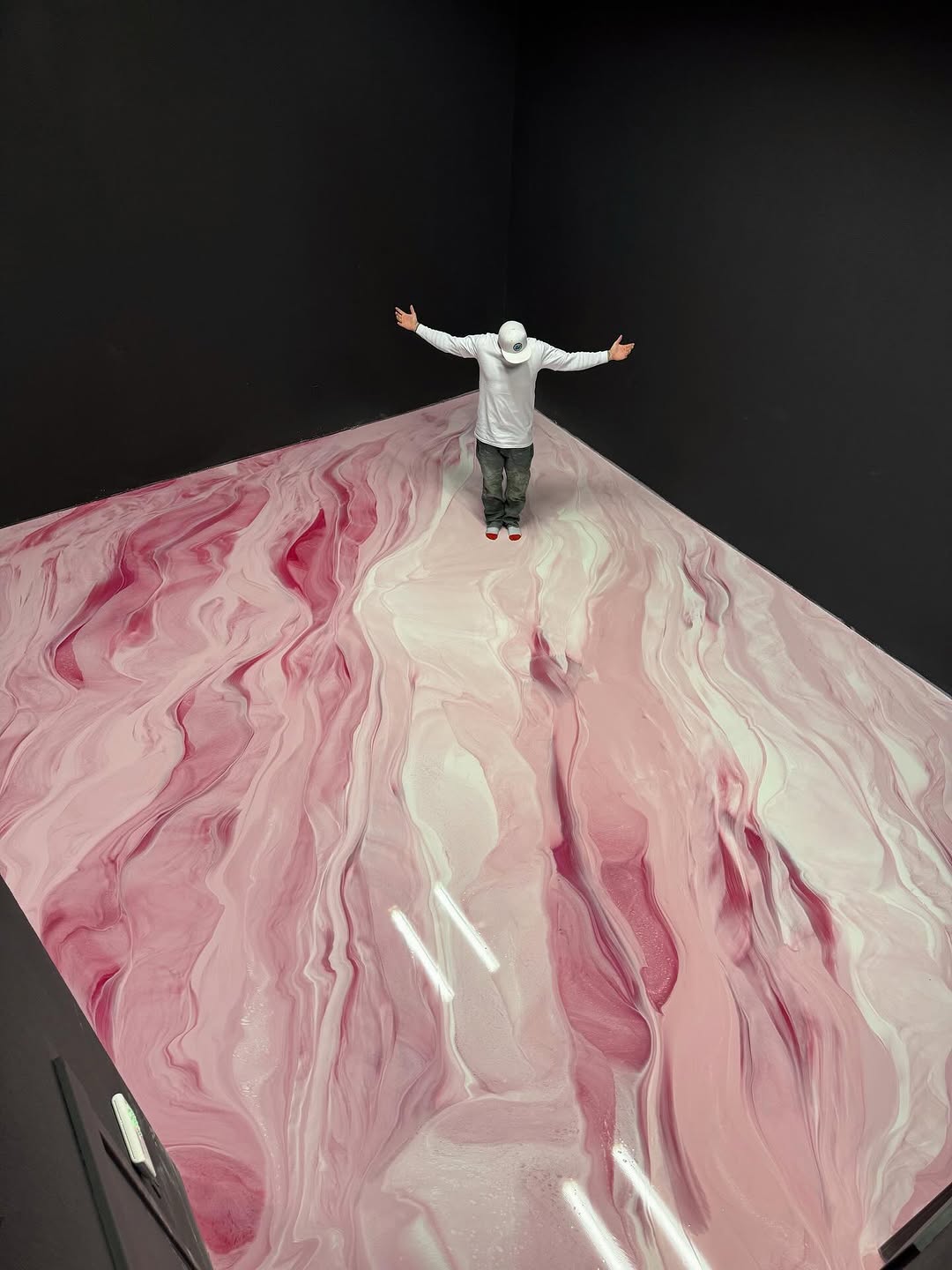
Epoxy Base, Polyaspartic Top
A full polyaspartic system is not automatically the better floor. On a lot of Cupertino jobs the stronger build is an epoxy base with a polyaspartic topcoat. The epoxy has the working time to wet deep into a ground slab and to carry flake or pigment evenly, and the polyaspartic on top brings the color hold and the wear surface. You get the finish that lasts without asking the base coat to do a job it is not built for.
Full polyaspartic earns the call when the schedule is the whole point, or when the space is a working shop that cannot sit idle. In a tear-down rebuild where trades are stacked back to back, that speed decides it. See both builds side by side in the full project gallery, or read how the same layering shows up in our flake epoxy floors and commercial coatings work.
PROCESS
A fast floor is not a fast prep. The day is short because the coats are quick, not because we skipped the part underneath them.
Grind and Test
Diamond grinding strips old sealer and cuts the profile the coating bonds into. Cracks and control joints get filled. Older Cupertino slabs get moisture tested first, because a slab pushing vapor will lift a topcoat no matter how good the topcoat is.
Primer
A penetrating primer locks adhesion into the prepared slab before any fast chemistry goes down. On a radiant Eichler slab the heat comes off well ahead of us so the primer wets in evenly instead of flashing off early and leaving a weak edge.
Body Coat
The main coat goes down at the wet film thickness the build calls for. This is the step that rewards a crew that has run the material: sections get cut in, rolled, and closed out on the material’s schedule, not on ours.
Top and Walkthrough
The final pass brings the floor to the sheen you picked and delivers the full build for wear and chemical resistance. Johnny walks the cured floor with you, points out what to watch the first month, and tells you when to park on it.
“We could not have the garage torn apart all week with two kids and both cars. Johnny cleared it Saturday morning and we were putting the shelving back Sunday. The floor looks better than the one our neighbor waited five days for.”Cupertino Homeowner, Two-Car Garage
FAQ
Get Your Cupertino Floor Back Fast
Call Johnny, tell him what your week looks like, and he will lay out the build that fits it. No pressure, no upsell to a system your floor does not need.