Sound Floors Beneath Piedmont’s Older Homes
Most Piedmont houses went up between the early 1900s and the 1930s, and the floors under them have been patched, painted and leveled by owner after owner. Garages and basements sit tucked into the slope below the living space, reached by steep driveways off narrow, hilly streets. Johnny Mendoza drives up from Hollister, reads what decades of fixes left behind and plans how his equipment gets in and out.
JP Resin Certified · Don Resin Certified · From Hollister to the Piedmont Hills
Piedmont sits entirely inside Oakland, and Johnny drives up from Hollister to walk each house.
Big houses from another era, on steep streets
Piedmont is a small city of about 11,000 people with Oakland on every side of it. It is almost entirely residential, and many of its houses are large ones built between the early 1900s and the 1930s, set along streets that climb and curve with the hills.
Houses of that age were not planned around the car. Where a garage exists, it is often tucked into the slope under the house or squeezed in beside it, and the basement next door may have served as a coal room, a workshop and a laundry over the years. The floors in those rooms are old, and most have been patched more times than anyone remembers: a fill where a furnace once stood, a skim over a crack, a painted section somebody hoped would brighten the room.
Old slabs keep surprises. The grinder finds them eventually, so the walk-through should find them first.
That makes the first visit about the floor you actually have. Johnny looks at every patch and how well it is holding, checks for old paint, sealer or tile adhesive, and takes moisture readings, since many slabs from that era went down with no vapor barrier under them.
The second question is getting there. Steep driveways and tight street parking decide where the truck goes, how a grinder reaches a basement door and how long a stretch of curb stays in use. Johnny works that out on the walk, so the morning of the job does not start with a parking problem.
Gold Coast finishes, shot on jobs elsewhere
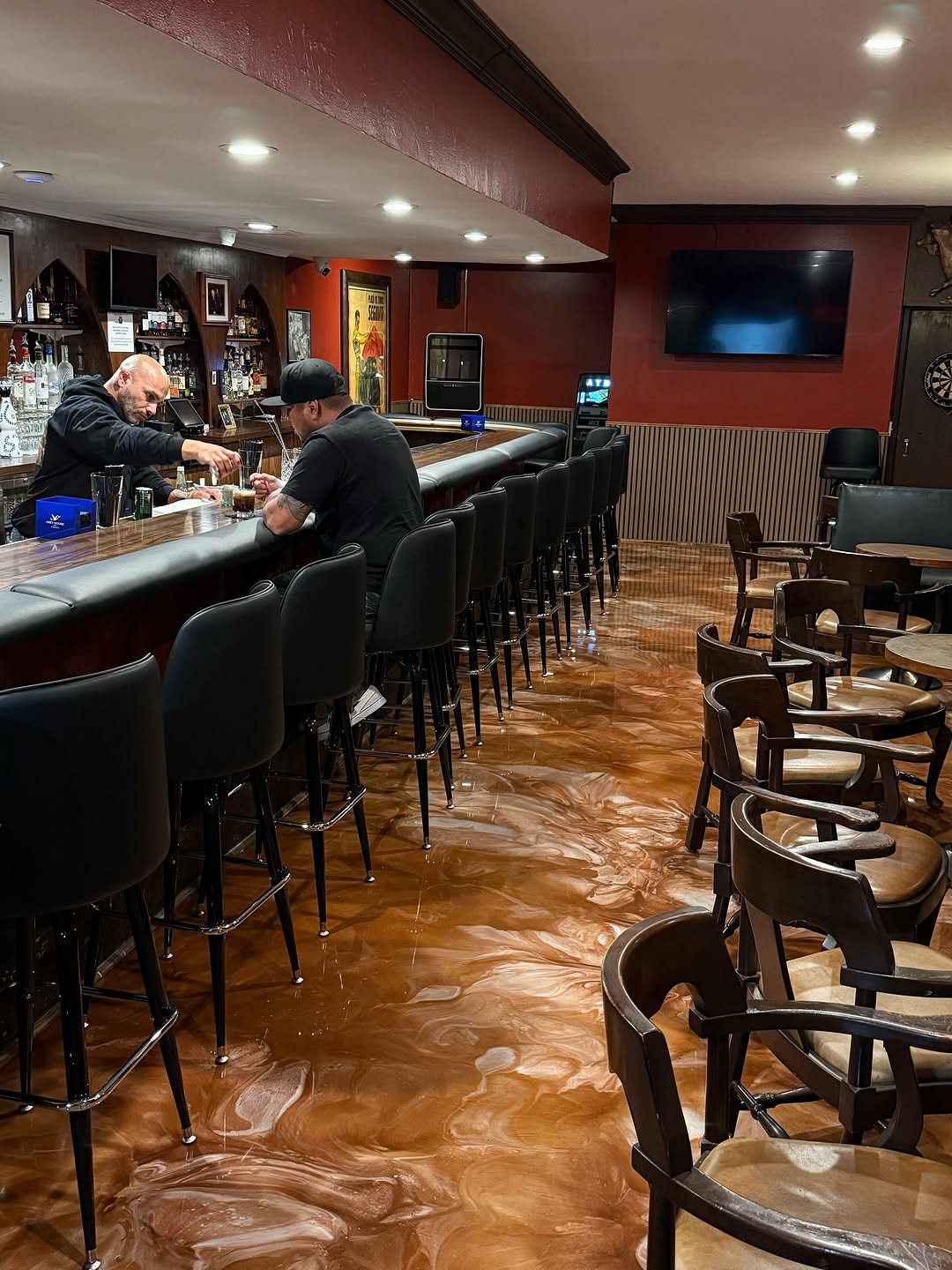
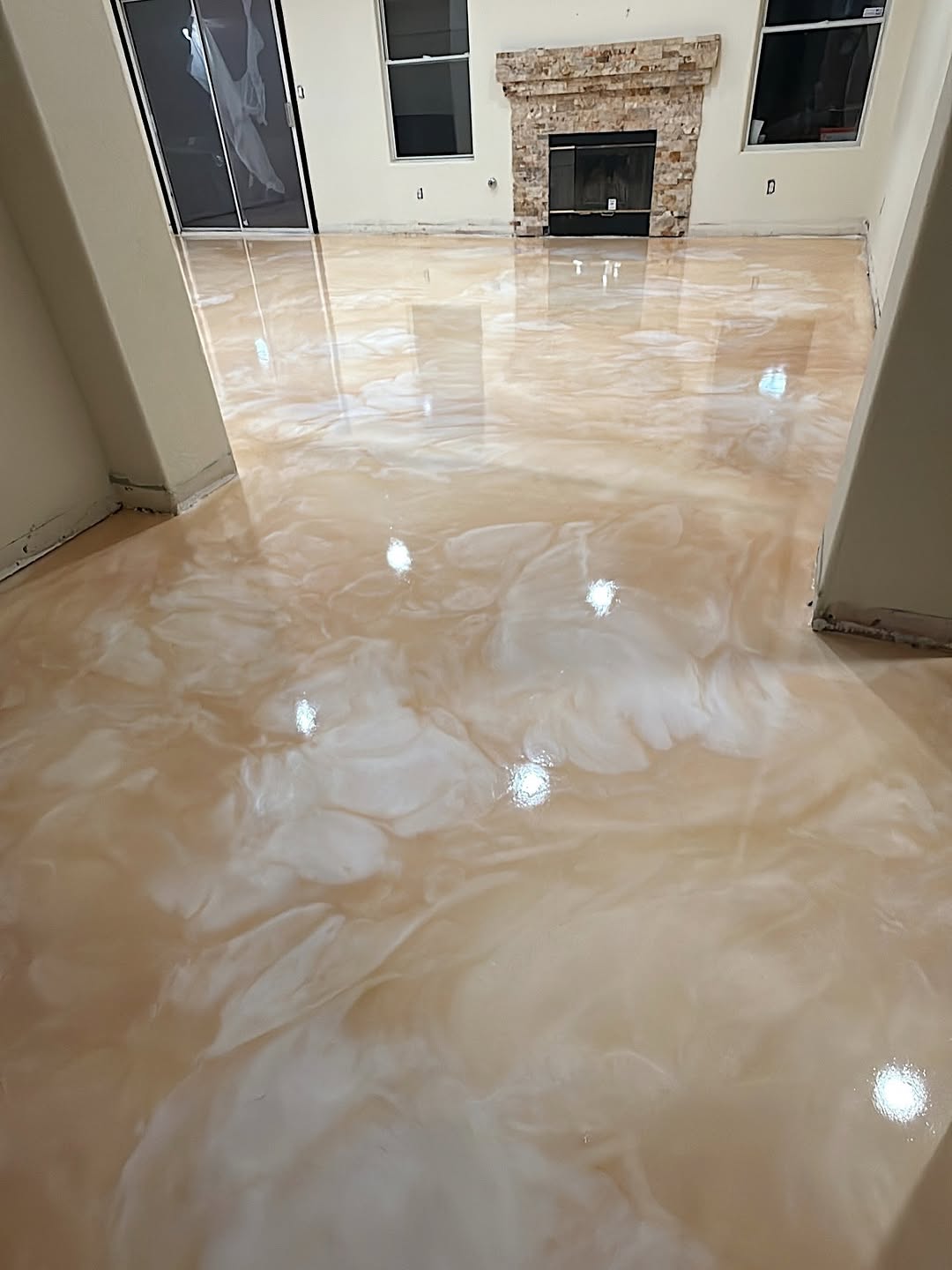
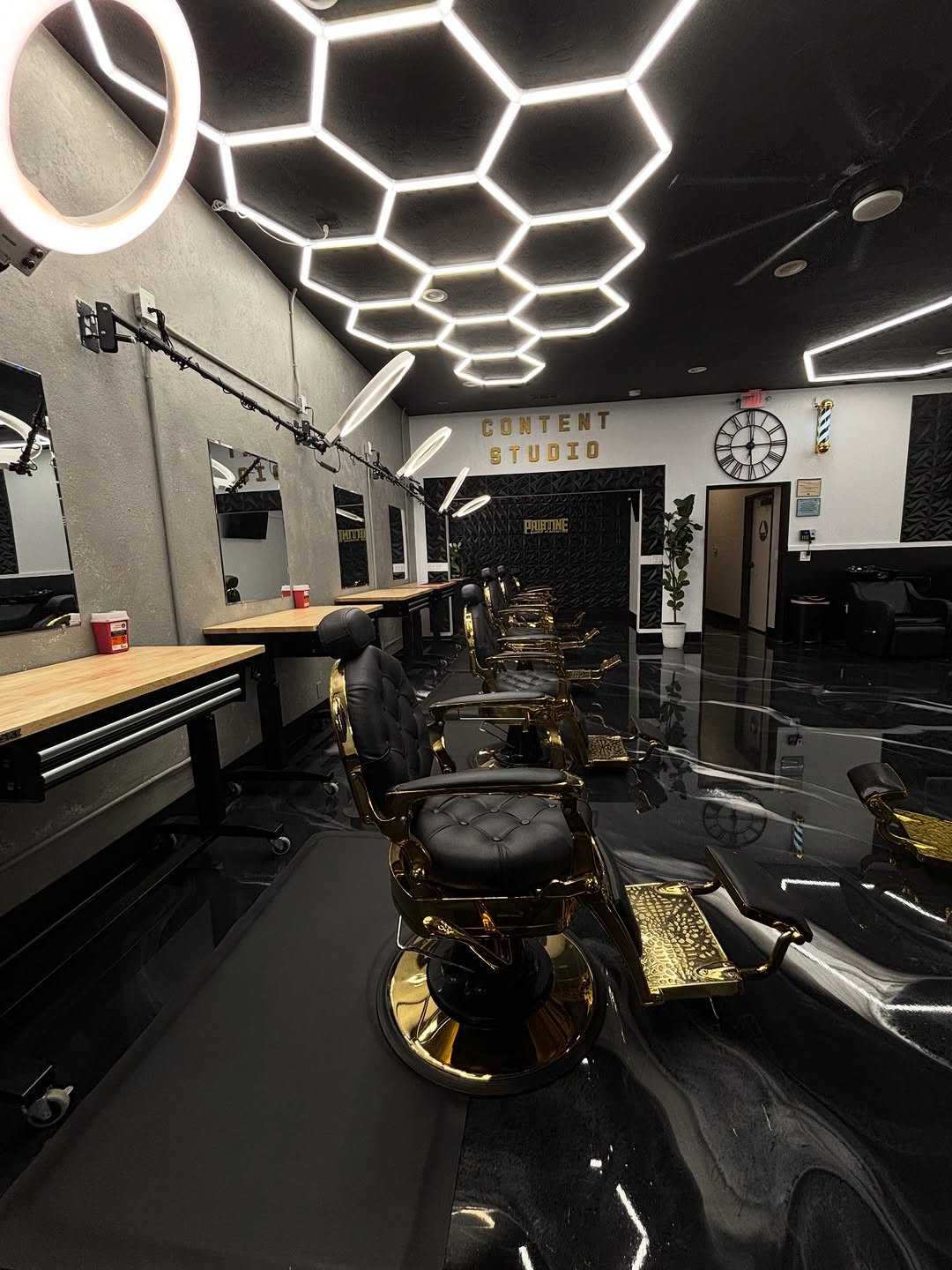
These photos come from Gold Coast jobs outside Piedmont: a bar, a living room and a barbershop. They show what the finish can look like, and your own slab sets the starting point. There is more to browse in the gallery.
Four places Piedmont floors get redone
Older houses tend to bring the same handful of rooms to the table, each carrying its own history in the slab.
Tuck-under garage
A garage beneath the house, often narrow, with a steep approach that sends rainwater toward the door. Old oil stains get ground out, then a flake system goes down that grips and sweeps clean. The joint at the door gets sealed so runoff never sits under the new floor.
Basement rooms
A workshop, laundry, gym or bonus room on an old slab that is usually uneven and patched. A leveling fill evens out the worst dips, then a metallic or flake goes on top. Moisture readings come first, because old basement slabs often sit right on the soil.
Garden-level entries
Rooms that open onto the yard at the low side of the lot, where shoes come in wet and muddy. A flake floor with a little texture hides dirt between sweeps and shrugs off a hose at the door. Old tile in these rooms often has to come up first.
Additions and remodels
Rooms added decades after the house was built, so a newer slab meets the original at a seam. That joint can move slightly with the seasons, and Johnny decides whether to carry the floor across it or mark it with a clean, deliberate line.
Decades of patches in one slab
A slab under a house from the 1920s has lived a long life. It might carry an old skim coat, a painted section and a newer patch where a water heater got moved. Some of those repairs are bonded tight. Others sound hollow when tapped, and left in place they would take a new coating up with them the first time they let go.
Johnny sounds the floor with a hammer or a chain dragged across it and listens for the dull spots. Hollow patches come out and get refilled with a repair material that bonds to the old slab. Paint and old sealer get ground off completely, because a coating is only as strong as the layer it grabs. Low corners get a leveling fill, so a basement floor stops collecting water in the same spot every winter.
Old tile is its own question. The black adhesive used under tile in houses of that period sometimes contains asbestos, so it gets tested before anyone grinds it. If the result comes back positive, a licensed abatement crew removes it before the floor work begins. Johnny would rather wait on a test than put that kind of dust into a family’s house.
A hollow patch left in place is the first spot a new floor will lose its grip.
Where metallic and flake fit in an old house
A metallic floor can turn a dim old basement into a room people actually want to use. Each pour is worked by hand, so the color moves and settles differently across the floor, and a deeper tone sits comfortably next to the dark wood trim many houses of this period still carry. Under good lighting the floor reads as part of the house, not an add-on.
A flake floor is the working option. Chips broadcast to full coverage hide dust, grit and the slight waves an old slab never quite loses, and the texture adds grip at a garden door or beside a laundry sink. A broad chip blend also hides small dips better than any solid color can.
In the garage, a garage coating begins by grinding out decades of oil and flaking paint, followed by crack and patch repair. Then come a base coat, a full broadcast and a topcoat chosen for hot tires. On a steep approach, a little extra texture near the door helps when the car rolls in wet.
Before the work starts: questions from Piedmont
Our basement floor has old paint on it. Does that have to come off?
All of it, yes. A new coating grips the slab itself, and anything sitting on top becomes the weak link. Johnny grinds the paint off with vacuum dust collection running, then looks at what it was hiding, since old paint often covers cracks or patches that need repair before any base coat goes down.
There is old tile in the basement. Can you just grind it up?
Not until the adhesive is tested. Black adhesive under tile in older houses sometimes contains asbestos, and grinding it would put that into the air. A sample goes to a lab first. If it comes back clean, the tile and glue come up as part of prep. If not, abatement happens before the floor.
Where will your truck and equipment go on our street?
Johnny works that out during the site assessment. He looks at the driveway grade, any curb space and the distance from the street to the garage or basement door. Grinders and extractors roll in on carts. If a neighbor’s frontage is involved, a heads up a few days ahead keeps everyone on good terms.
Our basement floor slopes toward one corner. Can it be leveled?
Often, yes. Shallow dips get a leveling fill that bonds to the old slab before any coating goes on. If the slope runs toward a floor drain, Johnny keeps enough fall so water still finds it. A slab that has heaved or sunk badly may need a section cut out and replaced before any fill will hold.
Rain runs down our driveway into the garage. Will that hurt the floor?
A sealed coating does not mind water on its surface. Trouble starts when water sits at the edges or works under a lifted section. Johnny seals the floor tight at the door and along the walls, and he will point out if the drive needs a drain or a lip so runoff stops pooling inside.
Can the floor suit the style of an older house?
Within reason, yes. A metallic can be tinted toward the wood tones upstairs, and a flake blend can pick up colors from stone or brick around the house. Johnny brings samples to the site assessment and lays them on your slab in your light, because a sample under showroom lights rarely tells the truth.
Have Johnny sound out the basement floor
Give Johnny a rough idea of the rooms, how old the house is and whether there is tile, paint or patching on the floor now. Photos of the driveway and the basement door help him plan access. He drives up from Hollister, tests the slab and sends a written price, with repair work listed apart from the finish.
Metallic and flake finishes that suit a basement are in the gallery. Easier to type than talk? Write to Johnny here and he will answer.