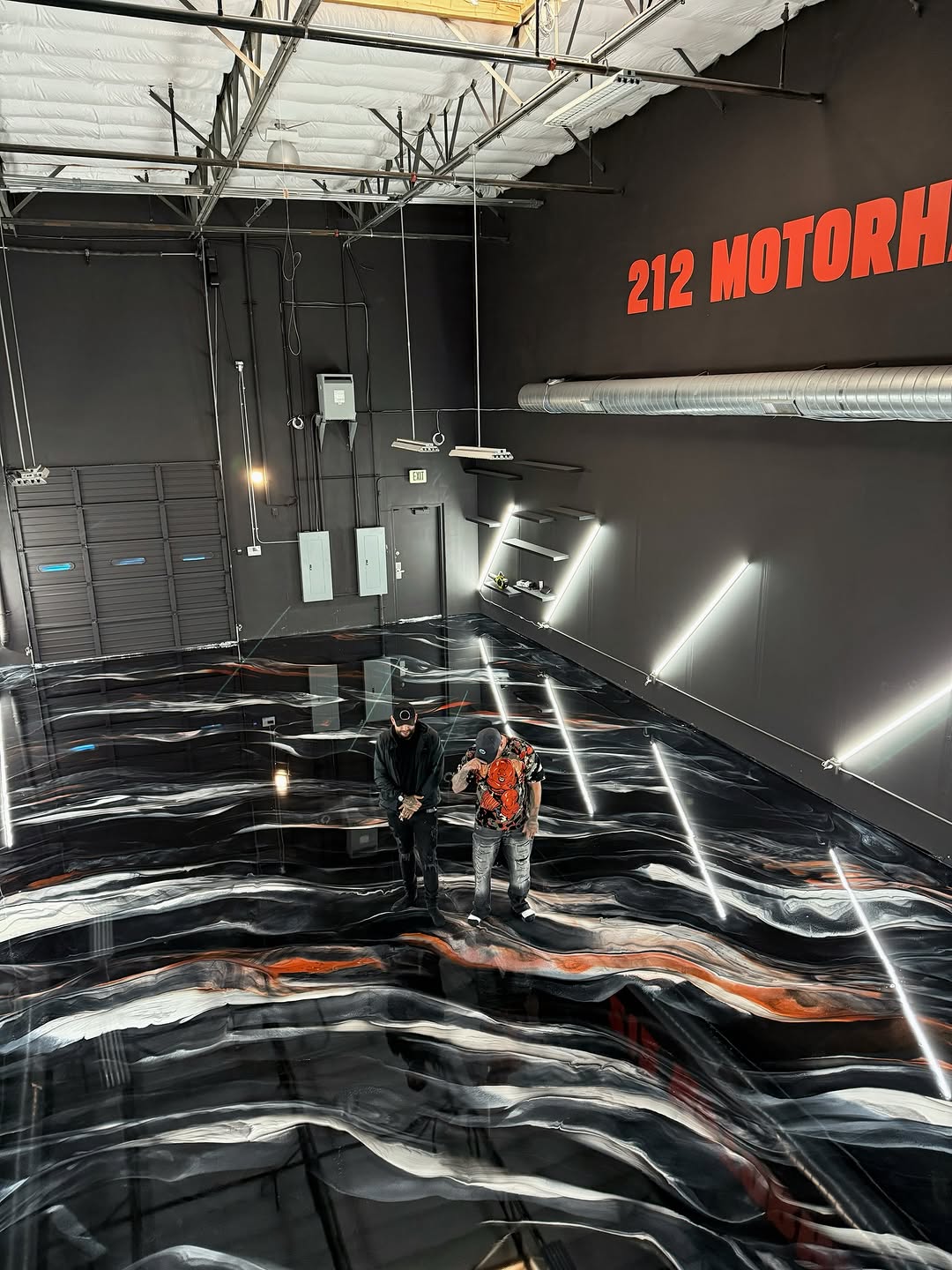
Morgan Hill Commercial Floor Coatings Perform Under Pressure
Industrial floor coatings protect your facility’s most critical surface from the forces that destroy an ordinary slab: chemical spills, forklift traffic, thermal shock, heavy impacts, and decades of continuous operation. Gold Coast Resin installs high-performance industrial coating systems across Central California. Serving Morgan Hill and Santa Clara County homeowners with the same JP Resin and Don Resin certified craftsmanship Gold Coast Resin delivers across Central California.
JP Resin Certified·Don Resin Certified·160-Mile Radius
Understanding Industrial COATINGS
Industrial floor coatings are fundamentally different from decorative epoxy systems. While both use resin-based materials, industrial coatings are engineered specifically to resist the chemical, mechanical, and thermal stresses that would destroy a standard decorative coating within months. The formulations are denser, the build thicknesses are greater.
The range of industrial coating technologies is broad. Epoxy-based systems offer excellent chemical resistance at economical price points. Polyurethane systems add UV stability and abrasion resistance. Urethane cement systems provide thermal shock resistance for food processing. Polyaspartic systems cure rapidly for facilities that cannot afford extended downtime.
Gold Coast Resin does not sell a single industrial coating product to every customer. Johnny evaluates each facility individually, understanding the chemicals present, the traffic type and weight, the cleaning protocols, the temperature ranges, and the regulatory requirements that govern your operation.
Morgan Hill runs on more than wineries and tasting rooms. The industrial pockets off Condit Road, the shops along Digital Drive, and the food and beverage operations tied to south Santa Clara Valley agriculture all put real load on their concrete every single day. A wine bottling line drips acidic product and gets hosed down on a hard schedule. A metal shop drops sharp scrap and rolls loaded pallet jacks over the same lane a thousand times a week. A cold-storage room swings from 38 degrees to a warm wash-down and back, and that thermal cycle is what pops an ordinary coating loose. Johnny walks the floor with those specific stresses in front of him instead of guessing from a catalog.
The other thing about Morgan Hill slabs is age and mix. A lot of the older light-industrial buildings near the downtown grid were poured decades ago, and the concrete underneath is soft, dusty, or already sealed with something that fights adhesion. Newer tilt-up shells out toward the 101 frontage often trap construction moisture that has nowhere to go. Both problems are solvable, but only if you find them before the resin goes down. That is why the assessment is not a formality here. It decides whether the floor holds for fifteen years or lifts in one.
PROCESS
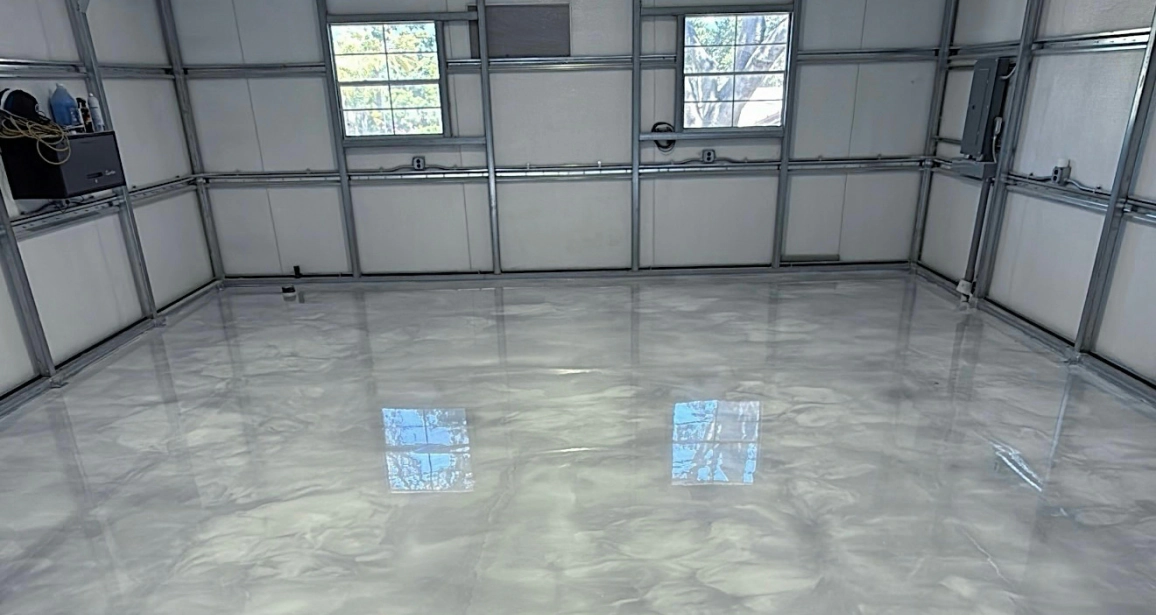
Every industrial floor begins with an engineering assessment and ends with documented performance verification. No guesswork, no shortcuts.
Facility Assessment
Johnny inspects your facility, documenting chemical exposure types, traffic patterns, thermal conditions, moisture levels, and current slab condition. This assessment drives the coating system specification.
Surface Preparation
Shot blasting, scarifying, or aggressive diamond grinding profiles the surface to the specific CSP required. Cracks are routed and filled with structural epoxy. Moisture barriers are installed where needed.
System Application
The specified coating system is applied in multiple layers at controlled thicknesses, verified by wet film gauges. Safety markings and anti-slip aggregates are incorporated during application.
Cure and Inspect
The completed coating cures under controlled conditions. Johnny inspects for thickness compliance, adhesion quality, and correct placement of safety markings before releasing the floor for traffic.
INDUSTRIAL FLOORS
Industrial coating failures are expensive. A floor that delaminates in a food processing plant means shutdown, emergency repair, and potential regulatory consequences. Choosing the right installer and system from the beginning costs a fraction of repairing a failed installation.
Every system is chemical-resistant and rated for specific chemicals in your facility. Coating systems are forklift-rated for your equipment, whether 5,000-pound warehouse forklifts or 20,000-pound loaded reach trucks. Gold Coast Resin offers fast-cure polyaspartic systems returning floors to service within 24 hours. Every installation includes safety markings and anti-slip treatments as standard.
Johnny treats every industrial floor as an engineered system, not a paint job. He specifies coating chemistries based on actual exposure data, documents system builds and application conditions, and stands behind every installation.
Moisture is the quiet killer in this valley, and Morgan Hill sits right where it bites. Groundwater in south Santa Clara County can run high, and a slab poured on grade will push water vapor up through itself for the life of the building. When that vapor hits the underside of a sealed coating it blisters, bubbles, and delaminates in wide sheets. Before Johnny commits a system he runs calcium chloride or relative humidity testing on the slab, and if the numbers come back high he installs a moisture-mitigating primer rated for that vapor drive. It adds a day to the job and it saves you from a total redo two summers later.
Downtime is the number that actually costs a facility money, so Johnny plans the schedule around your operation instead of his own convenience. Warehouses and shops that run five days a week usually get the floor done over a long weekend with a fast-cure polyaspartic topcoat so Monday morning rolls in on a cured surface. Food and beverage rooms that cannot tolerate any dust get sealed off in phases with negative-air containment so one bay stays productive while the next one cures. He talks through the whole plan before a grinder ever touches the concrete, and he keeps the site clean the entire time, because a coating shop that leaves grinding dust on your product racks is a coating shop that failed at the part you actually care about.
When the last coat goes down Johnny does more than pack up and send an invoice. He walks the floor with you, points out where the slip aggregate sits heavier in the wash-down zones, hands over the cleaning schedule for the specific topcoat he used, and tells you honestly when the surface will be ready for foot traffic versus loaded forklift traffic. If something is not right, he comes back and makes it right. That accountability is the whole reason a lot of Morgan Hill operators call him after a cheaper crew left them with a floor that failed.
PROJECTS
Warehouses, manufacturing floors, and commercial facilities protected with engineered systems. See more in our project gallery.


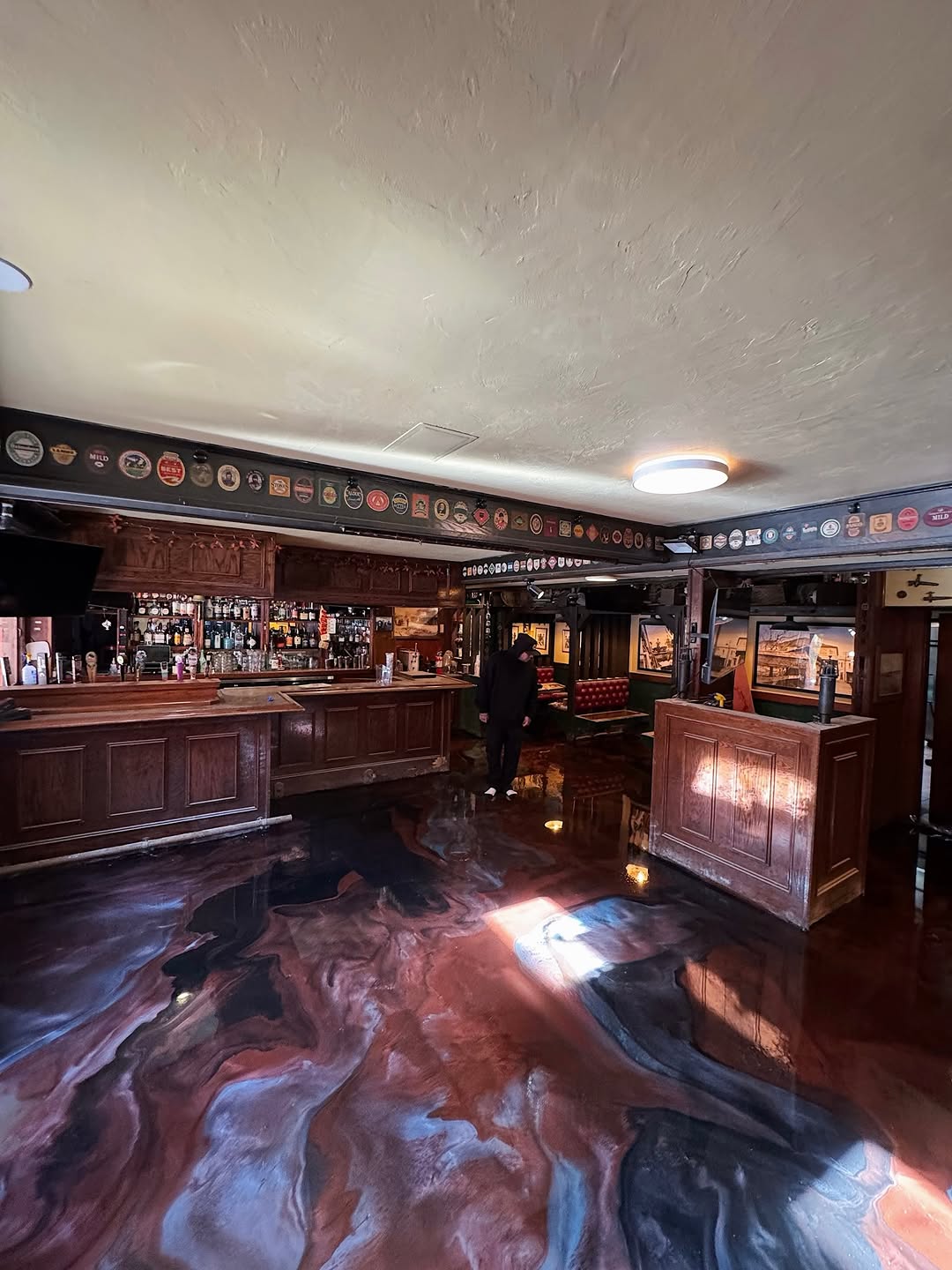
“We had two previous floor coating jobs fail in our food processing area within eighteen months. Johnny came in, actually tested our chemicals against the coating samples, and specified a system that has been holding up perfectly for over three years now.”Plant Manager, Salinas Valley, CA
FAQ
PROJECT
Protect your facility with an industrial coating system engineered for your specific conditions. Call Johnny for a free on-site assessment.