Epoxy Flooring in Lodi, California
JP Resin Certified·Don Resin Certified·160-Mile Radius
Why Lodi’s Wine Country Trusts Gold Coast Resin
Lodi has emerged as one of California’s premier wine destinations, with over 85 wineries drawing visitors to its charming downtown and surrounding vineyards. The Lodi Rules sustainability program has put this San Joaquin County city on the map as a leader in responsible winemaking, and the growing tourism economy has turned Main Street into a vibrant corridor of tasting rooms, restaurants, and boutique shops. Each of these businesses needs flooring that reflects the quality of the experience they offer.
Gold Coast Resin serves Lodi’s diverse flooring needs with the same attention to craft that winemakers bring to their vintages. For tasting rooms and hospitality spaces, our metallic epoxy systems create breathtaking visual statements that enhance the visitor experience, wine-stain resistant, easy to maintain, and customizable to match any brand aesthetic. For winery production facilities, our industrial coatings withstand the caustic chemicals, heavy barrel traffic, and constant wash-down cycles that crush production demands.
Beyond the wine industry, Lodi is home to Hutchins Street Square, a vibrant downtown arts and cultural scene, and established residential neighborhoods where families take pride in their properties. Johnny evaluates every Lodi project personally, from the historic buildings along Main Street to the newer homes expanding the city’s footprint. His JP Resin and Don Resin certifications ensure that whether we are coating a tasting room floor or a residential garage, the craftsmanship meets the highest professional standards.
- JP & Don Resin certified, advanced metallic and coating systems
- Free on-site consultations throughout the region
- Commercial-grade materials on every project
- Workmanship warranty backed by owner accountability
- Owner-operated, Johnny oversees every installation
Crush Season Sets the Calendar
Nobody coats a working winery floor in September. From late August through October the crush pad runs, the forklifts do not stop, and there is no window long enough to grind, pour, and cure anything. So Lodi production work gets scheduled in winter and early spring, when the barrels are quiet and a facility can give up a room for four or five days. Tasting rooms are the opposite: they want the work done in a slow midweek stretch before the spring visitors arrive on the Highway 12 wine route. Johnny builds the calendar around that rhythm because a floor scheduled at the wrong time of year is a floor that never actually gets poured.
The chemistry side of a production floor is different too. Wine is acidic, cleaning cycles run hot, and the caustics used on tanks and lines will find any weak point in a coating. Standard consumer-grade epoxy is not the right answer there. Urethane cement and chemical-resistant resin systems handle the acid load and the thermal shock of hot wash-down against a cold slab, and they get integral coving at the wall so there is no seam for must and rinse water to sit in.
Delta Air, Slab Moisture, and Winter Fog
Lodi sits close enough to the Delta that the air carries real humidity, and the tule fog that settles over San Joaquin County from November into February changes how resin behaves. Cold slab and damp air both slow the cure, which stretches return-to-service timing and, if ignored, leaves you with a soft topcoat that scars the first week. Johnny watches slab temperature with an infrared gun rather than trusting the air temperature, and he will push a pour a day rather than lay product onto concrete that is too cold to cross-link properly.
Moisture in the slab itself gets tested on every job. A lot of the older buildings around Main Street and the blocks near Hutchins Street Square were poured long before vapor barriers were routine, and irrigated ground around the outlying properties keeps subgrade moisture up year round. A wet reading means a moisture-tolerant primer goes down first. That is one extra day and it is the difference between a coating that stays bonded and one that bubbles by the second summer.
Metallic Floors for Rooms Where Guests Stand
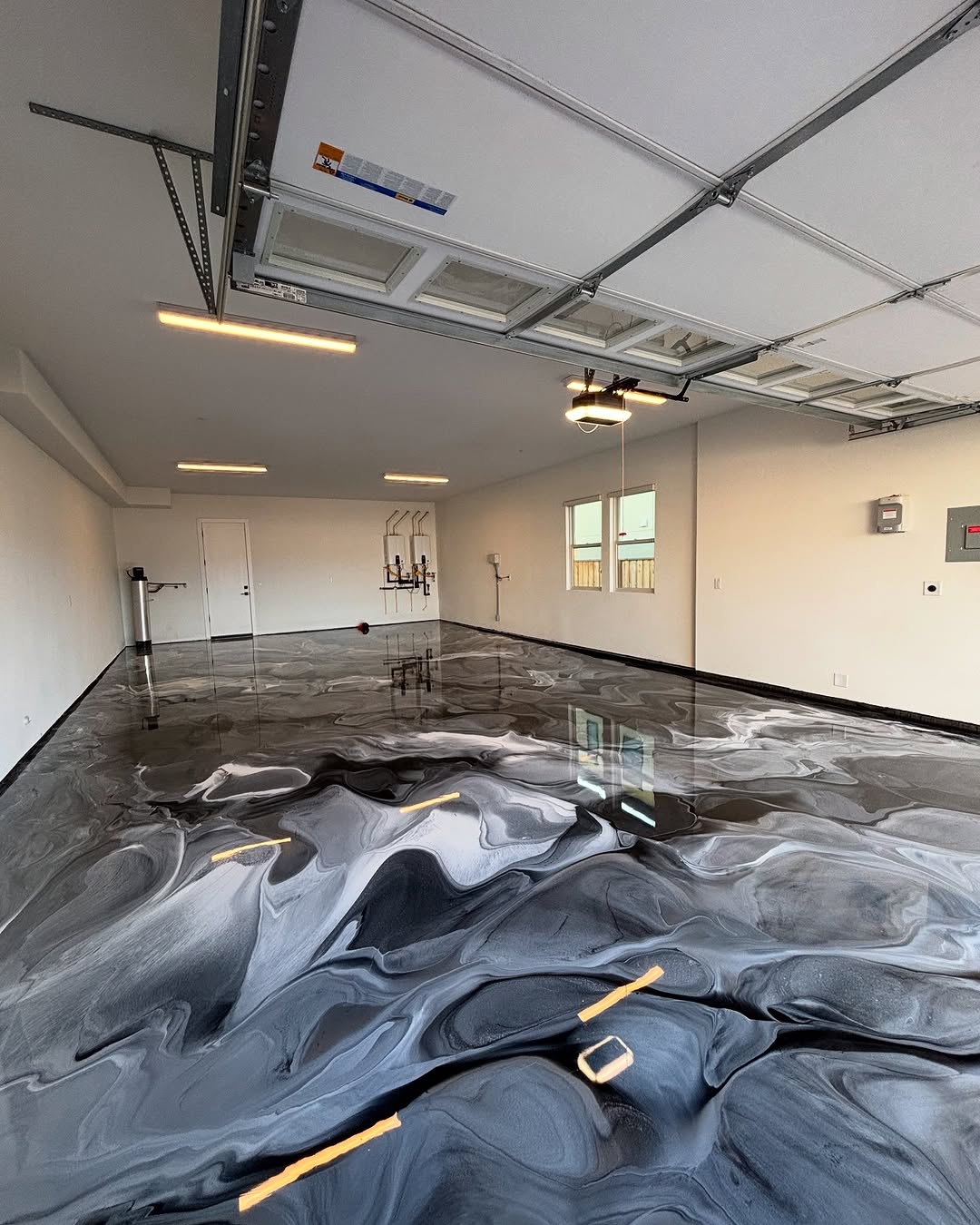
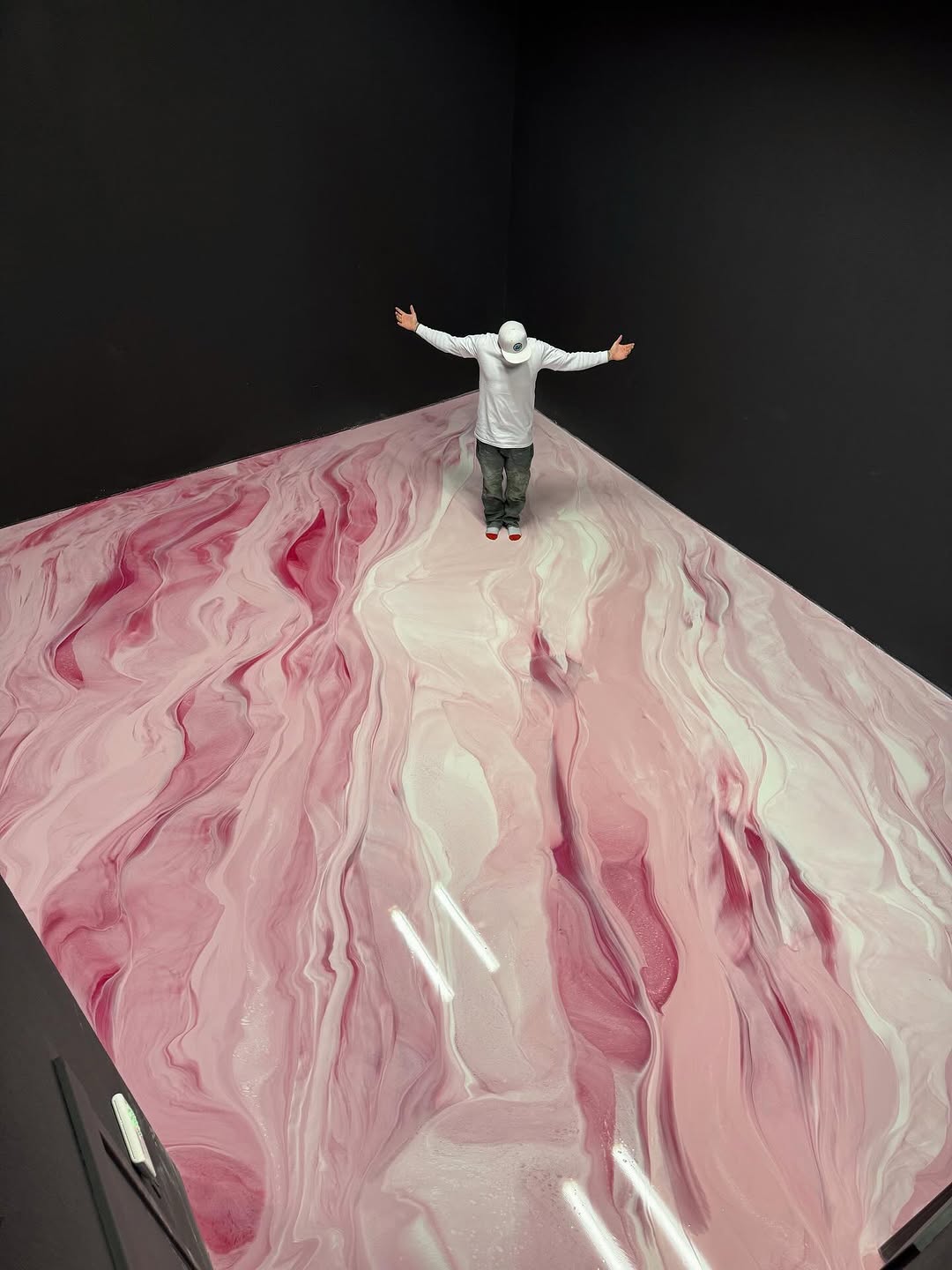
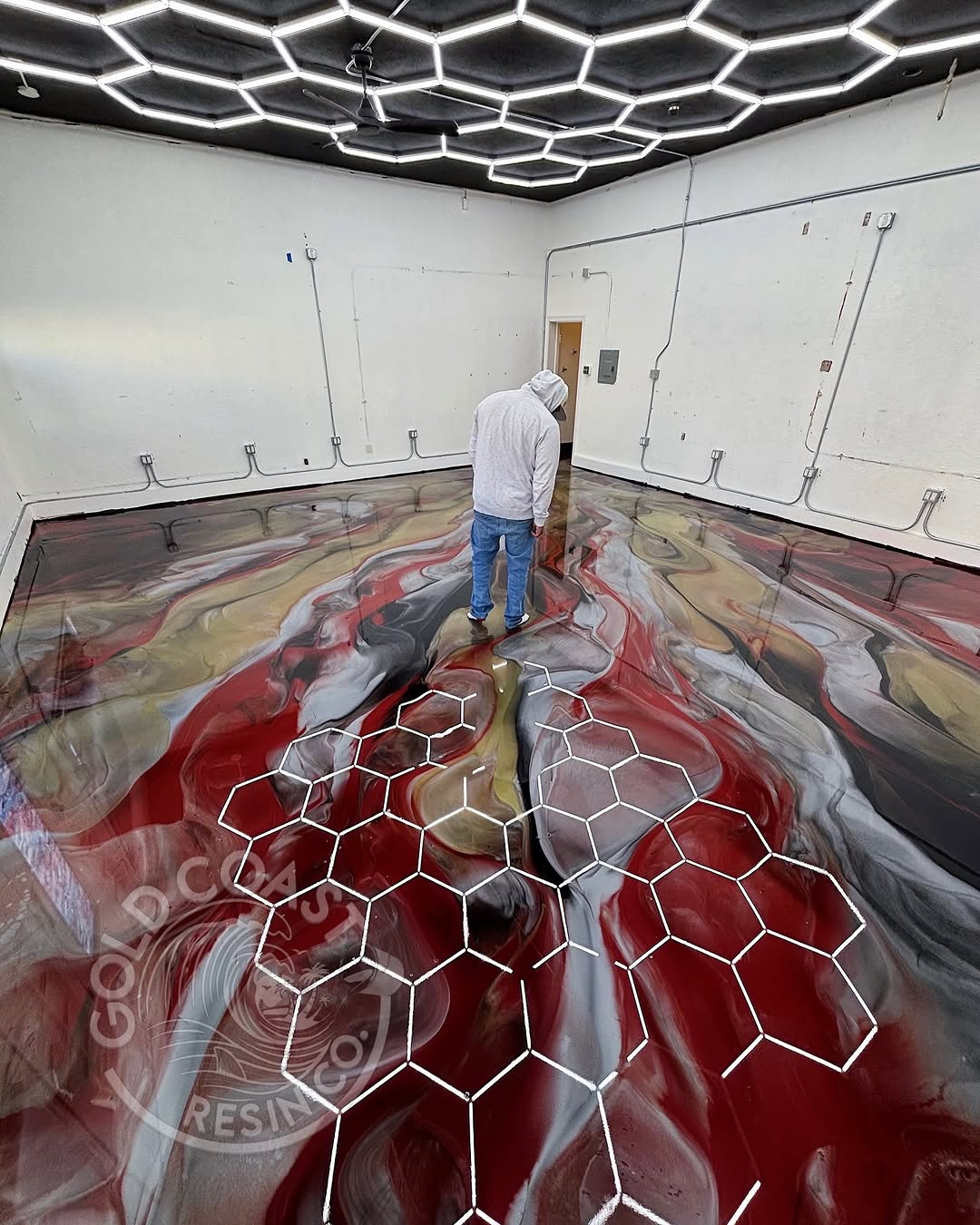
Tasting rooms are where metallic earns its keep in Lodi. Pigment gets poured and then worked by hand with rollers, a torch, and moving air, so the pattern opens up into something that looks like stone or moving water and cannot be duplicated on the next floor. Johnny will pull colors straight off a label or a barrel stave if that is the direction a winery wants to go, and he boards the blend first so the owner sees a cured sample instead of a rendering. The finished floor becomes part of the room’s story rather than something guests walk across without noticing.
The practical side holds up too. A polyaspartic topcoat over metallic resists red wine, cleans with a damp mop, and does not yellow where sun comes through the tasting room windows. In a bar area where spills are constant, we add a fine broadcast for grip so a wet floor stays safe under a crowd. Residential clients in the neighborhoods off Lower Sacramento Road get the same materials and the same prep, just at garage scale. Call (650) 797-3040 and Johnny will take a free look at the slab and give you a firm price with the schedule spelled out.
LODI
Every floor is a one-of-a-kind piece. Full color, full impact, the way epoxy art is meant to be seen.

SERVICES
“We renovated our tasting room on Main Street in Lodi and Gold Coast Resin installed a metallic floor that our visitors cannot stop talking about. It resists wine spills beautifully, cleans up in seconds, and the aesthetic perfectly matches our brand. Johnny understood our vision and delivered beyond expectations.”Lodi Wine Country Tasting Room Owner