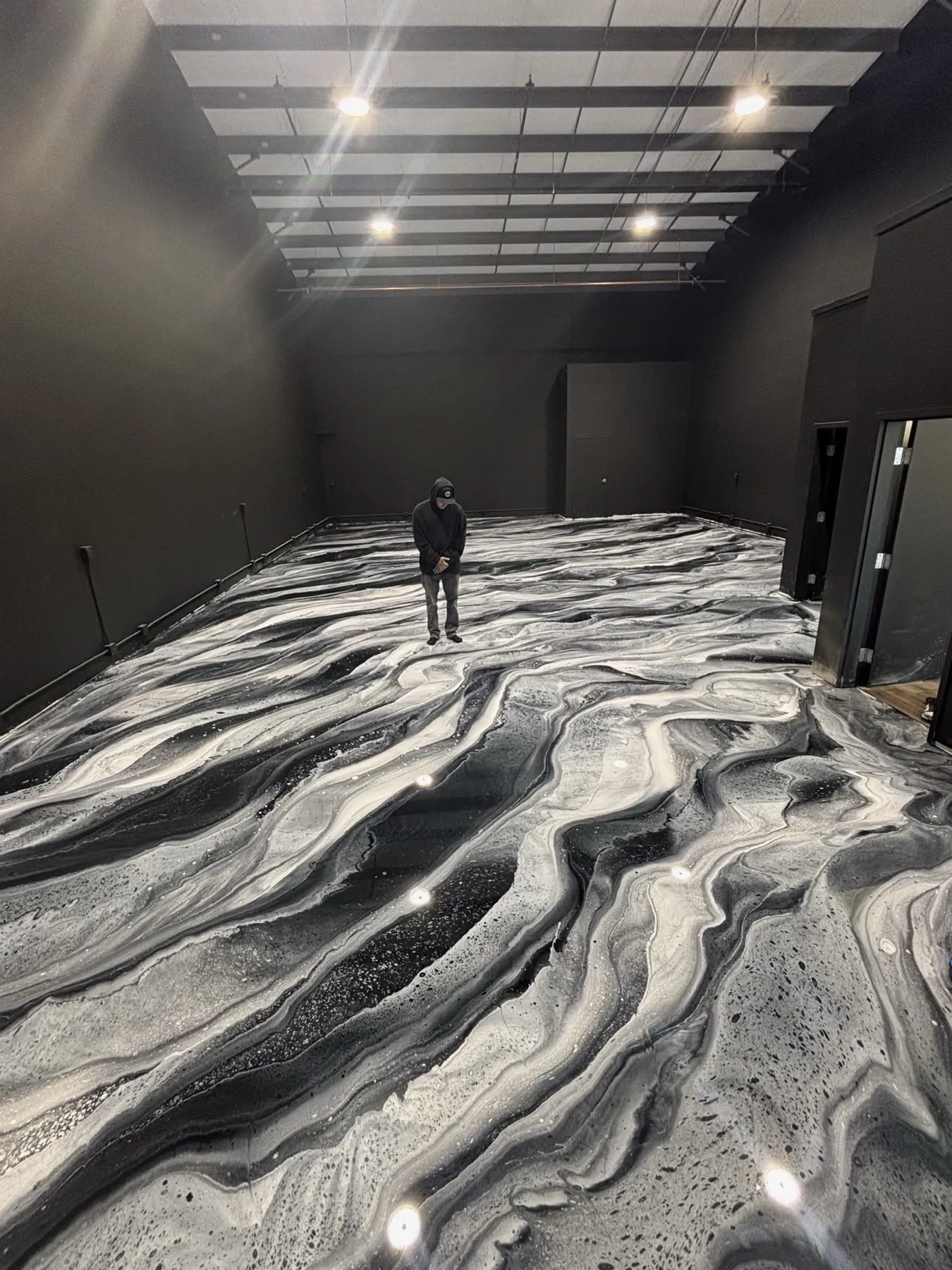
San Juan Bautista Showroom Floors That Belong to the Display
In a gallery or a tasting room, the floor ends up in every photo a visitor takes. Downtown, where adobe and old wood set the tone, a floor that shouts can drown out the room around it. Johnny Mendoza settles color, movement and sheen with you while standing on your slab, under your own lights, before any resin is mixed.
JP Resin and Don Resin certified · Fifteen minutes away in Hollister
The floor is part of what you are showing
A showroom floor gets looked at. In a gallery it sits under every piece on the wall. In a tasting room it makes the first impression before anyone pours a glass. That changes the order of the conversation. Durability still has to be there, yet the first questions are about how the floor should read in the room.
San Juan Bautista adds something most towns do not have. Many rooms downtown sit inside adobe walls or beside old timber, and a floor with too much going on will compete with them. A metallic pour can be loud or quiet. The pigments, the number of colors and how hard the resin gets worked while wet all decide how much it moves.
If visitors notice the floor before the work on the walls, the floor is wrong for a gallery.
So Johnny starts with the room instead of a color chart. He asks what goes on display, how the lights are aimed and whether the space changes between shows or seasons. Those answers rule out half the options before any samples come out of the truck.
A tasting room is a slightly different animal. People stand, linger and set glasses down, and the floor has to feel warm and easy rather than precious. There is more room for drift and depth in the pour there, as long as the sheen stays soft enough that the lighting over the bar does not bounce back up at the guests.
Color, movement, sheen and wear
Galleries and tasting rooms are the showroom spaces this town has. Each floor comes down to the same handful of calls.
Color
One or two tones close to the wall color keep a gallery calm. Copper and warm browns sit easily beside adobe. Black with a white or silver vein gives framed work a dark ground to stand on.
Movement
How much the pigment drifts depends on how the resin is laid and worked. A tasting room can carry more swirl than a gallery. We show you a quiet board and a busy one, then settle somewhere between.
Sheen
High gloss mirrors every fixture in the ceiling. Satin softens those reflections and reads warmer in old rooms, which is why we lean toward satin for display spaces in older buildings.
Wear
Cases, tables and display pieces get rearranged between shows. Topcoat thickness, and knowing where the busiest walking lanes run, decide how the floor looks years from now.
Glare, display lighting and the satin call
Track lights and spots are aimed at the work, and a mirror-gloss floor throws that light straight back at the visitor. In a small gallery that can leave a bright hot spot on the floor in front of every piece, which pulls the eye down and away from the wall. Gloss looks wonderful in a room with soft, even light. Under focused display lighting it tends to fight you.
A satin polyaspartic over a soft metallic is the pairing we suggest most often in town. The metallic keeps its depth and drift, while the satin knocks down the reflection and reads warmer under warm lamps. It also hides fine scuffs better than gloss does, which counts in a room where people walk straight in off the sidewalk.
Polyaspartic also returns to service quickly, which helps a gallery that cannot give up a show week to a floor.
Warm light matters here more than in most places. Rooms downtown often lean on lamps and amber bulbs to suit the old walls, and a cool silver metallic can look gray and flat under them. Coppers, bronzes and soft blacks hold up better in that light, which is one more reason to judge samples under your own fixtures.
Judge a sheen with the display lights switched on. Under a work lamp, every sample looks good.
Samples on your slab, morning to evening
Color on a phone screen and color on concrete are two different things. Johnny lays sample boards on the floor in the room where the finish will live, and leaves them so you can see them in morning light through the front windows and again in the evening with the display lights on. A copper that glows at noon can go muddy at dusk. Far better to learn that from a board.
The slab gets read on that same visit. Commercial spaces downtown often sit on concrete poured in sections over many decades, with patches wherever walls came out or plumbing got trenched in. Johnny sounds the floor with a hammer for hollow spots and notes where old concrete meets newer patch, because a metallic shows every change in the surface beneath it. Those areas get ground and repaired before any color goes down.
Moisture gets probed too. Many older slabs went down with no vapor barrier, and a slab that old is probed before any primer is chosen. High humidity readings mean a moisture-tolerant primer goes under the whole system.
Heavy pieces get planned for at the same time. A loaded display case or a sculpture plinth dragged across a fresh floor will mark it, so Johnny asks where the heaviest things sit and how often they move. Those lanes get extra topcoat build, and felt pads go under anything that slides.
The full approach for display rooms is on our showroom flooring page.
Gallery and tasting room questions
Will a metallic floor make our gallery look busy?
It can, if the pour has too much movement for the room. We control that with the number of colors and how the resin is worked. For a gallery we usually keep the pigment close to one tone with gentle drift, so the floor reads as a calm ground under the work.
Satin or high gloss for a tasting room?
Look at your lighting first. Spots and track lights aimed at bottles or art will throw hard reflections off a gloss floor. Satin calms those reflections and feels warmer next to old wood. Gloss suits a bright room with even light. We bring both sheens so you can compare them in place.
Can we see the color on our own floor before deciding?
Yes, and we would rather you did. Johnny sets sample boards on your slab and leaves them long enough for you to check them in daylight and again under your evening lights. Colors shift more than people expect between the two, and the sample visit is part of the free site assessment.
How does the floor hold up when we move heavy display pieces?
Rolling or dragging a loaded case is the hardest thing a showroom floor sees. We build enough topcoat thickness to take it, and we suggest felt or furniture sliders under anything that moves often. Point out the heaviest pieces at the site assessment so the high-wear lanes get extra attention.
Our building is old. Can the slab take a metallic finish?
Usually, after prep. Johnny sounds the floor for hollow spots and maps where newer patches meet the original concrete, since a metallic telegraphs every change underneath it. Loose or hollow sections get cut out and repaired. Moisture is probed as well, because many older slabs here have no vapor barrier.
Do we have to close while the floor goes in?
Usually not for long. We work on the days you are closed or between shows, and a polyaspartic topcoat lets the room go back into use quickly. Bigger rooms can be split into sections. Tell us your show calendar and your slowest days and we will plan around them.
Set up a sample visit
Tell us what kind of room it is, roughly how big, what goes on display and how the lights are aimed. Johnny comes over from Hollister, walks the space, sounds and probes the slab, and leaves sample boards so you can judge color and sheen in your own light across a full day. The written price that follows puts slab repair on one line and the finish on another.
Finished metallic floors are in the gallery. Would you rather write it out? Send Johnny a note about the room and he will reply.