Recoat or Regrind: Redoing a Store Floor While You Stay Open
Whether the old coating can stay decides how many nights the job takes. Once that is known, the store gets split into zones and the register keeps running.
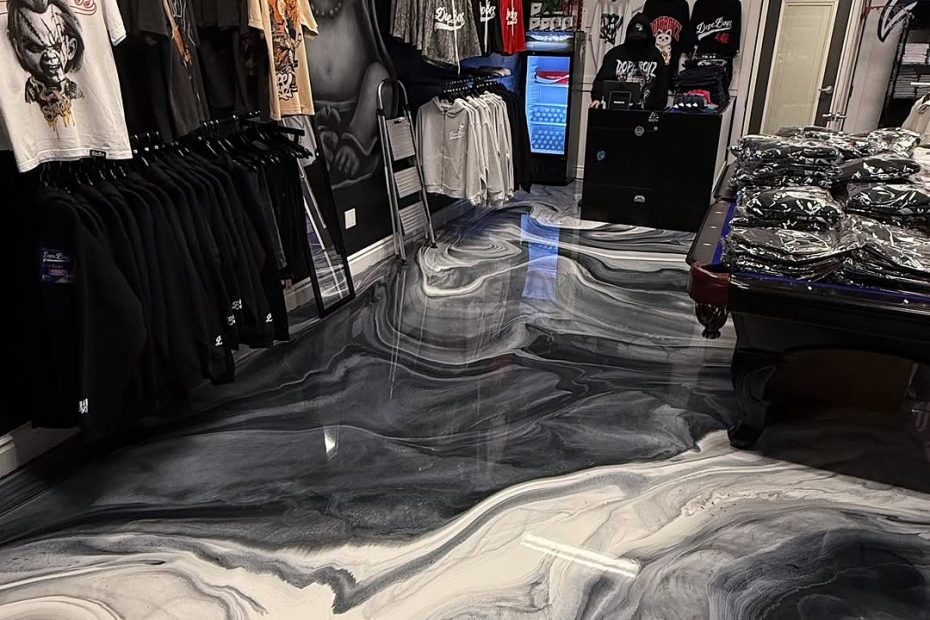
Most store owners put off redoing the floor because they assume the store has to close. Usually it does not. The bigger question is what is already on the floor and whether it can stay. A worn coating that is still stuck down can take a fresh topcoat in a few nights. One that is letting go has to come up first, and that changes the whole schedule. Johnny settles that question on the first visit, then plans the work in zones after hours. The retail flooring page goes through fixture wear, entry grip and brand colors for Ceres stores.
The tap and scrape test
A recoat only works when the old coating is still bonded. Johnny checks that by hand before he talks about anything else. He taps the floor with a hard tool and listens. Sound coating gives a solid click. A hollow, papery note means air or moisture under the film, and the coating there is already loose.
Then he scrapes. A sharp blade at a chipped edge shows whether the coating holds tight or lifts in a strip. He checks at the front door, along the main aisles, under spots where fixtures used to sit and anywhere water gets tracked in, since those are the places a coating lets go first.
He also looks for the quieter signs. Bubbles or blisters point to moisture coming up through the slab. Yellowing and chalky patches near the windows mean the old topcoat was not built for sun. A floor can pass the tap test and still need a moisture check if blisters show up, because a new topcoat over a damp slab just adds another layer to lift.
When a recoat is enough
If the coating holds everywhere Johnny checks, the job gets much smaller. The floor is cleaned hard to strip off wax, mop residue and anything that could keep new resin from sticking. Then the whole surface gets a scuff sand, enough to dull the gloss and give the new coat something to grab.
Chips and worn spots are patched and feathered in. After that, a fresh polyaspartic topcoat goes down. It brings back the gloss, covers light scratches and gives the store a hard wearing surface again, while the color underneath stays exactly as it was.
A recoat moves fast. There is no grinding to bare concrete in most of the store, so there is less dust and fewer nights. For a store that cannot spare much floor at once, that difference is often what makes the job possible at all.
A recoat is also the time to fix small things that bothered you about the old floor. A topcoat can go down in satin instead of gloss if the old shine showed every scuff, and a fine grit can be added at the entry while the rest of the store keeps its finish. Ask about those before the first night, since they change what gets mixed.
When the old floor has to come up
If the coating sounds hollow in more than a few spots, lifts in sheets or shows blisters across the floor, it comes off. Laying new resin over a coating that is letting go only buys a bigger peel later, and the new floor fails with the old one underneath it.
Taking it up means grinding the old coating down to bare concrete, then opening the slab to a CSP 2 or CSP 3 profile so the new primer bites. Cracks get chased out and filled. If moisture caused the blisters, it gets tested and a moisture-mitigating primer goes down before anything else.
A regrind takes more nights and throws more dust, even with vacuums on the grinders. Merchandise near each zone gets covered or moved further back. It is more work, and it is the only way to get a floor that stays down.
Planning the nights
Once Johnny knows which job it is, he and the owner split the store into zones, usually along aisles or fixture lines. Some stores do halves. Others do four or five smaller sections. The register area and fitting rooms tend to go last, on the slowest nights of the week.
Each night follows the same pattern. After closing, the zone gets cleared, prepped and coated, then closed off with tape and signs while it sets. When it is hot out the resin’s open time gets shorter, so the crew keeps batches small. The rest of the store opens the next morning as usual.
Leave a night of slack in the plan. A delivery that lands on a coating night, a zone that needs extra crack repair or a damp slab that wants another test can push one section back a day, and a spare night keeps that from spilling into a weekend.
Write the plan down before the first night: which zone, which nights, where the stock from each zone goes and who on staff opens up. Foot traffic on a new section is usually fine the next morning, and fixtures go back on a schedule Johnny gives you for the system and the temperature.
The morning after each zone
Tell your staff what to expect. They will find tape and a sign across one area and the stock that lived there sitting somewhere else for a day. A short note at the register about which aisle is closed saves a lot of questions from regulars looking for their usual rack.
When fixtures go back, carry them. Felt pads on table legs and casters that actually spin protect the new surface from the first day.
Check the seam between the new zone and the next one before the following night. On a recoat it should be hard to find. On a full regrind with a metallic, Johnny places seams at aisles or fixture lines so any change in the pattern looks planned.
Questions store owners ask
How much of the store gets coated at once?
That depends on the layout and how much floor you can give up for a night or two. Some stores do it in halves, others in four or five zones. Johnny maps the sections with you during the site assessment, based on where the register, fitting rooms and entry are, so the store can stay open the whole time.
Will the new sections match the first ones?
Solid colors and flake blends match closely from one night to the next, since the same material goes down the same way. Metallics vary by nature, and each section moves a little differently. Johnny plans the seams at aisles, fixture lines or doorways, so any change in the pattern lands where it looks deliberate.
Do all the fixtures have to come out?
Everything sitting on the section being coated has to move, but only that section. Rolling racks are easy. Wall units and counters fixed to the floor take more planning, and sometimes the coating stops neatly at their base. Johnny walks the store with you and marks what moves each night.
Store floors in Ceres are a regular drive for the Hollister crew. Visit the Ceres page, read the retail flooring details, ask Johnny to tap and scrape your floor, or call (650) 797-3040. Own a shop with chairs instead of racks? The barbershop flooring page is for you.
Find out if your floor can stay
Johnny tests the old coating, checks for moisture and maps out the nights so you never have to close. He does not charge for that first look.
Call (650) 797-3040