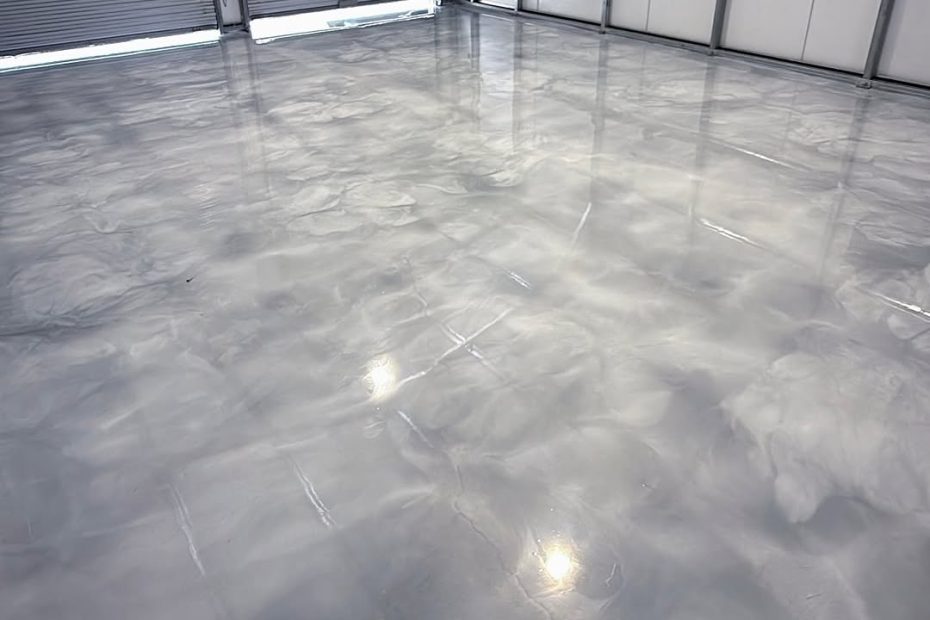
Where a Metal Building Floor Fails First: the Roll-Up Door
Steel buildings and ag shops wear their floors from the outside in. The strip under the roll-up door takes weather, wheels and grit before anything else does.
Walk the floor of almost any steel building that has been coated for a few years and the damage tells you where the doors are. The middle of the slab looks fine. The first few feet inside each roll-up door are chipped, stained and worn to bare concrete in the wheel paths. That edge is where Johnny starts every walk-through on a metal building, because it decides how the rest of the floor gets built. Harvest scheduling, wash-down systems and color choices for a windowless shop are covered on our warehouse flooring page for Ceres.
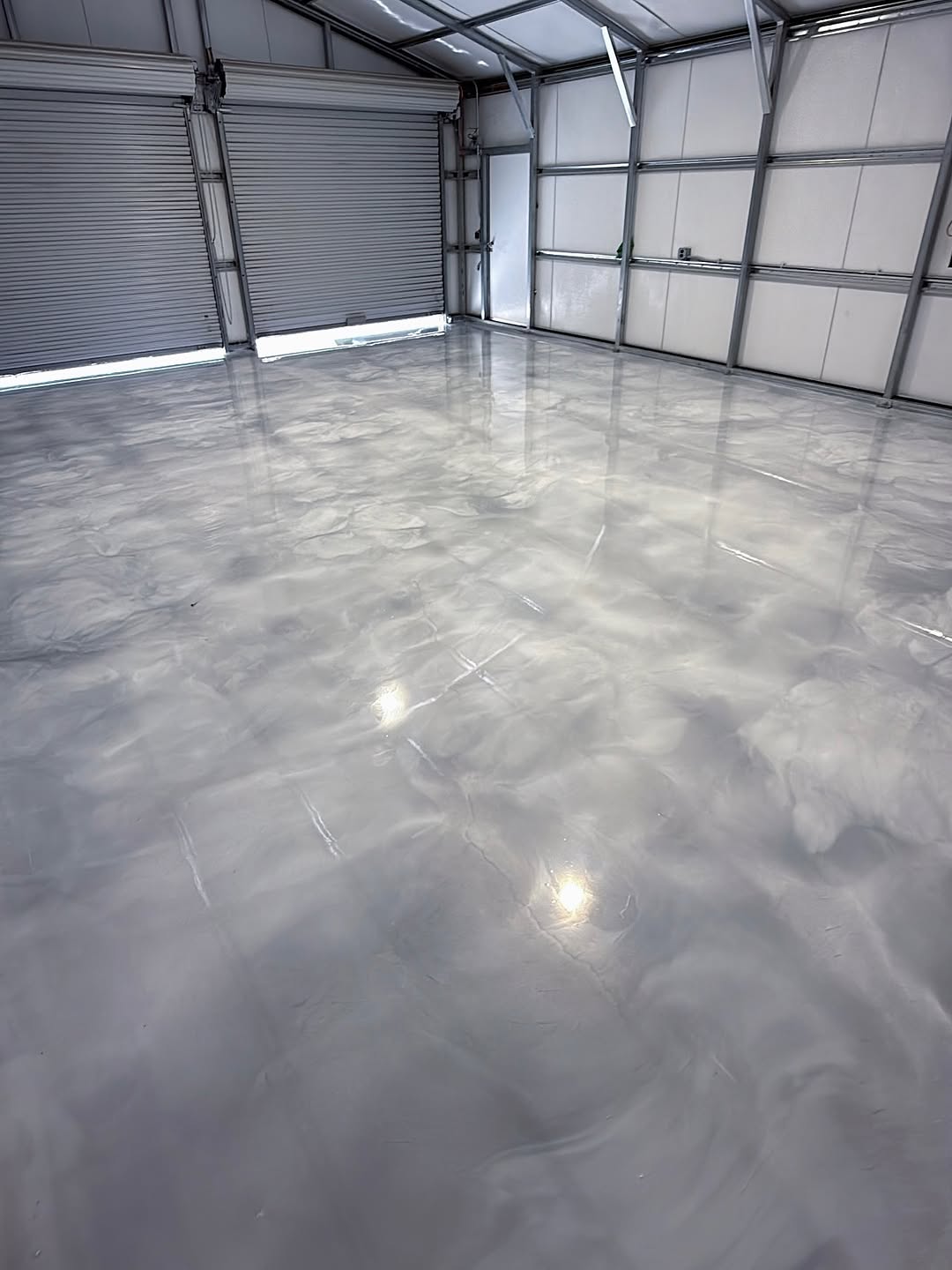
What comes in under the door
A roll-up door is a big hole in the wall. When it is open, dust from the yard drifts straight onto the slab edge. In summer the sun bakes the first few feet of concrete while the back of the building stays cool. When it rains, water runs under the door seal and sits along the threshold.
Each of those works on a coating differently. Grit gets ground in by every tire that rolls through. Heat stresses the bond at the edge. Standing water finds any spot where the coating was thin or the prep was rushed, and starts lifting from there. Put all three in the same few feet of floor and you have the reason the door strip fails years before the rest.
So the door strip gets its own plan. It is ground harder, inspected closer and finished more carefully than the open floor behind it. The threshold, the coating edge, the sun on the first few feet and the joints near the door each get looked at on their own.
The threshold and the door seal
Most metal buildings have a slab edge at each door that was poured and finished in a hurry. The concrete there is often rougher, sometimes lower than the floor inside, and frequently cracked along the line where the door track meets the slab. Rain that gets past the bottom seal follows that low spot and sits.
Before any coating goes down, Johnny looks at how water behaves at each door. A worn bottom seal is cheap to replace and stops a lot of the problem at the source. A threshold that dips inward may need a small patch so water drains out instead of pooling against the coating. Cracks along the door line get chased out with a blade and filled with a rigid polyurea, then shaved flush.
Oil and old sealers collect at doorways too, tracked in from the yard on every tire. They get ground out completely. Resin laid over a contaminated threshold is the first piece of a floor to peel.
Where the coating stops at the door line
The way a coating ends matters as much as how it starts. A floor that stops a few inches short of the door leaves a raw lip of concrete next to a raised coating edge. Every wheel that crosses it bumps that edge, and over time it chips and peels back into the building.
The better approach is to run the coating right out to the door line and lock the edge in. Johnny grinds a shallow saw cut, called a key, along the termination so the coating fills it and ends inside the concrete instead of sitting on top. The edge comes out flush, and there is nothing for a tire or a pallet jack to catch.
Where the slab steps down outside the door, the coating wraps the edge cleanly or stops at the key, depending on how the doorway is used. Either way, the last inch of coating gets the same attention as the first, because that inch is what keeps the rest of the floor attached.
Heat cycling in the first few feet
On a hot afternoon with the doors up, the concrete just inside a roll-up door can sit in direct sun while the slab deeper in stays shaded. At night it cools off. That daily swing makes the door strip expand and contract more than the floor around it.
A coating that is well bonded moves with the concrete. One that is barely attached feels that movement as stress at its weakest spot, which is usually the edge or a crack. Hairline cracks near doors can open and close with the heat, too, so a rigid fill there has to be backed by good prep or it pops out.
A polyaspartic topcoat helps on this strip because it holds its color in the sun instead of yellowing, and it handles the surface heat well. Under it, the real defense is bond. Grinding to a CSP 2 or CSP 3 profile and priming properly is what lets the coating ride out the heat rather than fight it.
Wheels at the joints near the door
Forklifts and pallet jacks are hard on joints, and the joints near the doors take the most traffic. The small, hard wheels on a pallet jack drop into a saw-cut joint and slam the far edge on the way out. Do that a few hundred times a week and the concrete edge spalls, the coating chips with it, and the joint becomes a trench.
Damaged joint edges get repaired first so the wheel has a solid shoulder to roll over. Then the joint is either filled or honored, depending on whether it still moves. Lanes that carry a forklift every day get a heavier build than a corner that holds a parts shelf.
After the floor is done, a walk-off mat or a steel grate just inside each door catches yard dirt on the first few turns of a tire. That is grit that would otherwise get dragged across the whole building and ground into the door strip first.
Questions about metal building floors
Can the roll-up doors stay open during the job?
Some airflow helps, but wide open doors on a dusty or windy day put dirt in the wet resin. Most jobs run with the doors cracked or closed and fans managed, and the doorway section gets poured when the yard outside is quiet. Johnny plans that around your loading schedule so trucks and pallets still have a way in.
Do the control joints get filled?
It depends on how the slab has moved. Joints that have stayed put can be filled flush with a semi-rigid filler, which gives forklift wheels a smooth path across them. Joints that still move get honored instead, with the coating stopped clean at each edge. Johnny reads the slab and tells you which approach he is taking.
Can a worn door strip be fixed without redoing the whole floor?
Often, yes. The damaged strip gets cut back to coating that is still bonded, ground, rebuilt and topcoated, while the rest of the floor stays as it is. The repair may show a faint line where new meets old, so Johnny will usually square it off at the door line or a joint, where it reads as intentional.
Gold Coast Resin is a Hollister company that coats shop and storage floors in Ceres. See the Ceres page, read the warehouse flooring details, ask Johnny to walk your building, or call (650) 797-3040. If part of the building shows off equipment or cars, the showroom flooring page is worth a look.
Start with the floor at the door
Johnny walks the thresholds, the door seals and the forklift lanes, then tells you how the edges get built, and the walk costs you nothing.
Call (650) 797-3040