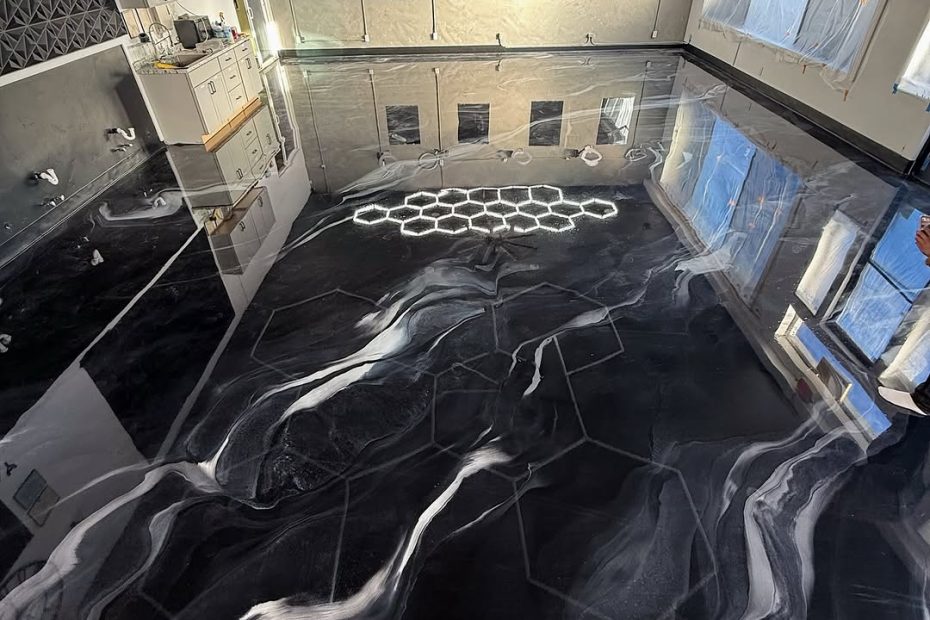
What Barber Chairs and Clippings Do to a Shop Floor
A barbershop floor takes real abuse in a few small spots and a hundred little messes everywhere else. Knowing where it fails is most of building one that lasts.
Look at a shop that has run a few years on bare or painted concrete and you can read the floor like a schedule. A dull ring sits around every chair. Oil has darkened the concrete beside each station, and a gray film of clippings has worked into the pores near the door. Johnny sees that floor a lot. A coated floor fixes most of it, as long as it is built for the spots under the chairs and cleaned the right way afterward. Grip at the wash bowls, closed-day scheduling and color choices are all on our barbershop flooring page for Ceres.
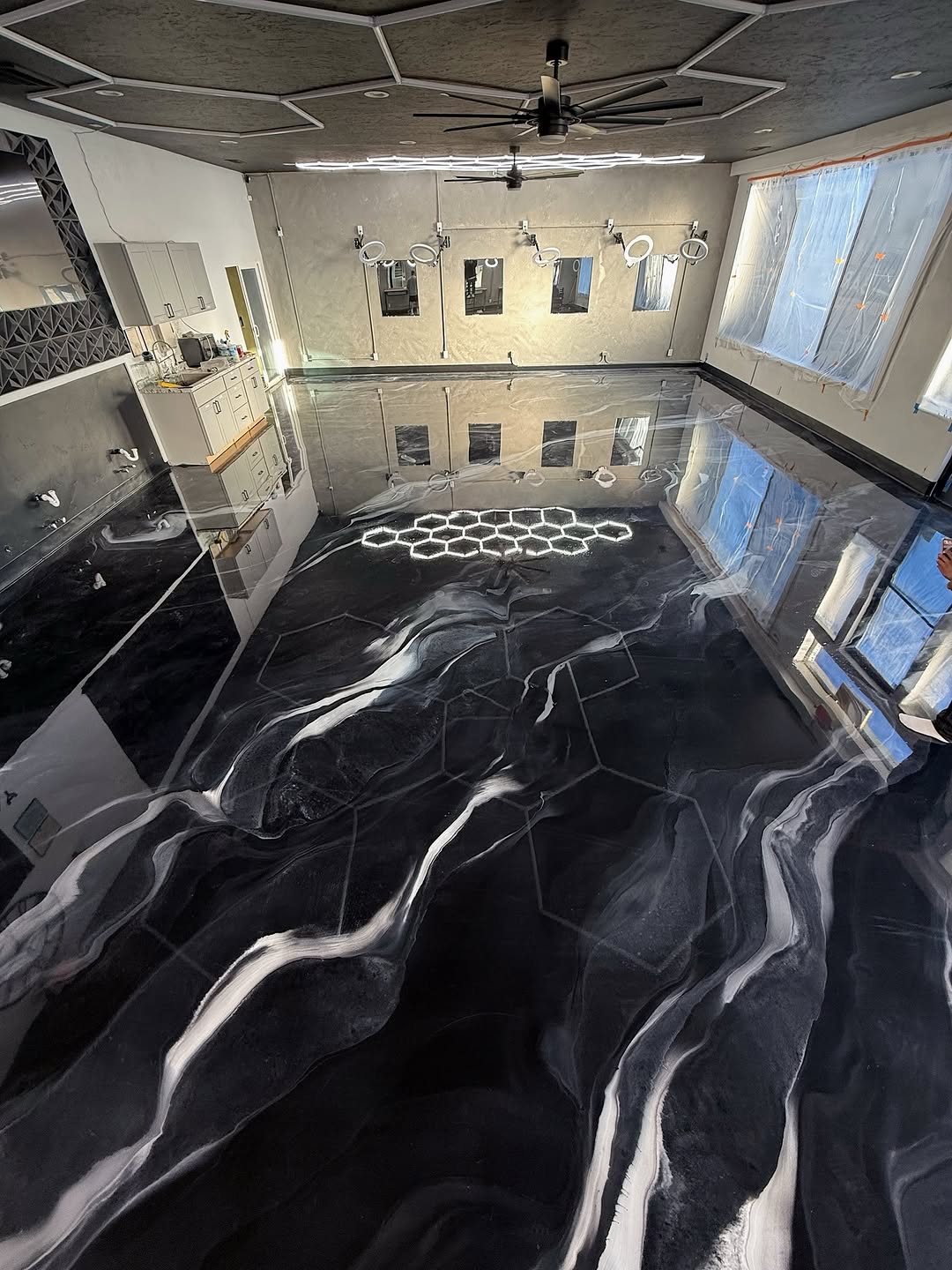
The ring a chair base wears in
A hydraulic barber chair sits on a heavy round base, and the seat turns on top of it all day. The base barely moves, but every pump of the pedal, every swivel and every time a barber leans on the arm rocks it a little. Over months that rocking grinds at whatever is underneath. Grit makes it worse. A few clippings and a little sand from someone’s boots get trapped under the edge of the base and act like sandpaper with every rock.
The fix starts under the coating. Johnny grinds the whole slab to a CSP 2 or CSP 3 profile so the primer has something to bite, then builds the floor thick enough at the stations that a little rocking never reaches the base coat. The polyaspartic topcoat is the layer that takes the wear, and it is the layer that gets refreshed years from now if a ring ever starts to show.
Plenty of shops also set a round mat under each chair. The mat spreads the load and takes the rocking before the floor does, which is the cheapest protection a station can get.
Bolted chairs and freestanding chairs
How the chair meets the floor changes the job. A freestanding chair rests on its own weight. It comes out the night before, goes back after the floor cures, and the only question is where it sits. Those chairs can creep a little over time, and a base that wanders an inch spreads its wear into a wider, fuzzier ring.
A bolted chair is locked in place, which keeps the wear in one tight circle. It also means holes in the slab. Before anything is ground, Johnny marks every bolt spot. The anchors come out, and the old holes get filled flush during crack repair so the coating runs over them in one smooth layer. Once the floor has cured, new anchors go in at the marks.
Drilling through a new floor is done carefully, with a sharp bit and light pressure so the coating does not chip around the hole. A bead of sealant around each anchor keeps disinfectant and mop water from sitting in the gap. If you have been meaning to move a station or add one, the time to decide is before the pour, while the floor is open and nothing has to be drilled twice.
What a worn ring looks like on three floors
On painted concrete the ring shows up fast. Garage floor paint is thin and soft, and within months the circle under a busy chair wears through to gray concrete with flakes of paint curling at the edge. Mop water gets under those curls and the peeling spreads outward.
A thin epoxy kit from the hardware store lasts longer but fails in the same shape. The gloss goes first, leaving a dull halo. Then the color thins out until the concrete shadows through. Because those kits often go over a slab that was only acid washed or barely cleaned, the coating can also lift in a sheet once the edge is broken.
A full build ground into the slab wears differently. The topcoat dulls in a circle, and that is usually the whole story. The color and the base coats underneath stay intact because the rocking never gets through the topcoat. Fixing it means a light scuff and a fresh polyaspartic coat, done on a closed day with the chairs set aside. Nobody has to grind the floor back to concrete.
Clippings, disinfectant and blade oil
Hair is the obvious mess. Short clippings work into anything with texture or pores, and bare concrete is nothing but pores. A sealed resin floor gives them nothing to hang onto, so a broom or a dust mop moves them in one pass instead of three.
The liquids are sneakier. Disinfectant jars get knocked over. Spray bottles drip all day. Clipper oil and blade wash land around every station, and oil darkens bare concrete in a halo nobody can scrub out. A topcoat sealed wall to wall keeps all of it sitting on top, where a damp mop picks it up.
What you clean with matters just as much. A pH-neutral cleaner and warm water handle the daily mop. Heavy degreasers and strong solvents can dull a topcoat over time, so leave them for the parking lot. Wipe up spilled disinfectant the same day instead of letting it sit overnight under a station.
A cleanup routine for the day, the week and the year
Every day, sweep or dust mop between clients and again at close, paying attention to the floor around each base where hair and grit collect. Damp mop the whole floor at night with a pH-neutral cleaner, and wipe any oil or disinfectant drips at the stations before you lock up.
Once a week, pull the mats. Clippings pile up under them faster than anywhere else in the shop, and grit trapped underneath scratches the very spot the mat is supposed to protect. Sweep and mop under each one and let the floor dry before the mat goes back. Check the backings while you are down there. Rubber and vinyl backings can trap moisture and leave a stain or a sheen mark on the finish, so pick mats with a backing made for coated floors.
Once a year, look hard at the floor around each chair in good light. A dull circle in the gloss is the signal for a scuff and a fresh topcoat. Catching it at that stage keeps the job small. Johnny goes over all of this before he leaves, using the bottles you actually keep in the back room.
Questions barbers ask about the floor
What kind of mat is safe on a coated floor?
Pick mats with a backing made for coated floors. Rubber and vinyl backings can trap moisture against the finish and leave a stain or a dull patch where the mat sat. Pull them once a week, sweep the clippings out from under them and let the floor dry before they go back down.
Do bolted chairs go back into the same holes?
Usually, yes. The bolt spots get marked before the chairs come out, the old holes get patched flush during prep, and new anchors go in at the same marks once the floor has cured. If you want to move a station while the floor is open, say so before the pour so the layout gets settled first.
How often does the topcoat need a refresh?
That depends on how many chairs you run, how busy they are and how well grit gets swept up. Look at the floor around each base once a year. When the gloss turns dull in a circle, it is time for a scuff and a fresh topcoat. Johnny can look at it and tell you if it is ready.
Johnny drives over from Hollister for shops in Ceres. Start with the Ceres page, read the barbershop flooring details, ask Johnny to come look at the shop, or call (650) 797-3040. The retail flooring page covers the store floors a few doors down.
Have Johnny look at the shop on a closed day
He checks the slab, the chair bases and the bolt spots, then tells you how the floor gets built. There is no charge for the visit.
Call (650) 797-3040