Why Ridgemark Cart Bays Get Full-Broadcast Flake
A cart comes back off the course with wet tires and turf stuck to them, and it rolls straight onto the garage floor. That one evening habit decides more about the right coating for a Ridgemark bay than color ever will.
Many Ridgemark garages hold a golf cart beside the cars, and the cart is the hardest user that floor has. It turns tight, it brings in water and clippings, and it parks in the same two tracks every night. Johnny builds most of these bays as full-broadcast flake, and the reasons have more to do with grip and wear than with looks.
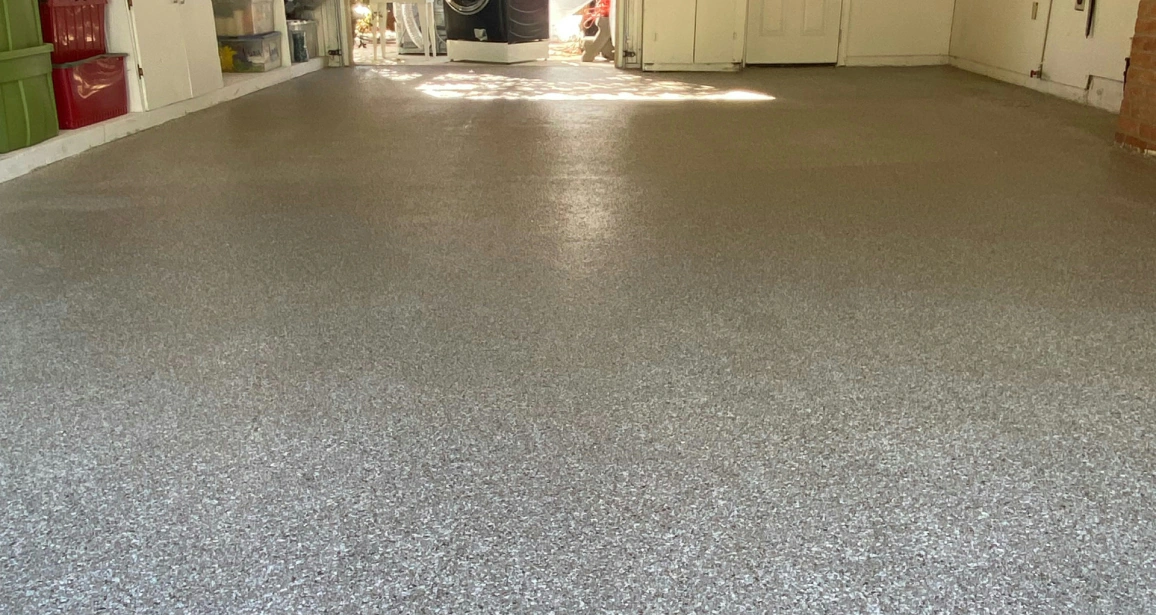
What a Wet Cart Tire Does on a Smooth Floor
A cart that spent the afternoon on the course picks up water from damp turf and sprinklers, and it carries that water into the garage on its tires. On bare concrete nobody notices, because a plain slab has enough surface roughness to grip. A glossy coating changes that. A thin film of water on a smooth, hard finish gives rubber very little to hold, and the cart is usually turning at that exact moment to line up with its spot.
The cart itself is rarely where the trouble starts. The trouble is the person stepping off it in wet golf shoes, or the second person walking in behind it across the same wet tracks. Most garage slips happen at walking pace, on a floor that felt perfectly fine that morning when it was dry.
So the first thing Johnny asks about a cart bay is simple: does the cart ever come home wet? If the answer is yes even a few times a season, the floor needs texture built into the finish, and that points straight at flake.
The stretch just inside the door deserves its own look. Water dripping off a parked cart runs toward the lowest part of the slab, and on many garages that low spot sits right at the threshold where everyone walks in from the drive. A glossy finish there stays slick long after the rest of the floor has dried. Texture across the whole bay means there is no single place where a wet shoe meets a smooth surface. Mats slide around, and grip tape peels up under a turning tire, so we build the grip into the floor itself.
Broadcast to Refusal, Then Scrape and Seal
A full-broadcast flake floor starts with a pigmented base coat rolled over the ground slab. While that base is still wet, we throw chips across it by hand and keep throwing until the resin will not accept another one. That point is called refusal. A floor broadcast short of refusal leaves thin patches where the base shows through, and those patches wear first, usually right where the tires turn.
Once the base cures, the loose chips get swept up and the standing edges get scraped down flat so nothing snags a sock or a broom. Then the clear seal goes on. It wraps every chip, and the shape of those chips under the clear coat is what gives the surface its grip.
How much texture you end up with is a choice. A lighter seal leaves more tooth for a wet tire and a wet shoe. A heavier seal feels smoother and mops a little easier. For a cart bay we lean toward tooth, and we talk that through before anything gets mixed. The system itself is laid out on our Ridgemark flake epoxy page.
The Grind Under the Grip
Traction on the surface only helps if the coating stays bonded to the concrete, and a cart pivoting in one spot every evening puts a twisting load on the floor that a parked car never does. That bond starts with the grind.
Garage slabs in Ridgemark are generally well finished, troweled tight and smooth. That dense top layer looks nice and gives resin almost nothing to key into. Johnny diamond-grinds the whole floor until it has a real profile you can feel with your palm, then runs a HEPA-shrouded vacuum over it so the grinding dust does not settle back and weaken the bond.
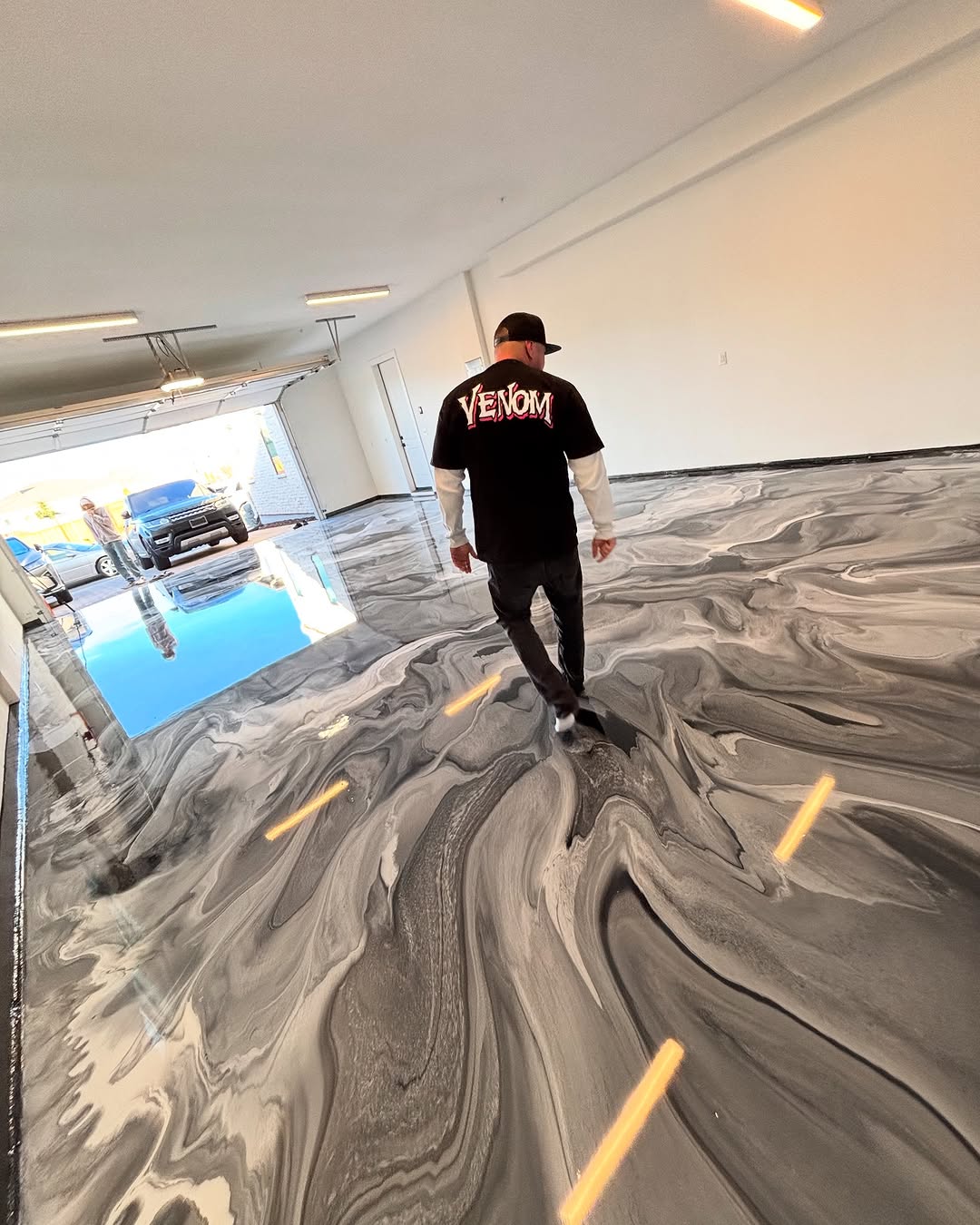
Hiding the Turn Marks and the Summer Dust
Every cart bay develops a path. The tires roll in on the same line, pivot in the same place, and leave faint scuffs right where the turn happens. On a solid color, and especially on a high-gloss finish, those marks show from the doorway. Flake breaks them up. The eye reads the chip pattern first, and a scuff disappears into it.
Blend choice does a lot of that work. Summers here run hot and dry, the bay door spends a lot of time open, and a fine layer of foothill dust settles on everything. Very dark blends show that dust within a day. Very light blends show tire marks. Mid-tone grays and tans with some darker and lighter chips mixed through hide both, which is why most cart bays we build land somewhere in that range.
A bolder color can still work. We just want you to look at the blend in your own garage light, with the door rolled up, before you commit to it.
Summer Slabs, Open Doors, and a Topcoat That Copes
On hot afternoons a closed garage heats the slab well past the air temperature, so summer installs here start early in the day.
The topcoat we put over flake is polyaspartic. It stands up to the sun that comes through an open bay door, it takes foot traffic the same day it goes down, and it copes with both the hot and cold ends of the year better than a rigid epoxy clear. More on that coat is on the polyaspartic coatings page for Ridgemark.
Chips for grip and a polyaspartic clear for sun is the build we recommend for most cart bays here.
Questions From Cart Owners
Will a textured flake floor be hard to keep clean?
No. The texture is fine enough that a push broom and a damp mop handle normal dirt, turf clippings and dust. A floor sealed for more grip holds a little more grit, so you may sweep it a bit more often. Most owners find that an easy trade once they have felt the difference under a wet golf shoe.
How soon can the cart go back in the garage?
You can walk on the polyaspartic topcoat that evening. If the slab is sound and dry, the cart can usually roll back in the following day. A damp slab or a cold week can push that out, and Johnny confirms the timing on install day.
What about water dripping off the cart where it parks?
A cart parked wet drips in the same spot every night. Flake under a sealed clear coat keeps that water on top where a mop or squeegee can reach it, and the chip texture keeps the spot from turning slick. If a patch stays damp even when the cart is out, that points to the slab, and Johnny tests it before any coating goes down.
Our shop in Hollister is minutes from Ridgemark. Start with the Ridgemark overview, send Johnny a note about how the cart comes in, or call (650) 797-3040.
Show Johnny Where the Cart Parks
He checks the slab, reads it for moisture, and holds flake blends up in your own garage light. The site assessment is free.
Call (650) 797-3040