Who Actually Needs the One Day Floor in Modesto
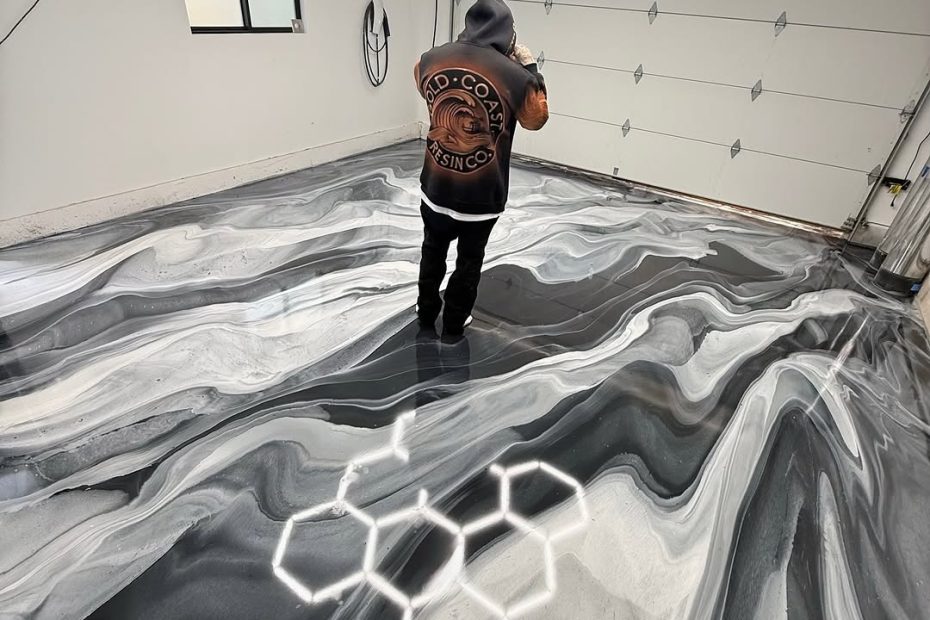
Polyaspartic cures fast enough that a garage or a working commercial room can be back in service the following day rather than the following week. That speed is worth real money to some clients and nothing at all to others, and Johnny will tell you which one you are before he prices it.
Polyaspartic is a polyurea chemistry rather than an epoxy, and three practical differences follow from that: it cures in hours instead of days, it does not yellow in sunlight, and it will still cure when a slab is cold enough that epoxy sits there uncured. Those are genuine advantages. They are also the only advantages, and whether they are worth the difference depends entirely on what is waiting on the room.
Price the Downtime, Not the Floor
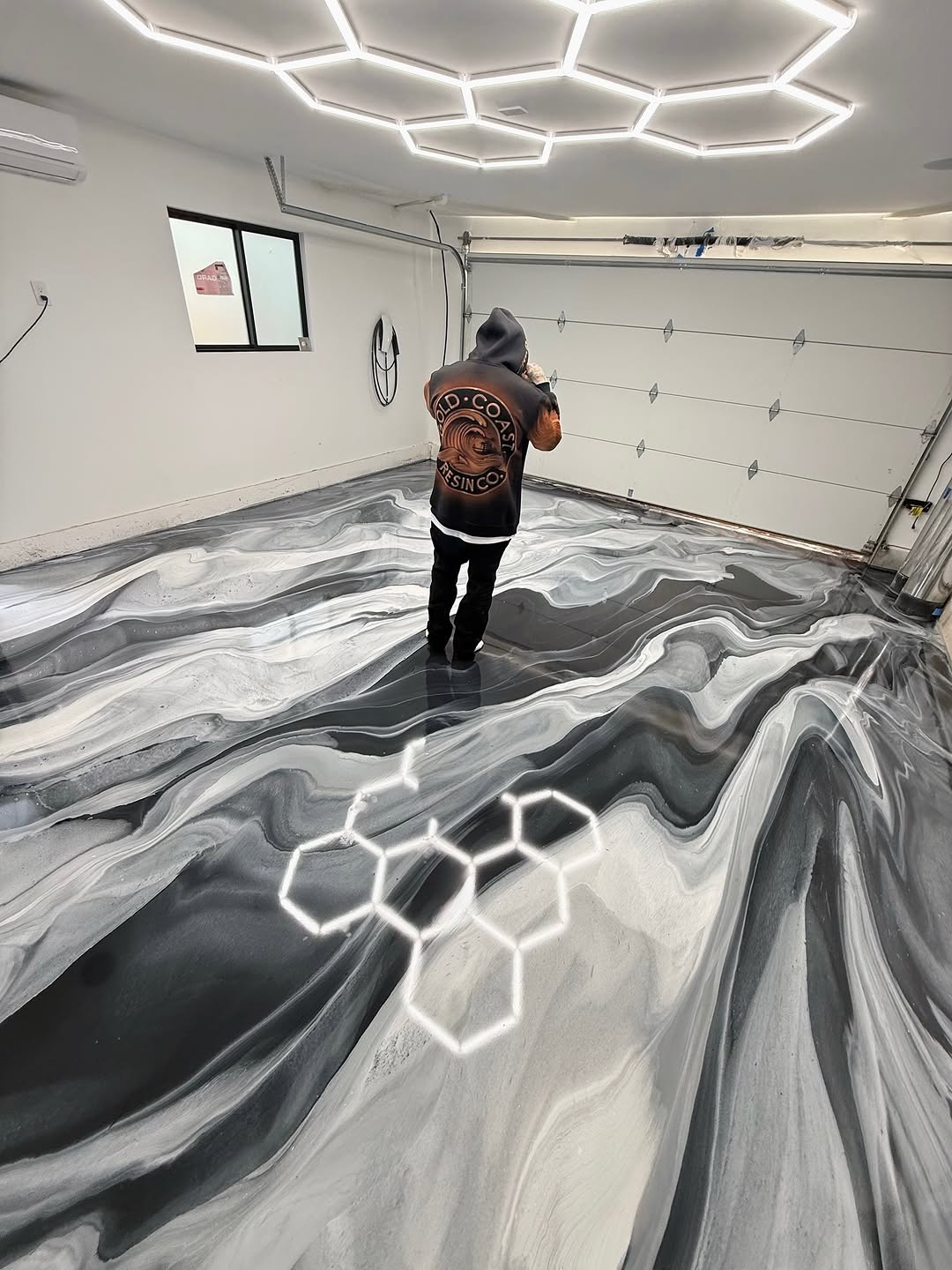
The honest way to make this decision is to work out what a closed room costs you rather than comparing square-foot numbers. If a space being out of service for three days costs you nothing, a standard epoxy with a good topcoat is the sensible spend and we will say so plainly.
If those three days cost you a day of production, a weekend of trade, or a delivery window you cannot move, polyaspartic pays for itself on the first install and every one after. A working commercial floor that cannot close usually clears the price difference in one avoided closure, which is why most of the polyaspartic we install in Stanislaus County goes into rooms with a business running through them.
Residential is where the math often points the other way. A garage with no deadline gains speed you were not going to use. The exception is a bay that has to be usable for a specific date, a move, a sale, or an event, and in that case grinding and coating in one day beats losing the better part of a week. The full breakdown sits on our Modesto polyaspartic page.
Valley Heat Shortens an Already Short Window
The trade for that speed is working time. Where an epoxy gives a comfortable window to spread and adjust, polyaspartic sets fast enough that the crew has to be organized and moving before the first kit opens. That is a crew problem rather than a client problem, but it does mean this is not a system to hand to a first-time installer.
Modesto heat compresses it further. Resin cures on temperature, so a slab holding valley summer heat pulls the pot life in from the datasheet number toward something considerably tighter. The crew that gets away with a leisurely approach in a mild coastal garage runs out of material time in a Modesto bay in July.
The answer is the same one we use on every heat-sensitive pour here. Start early, keep product cool until the moment it goes down, work the floor in planned sections rather than as one open field, and have the sequence agreed before anybody mixes anything. Speed on the floor comes from preparation off it.
Sun-Exposed Floors Where It Is the First Answer
On patios, entries and anything behind glass, polyaspartic is often the honest first recommendation rather than an upgrade. Standard epoxy ambers under strong valley light, and the usual fix is to put a UV-stable topcoat over it. Polyaspartic is UV-stable through the chemistry itself, which is a simpler and more durable answer for the same problem.
That difference shows up over years rather than weeks. A coating protected by a sacrificial UV layer depends on that layer staying intact; a chemistry that is inherently stable does not care where the surface has been scuffed. On a covered patio in this valley, where the light is strong even in shade, that distinction is worth having.
There is a second valley advantage worth naming. Polyaspartic tolerates the local temperature swing better than epoxy does, both during cure and in service. A Modesto garage that runs over a hundred in August and near freezing at a January dawn puts real thermal stress on a coating, and a polyurea handles that cycling with less brittleness. It also holds its hardness at temperature, which makes it strong against hot tire pickup.
When Johnny Says Epoxy Instead
The recommendation goes the other way more often than people expect. A residential garage with no date attached, no sun exposure worth worrying about, and no reason to hurry gets a standard epoxy build with a good topcoat, and the difference in price stays in your pocket or goes into a heavier flake broadcast where it does more good.
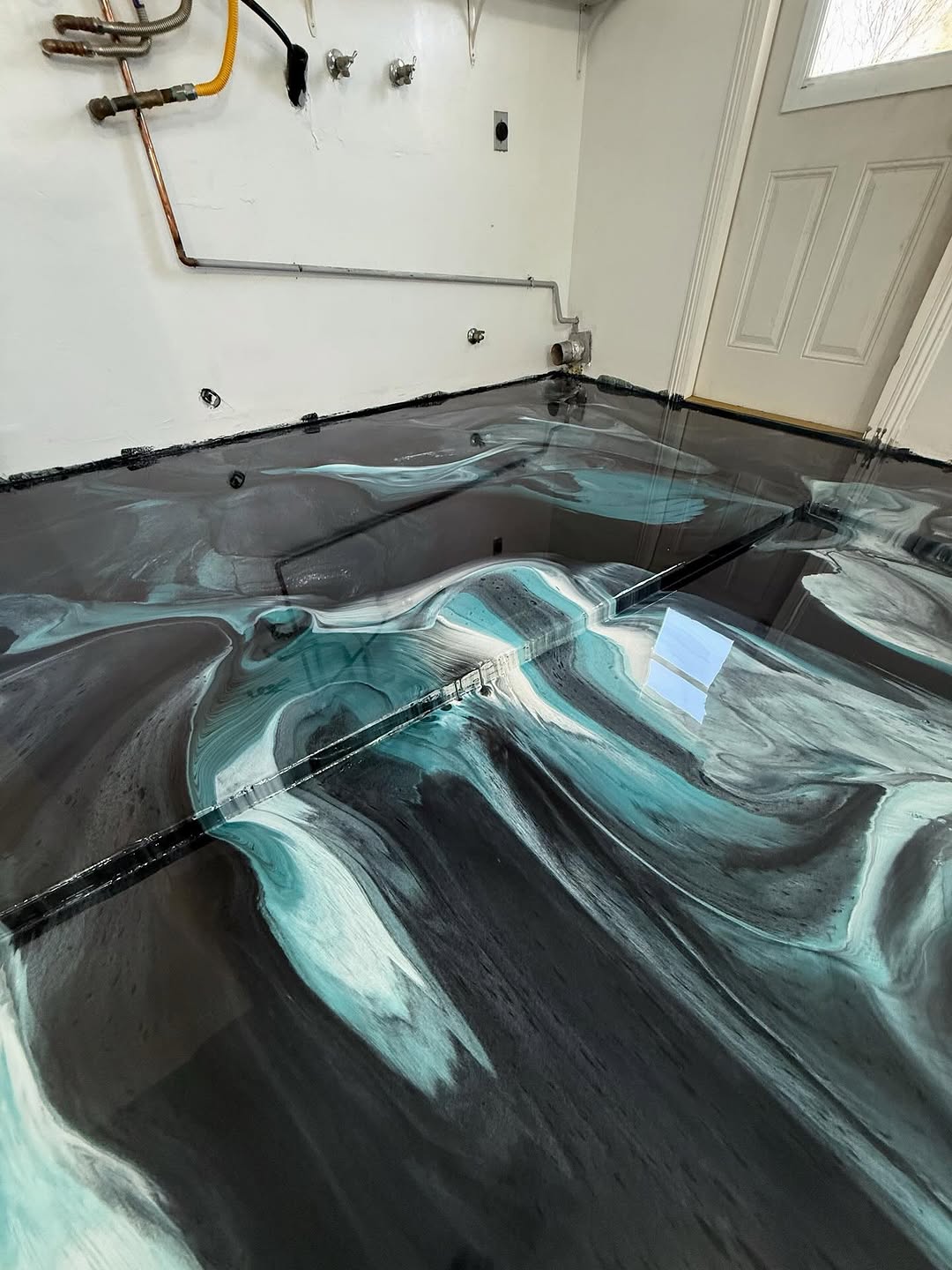
A room where the finish matters more than the speed is another case. Where a client wants a poured decorative floor and has the time to give it, the slower system allows more control over the material and a longer window to work it, and that shows in the result.
There is also a straightforward reality about prep. If a slab needs real repair, the coating chemistry is not what sets your timeline. Grinding, crack repair and moisture testing take what they take, and a one-day chemistry laid over three days of preparation is still a multi-day job. Johnny tells you at the walkthrough which category your slab falls into rather than after the deposit.
How It Fits With the Other Systems
Polyaspartic is frequently the clear topcoat over a flake broadcast rather than a floor on its own, and that combination is where it does its most useful work. The flake gives thickness, texture and dust-hiding, and the polyaspartic gives fast cure and UV stability. Most Modesto garages that get a same-week turnaround are built exactly that way.
As a standalone solid-color floor it is common in commercial rooms that need speed above appearance, and it is what makes an overnight commercial turnaround possible at all. It is also what opens the winter calendar, since it cures at temperatures where standard epoxy effectively stops, which in a tule fog January means work that would otherwise wait until spring.
Most residential jobs run as a single day for grind and coat, with the floor walkable that evening and vehicles the following day. Finished work is in the gallery, or call (650) 797-3040 for a free look at the slab and a firm price.
Polyaspartic Questions From Modesto
Is it genuinely a one-day job?
For a standard residential garage, usually yes: grind and prep in the morning, coat in the afternoon, walkable that evening and vehicles the next day. Larger or more damaged slabs need more prep, and prep is what extends a timeline rather than the coating chemistry. Johnny tells you at the walkthrough which one you have.
Will polyaspartic yellow in valley sun?
No, and that is one of its real advantages here. Polyaspartic is UV-stable through the chemistry rather than needing a protective layer added over it. On a patio, an entry, or anything behind glass it holds color where a standard epoxy would amber inside a year or two under this light.
Can you install it during a Modesto winter?
Yes, and it is often exactly why clients pick it. Polyaspartic cures at temperatures where standard epoxy effectively stops working, which opens the cold months for jobs that would otherwise wait for spring. In a tule fog January that can mean getting a floor finished months earlier than the alternative.
Start with garage coatings for a bay, look at a flake system underneath it, or tell Johnny your deadline.
Need the Room Back Tomorrow?
Tell Johnny what is waiting on the floor and he will say whether the fast chemistry earns its place or whether standard epoxy serves you better here.
Call (650) 797-3040