What a Roll-Up Door Lets Onto a Shop Bay Floor
The first ten feet inside a roll-up door take more abuse than the rest of the bay put together. Field dust, grit off tires and drips from parked equipment all land there first.
Turlock shops sit close to farm ground, and in a lot of high-bay suites the roll-up door stays open most of the working day. Whatever the trucks and ag equipment carry in from the fields gets dropped right inside the opening, then pressed into the floor by tires and pallet jack wheels. Johnny looks at that strip first when he walks a shop, because it usually predicts how the rest of the floor will wear. A coating that holds up at the door will hold up everywhere else in the bay.
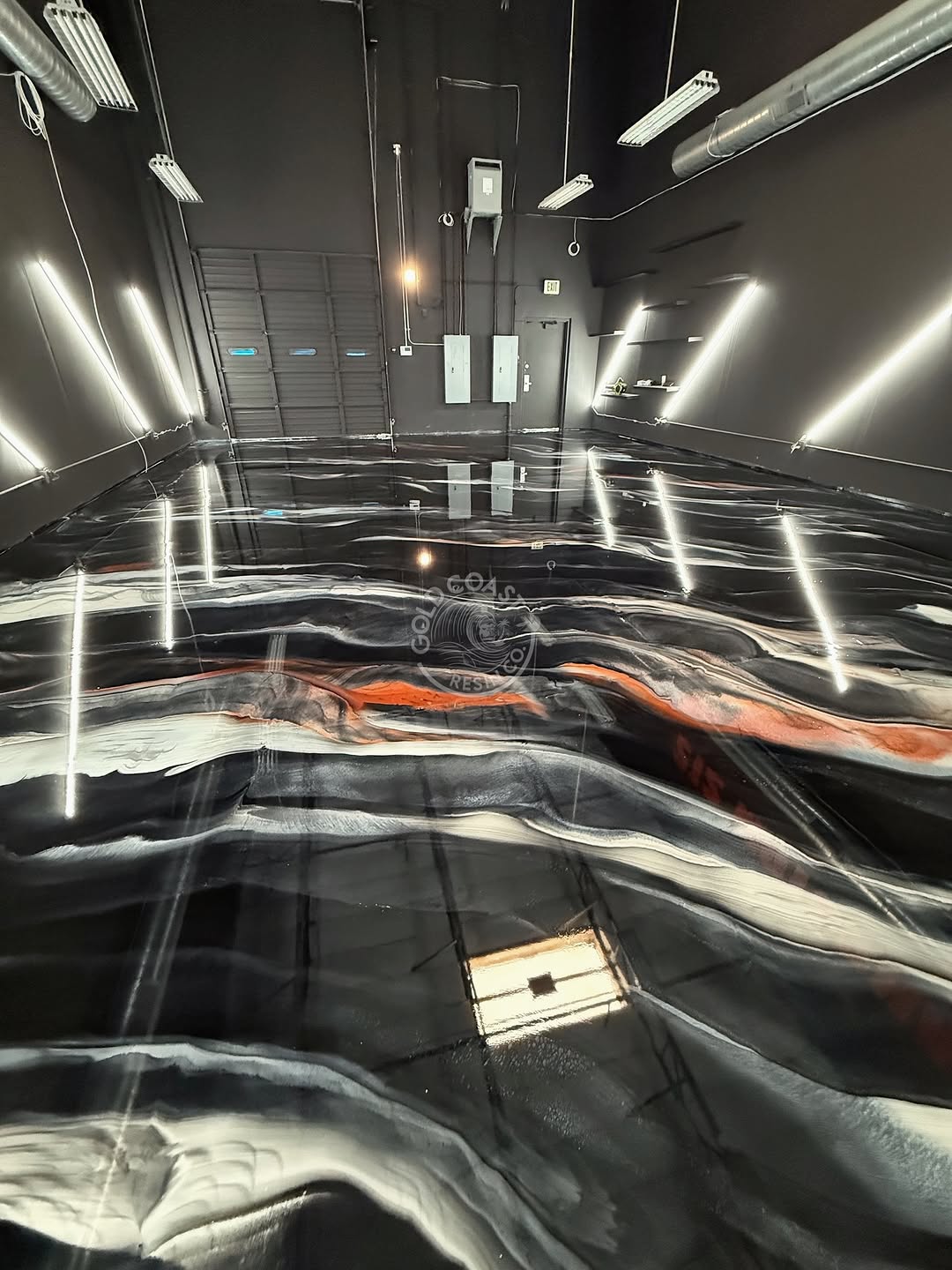
The threshold is where the floor wears first
When a loaded forklift rolls in off the apron, its tires are carrying whatever was on the lot: fine dust, small stones, a little mud after a wet morning. The first few turns of the wheel inside the door shed most of it. That grit then sits on the floor and gets ground down by every pallet jack and hand truck that follows.
On bare concrete it shows up as a worn, darker path. On a thin coating it shows up as dull lanes and, eventually, bare spots where the film has been sanded through. The door edge also takes impact. Pallets get set down hard, forks scrape, and the slab right at the opening is often the oldest and most patched piece of concrete in the building.
Johnny builds that zone heavier than the rest of the bay. He also pays close attention to how the coating ends at the door track, so there is no exposed edge for a wheel to catch and lift.
Hydraulic drips and parked equipment
Service trucks and farm machinery come into Turlock shops for repair, and most of them leak something. Hydraulic fluid, engine oil and diesel end up on the floor under wherever a machine sits for a few days. Bare concrete drinks those fluids, and the stain keeps coming back no matter how often it gets scrubbed.
A sealed resin floor keeps the fluid on the surface where a crew can wipe it up. The catch is that oil already soaked into an old slab will fight a new coating. Before anything goes down, Johnny grinds the floor and looks for dark, saturated areas. Those get cleaned and ground deeper until the concrete underneath is sound, because primer laid over oil-soaked concrete does not bond well and lets go later.
Drip pans under machines that sit for a while still make sense on a coated floor. They keep cleanup quick and stop a slow leak from sitting on the finish for a week.
Pallet jacks, forklifts and the aisle lines
Steel and polyurethane wheels put a lot of weight on a small contact patch. A loaded pallet jack turning in place twists against the floor, and a forklift turning at the end of an aisle does the same thing with far more weight behind it. Those turning spots wear faster than the straight runs between them.
Striping helps more than people expect. Painted lines on bare concrete wear off within a season in a busy shop. Lines laid into the coating system and sealed under the topcoat last as long as the floor, which keeps forklift traffic in its lanes and keeps people on foot out of them.
Decide where those lines go before the floor is coated. Mark out the bays, the aisles, the parking spot for the service truck and the clear zone in front of the electrical panels. Johnny can lay them in as part of the job, so nobody has to tape and paint over a new floor later.
Dry bays and wet rooms need different systems
Everything above assumes a dry floor. A shop bay or a warehouse suite that gets swept and mopped is a good fit for an epoxy system with a hard topcoat. A processing room at a dairy or a food plant is another job entirely.
Rooms that get hosed down with hot water and caustic cleaner every day need a urethane cement system laid thick, pitched to drain and carried up the wall. Some Turlock buildings have both kinds of space under one roof, a dry maintenance bay on one side and a wash-down room on the other, and they get two different floors.
Johnny will tell you which one a room needs when he walks it. If a bay is going to be washed down even once a week, say so, because that changes the material. Our industrial coatings page for Turlock covers the dry shop and warehouse system in more detail, from grinding to topcoat.
Finding a week to shut the bay down
The hardest part of coating a working shop is usually the calendar. A floor needs the bay empty for grinding, the coats and the cure, and in a town tied to the farm economy there are stretches of the year when a shop cannot spare a bay for even a few days.
Most owners plan the work for their slow season. Others split the building and do one bay at a time, moving equipment into the finished side while the next one gets ground. Johnny can phase it either way, and a polyaspartic topcoat gets each section back into service quickly.
Heat matters too. Metal buildings in Turlock run hot through July and August, and the slab gets warmer than the air around it. Resin sets up fast in those conditions, so summer jobs start early in the morning while the floor is coolest. A spring or fall slot is easier on everyone.
Questions from shop and warehouse owners
How heavy does the coating at the roll-up door need to be?
Heavier than the rest of the bay in most shops. Johnny looks at the traffic first: loaded forklifts, pallets dropped at the door, equipment dragged across the apron. He builds the door zone up to match and ends the coating cleanly at the door track, so a wheel has no loose edge to catch on.
Can the floor go down over concrete with old oil stains?
Usually, once the stains are dealt with. The slab gets ground, and dark saturated spots get cleaned and ground deeper until the concrete is sound. Deep stains where trucks park are the usual trouble. Coating straight over oil-soaked concrete is how a floor starts peeling a few months later, so that prep takes as long as it needs.
Will striping hold up under forklift traffic?
Lines built into the coating and sealed under the topcoat wear with the floor instead of sitting on top of it. Painted lines on bare concrete fade fast in a busy bay, which is the main difference. Plan the layout before the job starts so Johnny can lay them in during the install. A sketch of the bays and aisles is enough to start.
Gold Coast Resin is based in Hollister and comes up to Turlock for shop and warehouse floors. See the Turlock page, read about our industrial coatings, ask Johnny to walk your bay, or call (650) 797-3040. If the front of the building is a showroom, the retail flooring page covers that side.
Have Johnny look at the door strip first
He walks the bay, checks the worn path at the opening and the oil spots under the trucks, then tells you which system the room needs. The site assessment is free.
Call (650) 797-3040