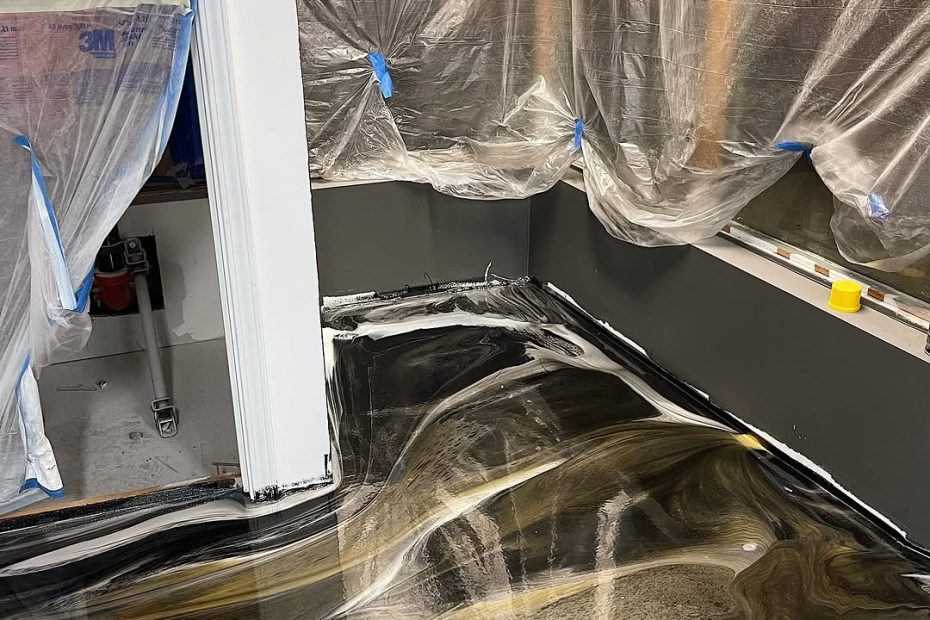
Coating an Eichler Slab in Cupertino: What Radiant Heat Changes
Cupertino holds one of the better collections of Eichler homes in Santa Clara County, and most of those houses heat themselves through the floor. If there is tubing in your slab, that one fact reshapes how the floor gets prepped, which coating belongs on it, and how long the job takes.
An Eichler is easy to spot from the street. Low flat roof, post and beam frame, glass where you expect a wall, and a slab poured right on grade. What you cannot see is that in many of those tracts the slab is also the heating system: warm water moves through tubing buried in the concrete, and there is no ductwork anywhere. Beautiful design, and a serious wrinkle for anyone coating it.
Settle the Radiant Question Before Anyone Prices the Work
Start with the era. Cupertino’s Eichler tracts went up when radiant slabs were a common way to heat a house. Then walk the rooms looking for supply registers in the floor, walls, and ceiling. A radiant house typically has none, and no return grille either. A thermostat with no air handler anywhere to serve it is another strong signal.
The clearest evidence is the manifold, the point where the loops leave and return. It usually sits in a utility closet, on a garage wall, or near the water heater, and it looks like a bundle of small pipes fanning out of one body. Settle this before anyone prices the work, because a cold slab and a heated slab are different jobs.

Why the Heat Goes Off and the Slab Sits Still
A coating cures chemically and bonds to the surface of the concrete, and both of those processes care about what the slab is doing underneath. A slab that is climbing or dropping in temperature is moving, and warmth pushes moisture vapor up toward a film that has not hardened yet. That is where blisters, pinholes, and bond failures come from.
So the system goes off well before we arrive and the slab is allowed to settle at room temperature and stay there through prep, coating, and cure. The product documentation sets a surface temperature window, and that window rules the schedule. We never warm the slab to hurry a floor along, which is the shortcut that ruins the work. Cupertino helps here: no freeze in the forecast, so a few days without floor heat in the milder months is a minor inconvenience.
The Real Risk Is a Grinder Finding a Tube
Mechanical prep is what makes a coating stick. Diamond grinding takes off the weak top skin and opens a profile for the resin to grab. On a radiant slab that same grinder is working above buried tubing whose depth is never as consistent as the original drawings suggest. Slabs get patched, tubes rise near the manifold, and an earlier flooring job may have already taken material off the top.
A careful crew treats the layout as something to be known rather than guessed. That means running the system briefly and reading the loops with thermal imaging while the warm lines still show, checking any records the owner has, and marking the field before a machine touches it. From there the control is depth. We stay conservative overall, go shallower over marked runs and near the manifold where tubing sits highest, and switch to hand tools where the risk is concentrated.
If a Tube Gets Hit, It Is a Plumbing Job First
Nicking a line announces itself, either as water or as a system that will not hold pressure. At that point the flooring stops. The affected loop has to be isolated and drained, the concrete opened around the damage, the tubing repaired, and the system pressure tested before anyone thinks about resin again. That is real repair work in the middle of your living room, and it lands on the plumbing side before it lands on ours.
Some Systems Do Not Belong on a Heated Slab
A slab that heats and cools on a thermostat cycle moves more than one that just sits there, and it holds a warmer surface while the system runs. Some builds turn brittle over repeated thermal movement and crack at the joints. Others soften under sustained warmth and mark up under furniture. Thick, rigid buildups are usually the wrong instinct here.
The place to settle this is the manufacturer documentation, which states a product’s position on radiant slabs, its service temperature range, and its moisture tolerance. We read that before we specify anything, and if a product sheet has nothing to say about radiant heat, we take the silence as an answer.
Let the House Set the Palette

An Eichler runs on a deliberately short list of materials. Exposed beams, mahogany paneling, glass, concrete. Drop a loud swirling floor into that room and it starts arguing with the house, which is why the most convincing Cupertino jobs run quiet. A calm mid tone with a fine flake reads as part of the architecture and hides ordinary living better than a flat solid color. Gloss matters as much as color, because with that much glass a mirror finish throws glare all afternoon.
Attached garages get more latitude. If you are weighing options, the Cupertino garage coatings page covers the systems we use, and flake epoxy in Cupertino goes deeper on the finish most Eichler owners choose inside the house.
Radiant Jobs Take Longer, and That Is Correct
Plan for a longer calendar than a standard slab. The heat goes off ahead of time and the concrete has to come down and hold steady. Prep runs slower because depth control matters more than speed. Every one of those steps is set by the slab, not by us. We would rather book the job into a mild stretch and move at the slab’s pace than compress it and hand you a floor that fails in a season.
Cupertino Radiant Slab FAQ
How do I know if my Cupertino Eichler has a radiant heated slab?
Look for supply registers in the floors, walls, and ceilings. A radiant house usually has none, and no return grille either. Then look for a manifold, a cluster of small pipes leaving one point, often near the water heater or on a garage wall. A plumber who works on hydronic systems can confirm it in one visit.
Does the heating system really have to stay off during the job?
Yes, and it needs to go off before we arrive so the slab has time to settle at room temperature. A slab that is warming or cooling under a curing coating is moving and driving vapor while the resin is trying to bond. The product documentation sets the window we work inside, and we do not turn the heat back on to hurry a floor along.
What happens if a grinder hits a heating tube?
It becomes a plumbing repair before it is a flooring repair. The loop has to be isolated and drained, the slab opened around the damage, the tubing spliced, and the system pressure tested before anyone talks about coating again. That is why the tubing gets located and marked before any prep starts.
Can any epoxy or resin go over a heated slab?
No. A heated slab expands and contracts more than a cold one and holds a warmer surface in service, so the system has to tolerate that movement and that heat. We read the manufacturer documentation for its position on radiant slabs, service temperature, and moisture, and if a sheet says nothing about radiant, we treat the silence as an answer.
If you own one of these houses and you are thinking about the floor, see what we do across Cupertino or request a free quote and we will start with the slab.
Talk Through Your Cupertino Slab First
Johnny walks the space, works out what is under the concrete, and gives you an honest read before any resin goes down. Call to start the conversation.
Call (650) 797-3040