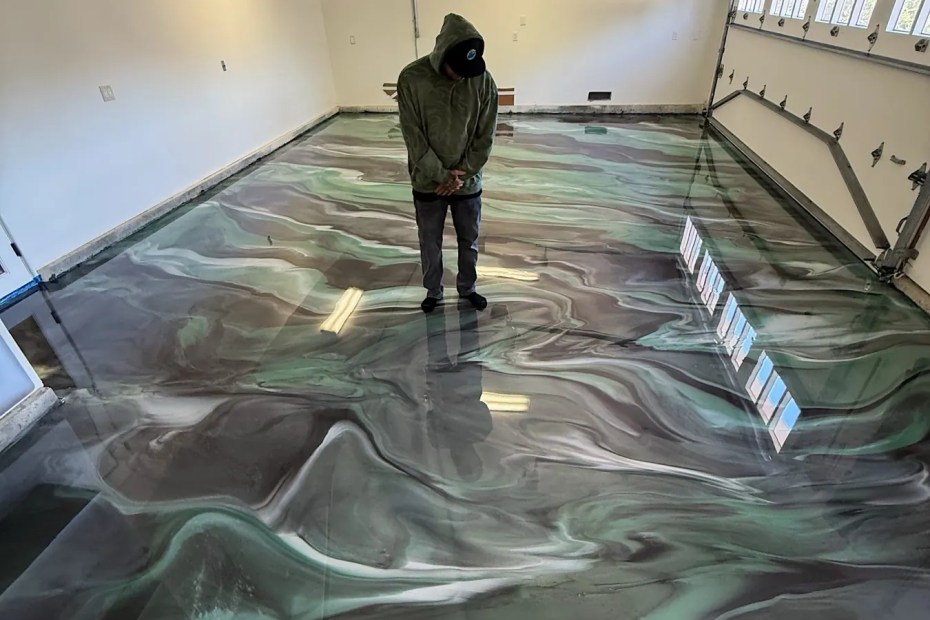
A Turlock Garage That Doubles as a Hangout and a Workshop
Some garages hold two cars. Others hold a workbench, a couch, a fridge and whatever project is up on jack stands this month. That second kind needs a floor planned around how it gets used.
Around Monte Vista, out toward Crowell Road and in the newer houses south toward Donnelly Park, plenty of garages have stopped being parking. They have become the place where friends watch a game, where a project car sits for months and where the tools live. A floor in that kind of garage takes a different beating than one that sees a car park and leave. Johnny starts by asking how the space actually gets used on a normal weekend, and he plans the floor from the answer.
Start with how the garage gets used
A parking garage needs a floor that handles tires and the occasional oil drip. A hangout garage adds chairs, a fridge, spilled drinks and people standing around for hours. A workshop adds rolling tool chests, jack stands, a creeper and dropped wrenches.
Most working garages are some mix of those. The workbench side wants impact resistance and easy cleanup. The sitting area wants something that looks finished and feels good underfoot. The parking side still has to handle a car coming and going every day.
Sketch the layout before Johnny comes out. Mark where the bench sits, where the car parks and where the couch or the bar goes. One system can cover the whole floor, but the topcoat and the texture can change across it to suit each zone.
Lighting is worth a thought at the same time. Plenty of garages have one bulb in the middle of the ceiling, and a new floor makes that obvious. A glossy finish bounces whatever light you add around the room, so a couple of bright fixtures over the bench go further on a coated floor than they ever did on gray concrete.
Jack stands, tool chests and dropped tools
Jack stands put a car’s weight onto four small steel feet. On a soft or thin coating those feet can dent the finish, and twisting a stand while positioning it scrapes a ring into the floor. A plywood square under each stand is the cheap fix.
Rolling tool chests are heavy, and they move constantly. Hard casters with grit under them leave scratch tracks, so it helps to swap in softer casters and keep the bench area swept. A full chest also rarely stays put; it migrates across the floor over months, and its path shows.
Dropped tools are the other risk. A wrench falling from bench height chips a thin coating at the impact point. A properly bonded system with a full broadcast of flake shrugs most of that off, and a chip in a flake floor hides in the pattern instead of standing out. Johnny will steer a heavy-use workshop toward that kind of build.
Field dust and the open garage door
Many Turlock neighborhoods sit right up against farm ground. When the wind comes off a field that has just been worked, fine dust ends up everywhere, and a garage with the door open for an afternoon collects plenty of it.
That dust is abrasive. Tracked across a glossy floor under shoes and casters, it slowly dulls the finish in the high-traffic paths. Regular sweeping with a soft broom does most of the work; a leaf blower aimed out the door is quicker and works fine on a cured floor.
Finish choice matters here too. A dark, solid, glossy floor shows every film of dust within a day. A flake blend with several colors in it hides dust far longer, and a mid-tone metallic sits somewhere between. If the garage door stays open most weekends, weigh that when you pick colors. Our garage coatings page for Turlock lays out the options side by side.
Slabs over irrigated ground
Turlock is dry country, so moisture in a garage slab surprises people. It should not. Plenty of houses, especially in the older parts of town, sit on slabs poured on grade with irrigated lawns and fields around them and no vapor barrier underneath. Water moves up through that concrete as vapor all year.
A coating laid over a damp slab can blister or let go in patches, sometimes a year or more after the job. That is why Johnny tests for moisture before he talks about colors. Probes go into the slab, and the readings decide the first coat.
When readings are high, a moisture-mitigating primer goes down before the base coat. It adds a step and some time, but it is far easier than grinding off a failed floor. Newer houses may have a barrier under the slab, but that is never assumed, and every garage gets checked.
Flake, solid or metallic for a working garage
Flake is the workhorse. Colored chips broadcast into the base coat give texture, hide dust and small chips, and handle tools and casters well. For a garage that is mostly shop, it is usually the answer.
A solid color looks clean and reads well under bright shop lights, which helps when you are hunting for a dropped bolt. It shows wear sooner than flake, though, especially in the paths between the bench and the car.
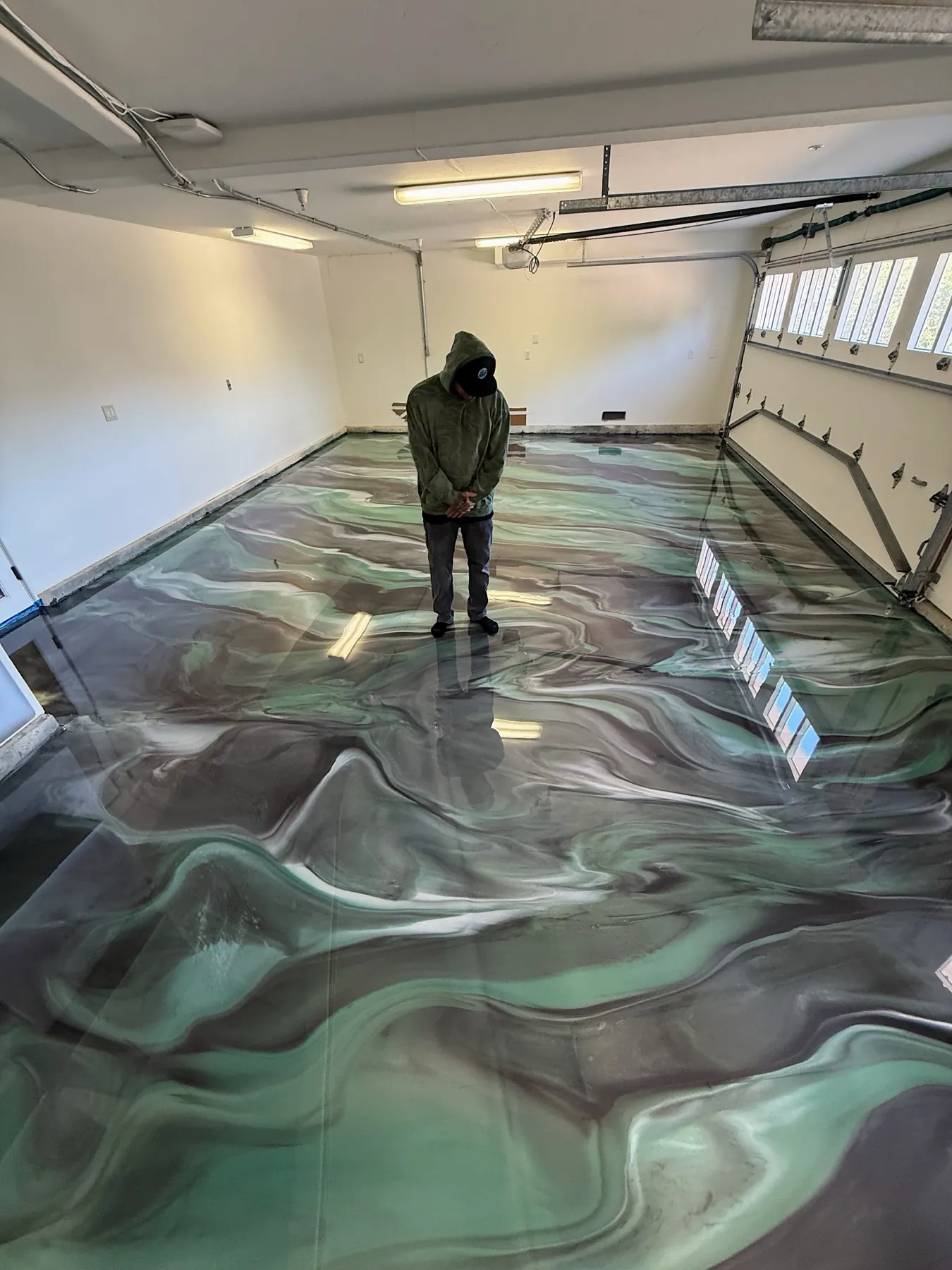
Metallic is the choice for a garage that is more lounge than shop. It looks like a finished room, and it can carry colors that match a mural, a bar or a team. It takes more care around jack stands and tool chests. Some owners split it, with flake on the workshop side and a metallic in the sitting area. If that is the plan, the metallic epoxy page for Turlock covers the metallic half.
Garage questions from Turlock homeowners
Can one garage floor have two different finishes?
Yes. The base system runs the whole floor, and the top layer can change between zones, with flake on the workbench side and a metallic or solid color where people sit. Johnny plans where the line falls so it looks deliberate, often along a step, a wall edge or the spot where the car parks. A sketch helps him place it.
How is the slab tested, and what happens if it reads high?
Because the slab and the weather are two different things. Concrete poured over irrigated ground without a vapor barrier pulls water up from below all year. Testing takes a short visit and tells Johnny whether the floor needs a moisture-mitigating primer, which is much easier to add before the job than after a blister. Every slab gets the same test.
How do I protect the floor under jack stands?
Set each stand on a square of plywood or a rubber pad. That spreads the weight and stops the steel feet from denting or scraping the topcoat while you adjust them. Do the same under heavy tool chests that sit in one spot, and keep the area swept so grit is not pressed into the floor.
Johnny comes up from Hollister for garages all over Turlock. Start with the Turlock page or the garage coatings system, send Johnny a sketch of your layout, or call (650) 797-3040.
Show Johnny how the garage gets used
He walks the space, tests the slab for moisture and talks through flake, solid and metallic for each part of the floor. That site assessment is free of charge.
Call (650) 797-3040