Coating a Small Third Street Shop One Section at a Time
A small shop downtown rarely has an empty room to hand over. The stock, the fixtures and the weekend visitors all stay part of the plan, so the new floor goes down in pieces.
Shops and galleries along Third Street live on weekend foot traffic. Visitors come for the Mission and the State Historic Park, then wander the storefronts, and a shop that closes on a Saturday gives up the day that carries the week. That makes a full closure a hard sell for a new floor, and in most small storefronts it is not needed. Johnny breaks the floor into sections that can be cleared, coated and filled again in turn. He plans those sections around the slab underneath, which is usually older and more pieced together than the owner expects.
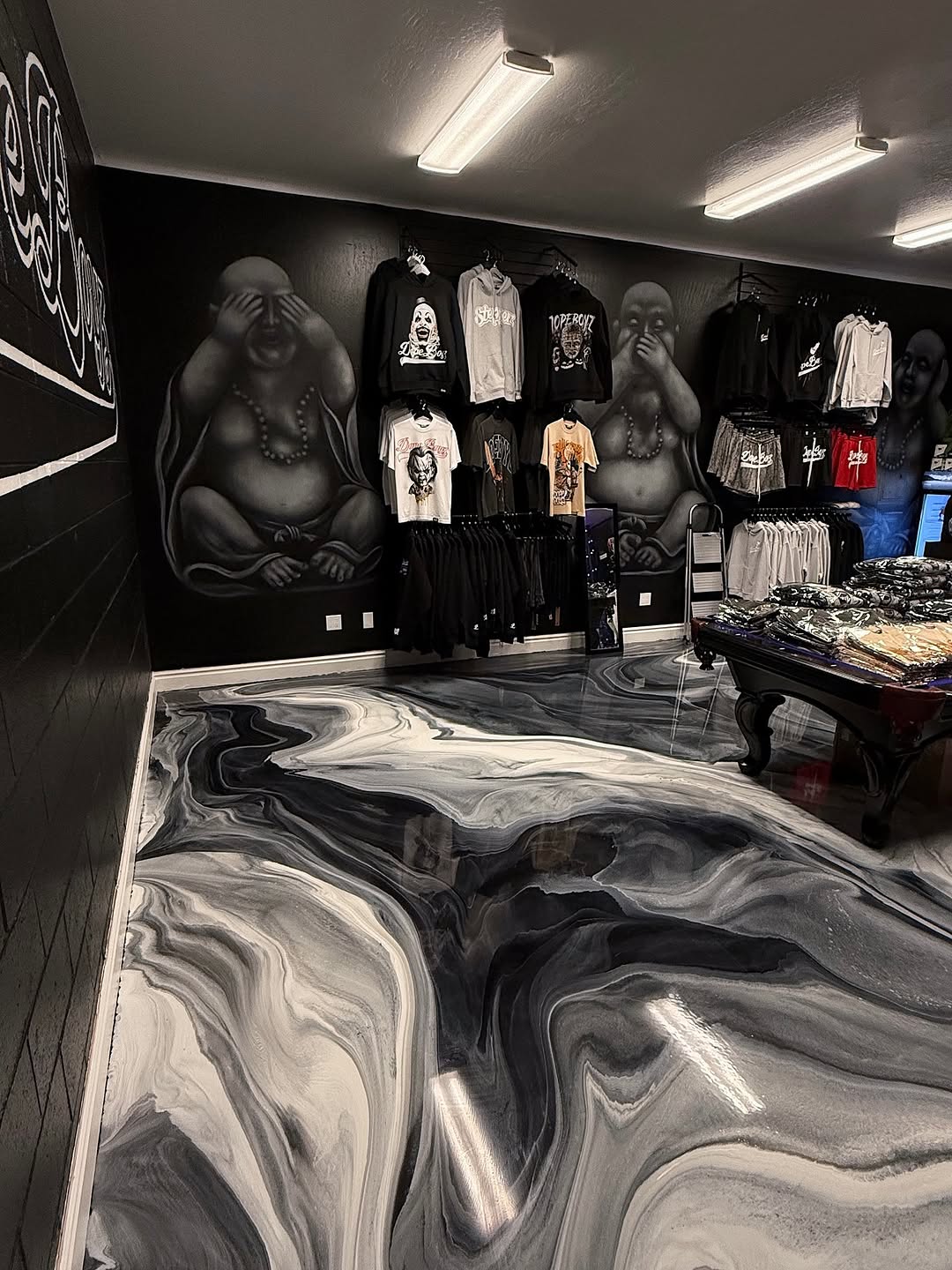
Sections planned around fixtures and stock
The first walk-through is about what moves and what stays. Wall shelving, slatwall and the register counter may stay put, while floor racks, tables and display cases can shift from one side of the room to the other. Johnny maps the room into areas that can each be emptied, usually starting at the back and working toward the door so the entry comes last.
Each section gets the full process: clear it, grind, repair, coat, and let the finish cure before stock moves back across it. A wall of plastic sheeting keeps grinding dust off the merchandise in the rest of the room, and the open part of the shop stays usable for storage or even a slow weekday of trade.
The tricky part is the seam. Where one day’s coating meets the next, the edge is ground and feathered so the new pour bonds to it and the joint stays quiet. On a metallic floor, that line is planned to fall where a fixture or a natural break in the room hides it. The details for shop jobs are on our retail flooring page for San Juan Bautista.
Old slabs poured in pieces
Many storefront slabs downtown were never poured in one go. They went down in sections across fifty or sixty years, got patched when a wall moved or a utility line was trenched through, and in places carry newer concrete laid over old. The floor under your carpet or tile may change density every few feet.
That changes the prep. Before anything is coated, Johnny checks the slab for hollow spots and for the seams where one pour meets the next. A hollow patch has to come out, because sealing over it only locks in a weak spot that will crack later.
The grinder tells the rest. A soft section cuts quickly while an old, hard section barely scratches, so the tooling and the number of passes change from one part of the room to the next. Cracks and joints get filled and leveled. Some older buildings also sit on slabs with no vapor barrier, so a moisture reading belongs on that first visit too.
Wet shoes at the front door
The entry is where a shop floor earns its keep. On a wet winter day visitors walk straight in off the sidewalk with water on their soles, and the first few feet inside take all of it. A glossy finish there is a slip waiting for someone to find it.
Johnny treats the door zone differently from the rest of the room. A fine slip-resistant aggregate can go into the topcoat across the entry, giving shoes more grip without making the floor look rough. Deeper into the shop, where soles have dried off, the finish can be smoother. The change is hard to see, but you feel it underfoot.
A walk-off mat still helps, and the coating makes it easier to keep clean underneath, since nothing soaks into the slab. Lift the mat and mop under it now and then so trapped water and grit do not sit on the finish. Because the entry usually gets coated last, a shop with a second door can keep customers moving through it during the earlier sections and then close briefly for the front.
Satin or gloss in an old building
A historic storefront has its own character: plaster or adobe walls, old wood trim, and front windows that throw strong afternoon light across the floor. A high-gloss floor can look out of place there, and it bounces window glare straight into shoppers’ eyes.
Most owners downtown end up with a satin topcoat. It keeps its depth, especially over a metallic, but it softens reflections and stops the floor from looking newer than the building around it. Satin also hides light scuffs from shoes and dragged racks better than gloss does.
Gloss still has a place. A shop with dark walls and focused light on the product can use a reflective floor to throw brightness back into the room. Samples laid out near the window and toward the back let the owner see both the brightest and the dimmest corners before choosing. A black and white metallic suits a modern apparel shop, while warmer bronzes and creams often sit better beside old wood. Galleries face a sharper version of this choice under display lights, which our showroom flooring page covers.
Harvest dust and a wet coat
Harvest puts field dust in the air downtown, and a drafty old storefront lets it in. It settles on everything, including a coating that has not cured. Once dust lands in wet resin it is there for good, and the finish ends up with a gritty haze that cannot be polished out.
So each section is sealed before the pour. The front door stays shut, gaps around old door frames get taped, and the work area is vacuumed and tacked right before mixing instead of the night before. A storefront with tall, drafty doors may need more taping than a newer building would.
Timing helps as well. On a windy afternoon it can make sense to push the topcoat to a calm early morning, and during harvest Johnny watches the forecast and reshuffles the order of sections if a day looks bad.
Questions from shop owners
Which section goes first?
Usually the back of the shop, working toward the door, so the entry comes last and customers can still get in while the earlier sections are coated. Johnny maps the room on the first walk-through around what moves and what stays put, so each area can be cleared, ground, coated and left to cure before the stock crosses it again.
Can a second door stay open as the entrance while the front is done?
If the building has one, yes. A side or rear door can carry customers through the shop while the earlier sections go down, and the front only has to close briefly once its turn comes. Without a second door, the entry is coated on a closed day or early in the morning, so the topcoat has the hours it needs before the first customer walks in.
Will the joints between sections show?
Not when they are planned well. Each edge is ground and feathered so the next pour bonds to it, and on a metallic floor the seam is placed where a fixture, a counter or a natural line in the room hides it. On a flake floor the chips cover the transition almost completely, which makes it even harder to spot.
Gold Coast Resin is in Hollister. Look over the San Juan Bautista page, send Johnny a few photos of your shop floor, or call (650) 797-3040.
Map your shop floor with Johnny
Send a few photos of the floor and where the fixtures sit. He maps the sections from there.
Call (650) 797-3040