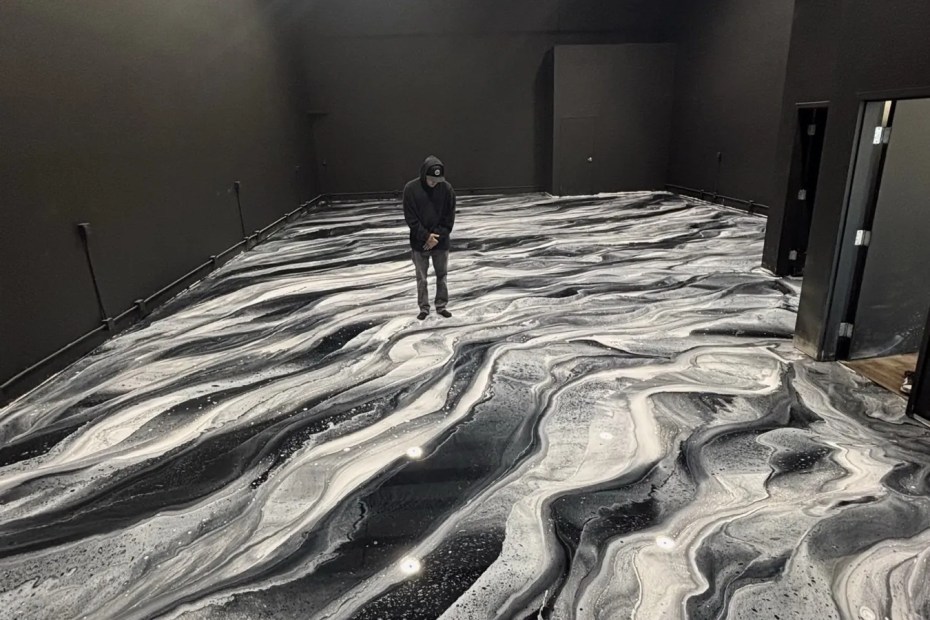
Picking a Metallic Floor for a Gallery in Its Own Light
In a gallery or a tasting room the floor is part of what people look at. A metallic that looks right on a sample board can look very different on your slab, under your lights, at six in the evening.
San Juan Bautista’s downtown draws visitors to its galleries and tasting rooms, and in those rooms the floor sits in every view of whatever is on display. That makes picking a metallic more personal than picking a garage floor. The color, the amount of movement and the sheen all change how the art or the bottles on the shelves read. Johnny puts samples on the real concrete, in the real room, and lets the owner live with them for a day before the first batch is ever mixed.
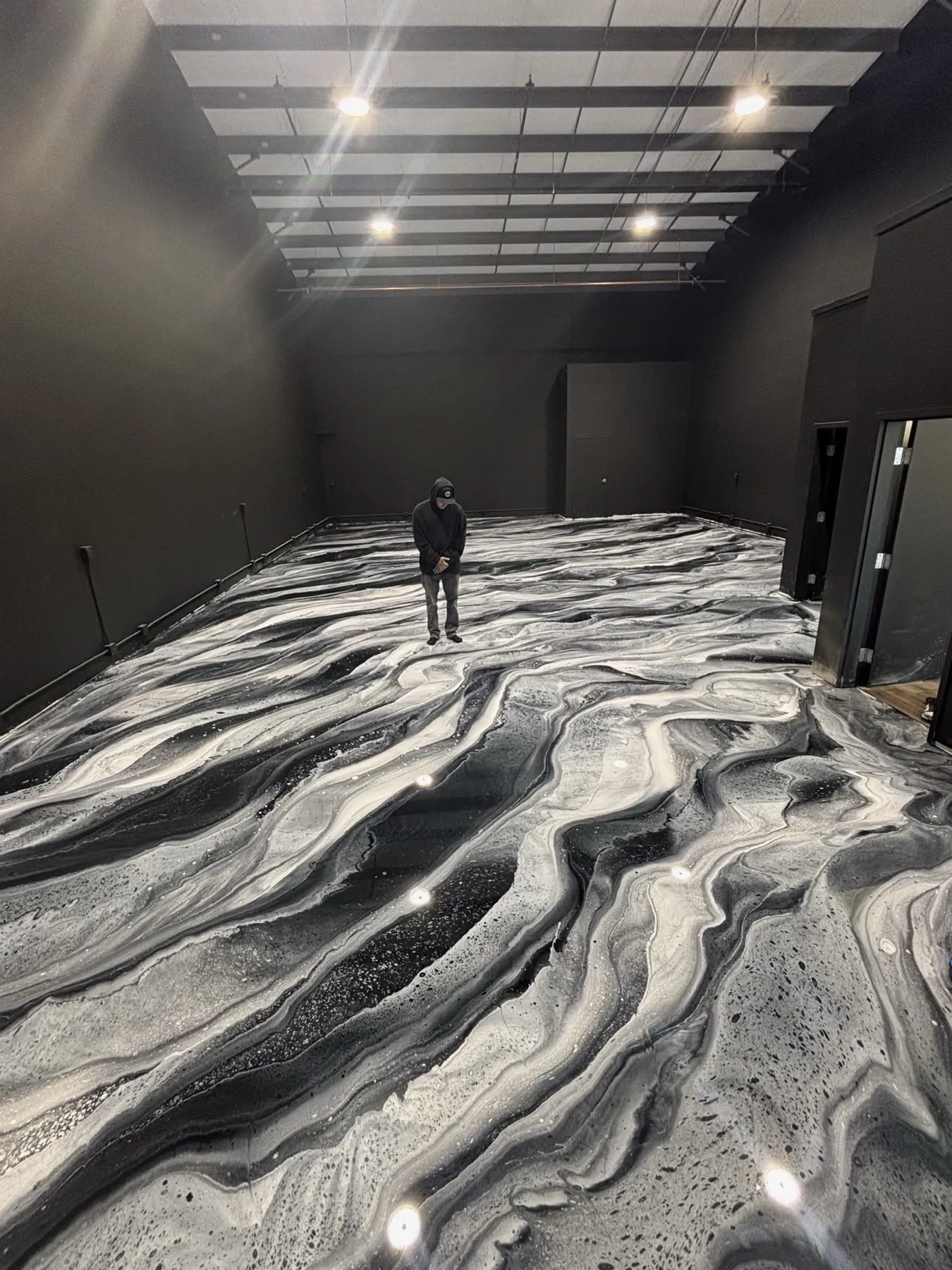
The floor is part of the display
A metallic floor is made by letting pigment move through clear resin while it is still workable. Johnny steers that movement with heat and hand tools, so the finished floor has veins, swirls or a soft cloud depending on how it is worked. That movement is why people choose metallic, and it is also the thing to handle carefully in a display room.
Too much of it and the floor competes with the work. A loud pour of white veins through black reads as a statement, which can suit a room hung with bold modern pieces. A quieter floor, with a soft shift between two close colors, lets paintings, ceramics or a wine wall carry the room.
Owners usually know which they want once they see the two side by side. Some galleries keep the strongest movement near the entry and calm it down toward the walls where work hangs, and the pour is planned so the movement runs with the way visitors walk through. Our showroom flooring page for San Juan Bautista covers the full system.
Samples on the real slab
A sample board under showroom lights tells you very little about your floor. The concrete underneath, the wall color, the windows and the fixtures all change how a metallic looks, and they are different in every building.
So Johnny brings samples to the space and sets them on the actual slab. They stay put while the owner looks at them in the morning with daylight coming through the front windows, again around midday, and again in the evening with the display lights on. A color that looks warm and soft at ten in the morning can turn flat or cold under evening track lights. Another can come alive.
Look at the samples from where a visitor stands, not only from above. A metallic changes with the viewing angle, so walk the room the way a guest would. Phone pictures rarely capture it, and they tend to flatten a metallic.
Owners sometimes ask to see the samples next to a specific painting or a shelf of bottles. That is a good instinct. The floor will spend its life beside them, so it should be judged beside them.
Satin or high gloss under display lights
Display lighting is the reason sheen matters so much in a gallery. Track lights and spots are aimed to make the work stand out, and a high-gloss floor catches those same lights and throws them back. Visitors end up with bright hot spots at their feet and glare wherever they glance down, which pulls attention off the walls.
A satin polyaspartic topcoat solves most of that. It keeps the depth of the metallic underneath, so the floor still shifts as you move, but it spreads reflections into a soft glow.
High gloss still has fans. In a dark room with a few hard spotlights, a glossy floor can make the space feel deeper. It also shows scuffs and dust sooner, which matters in a room with visitors all day. Like the color, the sheen is easiest to settle on the slab itself, with a satin and a gloss sample side by side under the lights you actually use.
Moving display pieces across the floor
Galleries rehang shows, and tasting rooms move furniture. Pedestals, display cases, tables and heavy sculpture bases get shifted across the floor, sometimes every few weeks, and that is harder on a finish than foot traffic.
A cured, properly bonded system takes the weight. Dragging is what does the damage. A heavy base pulled across the floor with grit underneath will scratch any clear coat, satin or gloss. Felt pads under furniture feet, a dolly for the heavy pieces and a quick sweep before anything moves keep the finish looking new.
Very heavy pieces deserve some planning. If a large sculpture or a full wine rack will live in one spot, Johnny wants to know before the pour, so the slab under it gets checked for hollow spots and the build suits the load.
Daily care is a dust mop and a damp mop with a mild cleaner. Skip abrasive pads and strong solvents, which dull a satin finish faster than visitors ever will.
Old slabs under a gallery floor
Many galleries and tasting rooms in town occupy older buildings, and the slab usually tells that story: pieces poured at different times, patches where walls moved or lines were trenched, density that changes across the room. Metallic is the least forgiving system for this, because every patch and repair can ghost through the clear resin if it is not handled.
Johnny checks the whole floor before talking about color. Hollow areas come out. Patches are made with a repair material that grinds down to match the concrete around it, and the base coat is built to give the metallic an even surface to move across.
Moisture gets checked as well. A slab poured without a vapor barrier can push vapor up into a coating, and in a metallic that can show as cloudy spots or blisters. Humidity probes go in, and if the readings call for it, the system starts with a moisture-tolerant primer.
Questions from gallery and tasting room owners
How long should we look at the samples before choosing?
At least a full day, so you see them in morning light, at midday and under the evening display lights. Look from where visitors stand as well as from above. Many owners also set the samples beside a piece from the collection or a shelf of bottles, since the floor will spend years next to those things.
Will a satin finish hide the metallic movement?
No. Satin softens reflections on the surface, but the color and movement sit beneath it and still shift as you walk across the room. Most owners find the floor reads warmer and calmer under satin than under gloss. A gloss sample laid beside it on the slab shows the difference within a minute, which makes the decision easier.
Can we hang a new show the week the floor goes down?
Walking on it is not the issue, since a polyaspartic topcoat is ready for feet that same day. Pedestals, cases and heavy furniture wait a little longer, and Johnny tells you when on the day of the pour after checking the system and the room temperature. Leave some breathing room after that before the installation starts.
Gold Coast Resin works out of Hollister. Browse the San Juan Bautista page, ask Johnny to bring samples to your space, or call (650) 797-3040.
See the samples in your own light
Johnny sets colors down on your slab, checks it for moisture and leaves them there through the evening lights. The site assessment is free.
Call (650) 797-3040