Diesel in an Old Farm Building Slab: Degrease, Grind, Check, Repeat
Ag buildings around San Juan Bautista carry years of diesel and hydraulic fluid in their concrete. Getting a coating to stay on that slab is mostly a matter of getting the oil out first.
Outside the historic downtown, San Juan Bautista is working farm country, and the shops, barns and equipment buildings around town see tractors, trucks and forklifts every day. Their slabs keep a record of it in dark patches wherever machines have parked for years. Owners call wanting a clean floor that sweeps easily and stops shedding dust. It can be done, as long as the coating bonds to clean concrete, and an old ag slab is rarely clean, however well it gets pressure washed.
Why oil in the slab ruins a coating
Concrete is porous. Diesel, hydraulic fluid and motor oil soak into it, sometimes deep, and spread under the surface well past the stain you can see. A pressure washer cleans the top and leaves the rest where it was.
That oil keeps moving. As the slab warms through the day, contamination wicks back up toward the surface. Coat over it and the new floor grabs the oil instead of the concrete, then peels weeks or months later right where the machines used to sit.
Hydraulic fluid is the stubborn one. It is thinner than motor oil and travels farther through the slab, so a small leak under a loader can mean a wide contaminated area underneath.
A good floor in an ag building starts with accepting that prep will take longer than it would in a garage. Our warehouse flooring page for San Juan Bautista lays out the full system, from first grind to topcoat.
Degrease, grind, check, and grind again
The process is a cycle. First comes a degreaser worked into the stained areas and given time to pull oil up out of the concrete, then scrubbed and rinsed. That alone handles light contamination.
Then the grinder. An aggressive grind takes off the top layer of the slab, removing the most saturated concrete and opening fresh pores. On an old ag slab this runs heavier than on a house, often with coarser tooling and more passes.
After grinding, Johnny checks. Clean concrete darkens evenly when water hits it and dries evenly. Contaminated spots stay dark, look blotchy or bead the water instead of drinking it. Anything still showing oil gets degreased again and ground again. Sometimes that second pass does it, and sometimes a deeply soaked area has to be cut out and patched.
This is the slowest part of the job and the one that matters most. A floor that goes down on schedule over oil still in the slab causes far more trouble later than an extra day of prep does now.
Hollow spots and density changes
Ag buildings often have slabs that grew over time: a section poured for the original barn, another added when a shop was built onto it, patches where a drain or a water line went in. Each piece can have a different mix and hardness, and the joins between them can crack or settle.
Before any coating plan gets made, Johnny sounds the floor with a hammer, listening for the hollow ring of concrete that has separated from the base beneath it. Those spots get cut out and filled, because a coating cannot hold together what the slab itself has lost. The grinder adds information too, cutting fast through soft areas and barely marking hard ones, which shows where density changes and what tooling each part needs.
Moving cracks are treated differently from settled, stable ones, and control joints in a working building may need to stay joints rather than be filled solid.
Older ag slabs in the low ground toward the river may also lack a vapor barrier, and Johnny takes humidity readings on that first visit for exactly that reason.
Pallet jacks, forklifts and rolling loads
Once the slab is clean and sound, the system gets built for the load. Pallet jacks with hard wheels, forklifts turning in place and carts loaded with feed or parts all put concentrated weight on small contact points, again and again along the same paths.
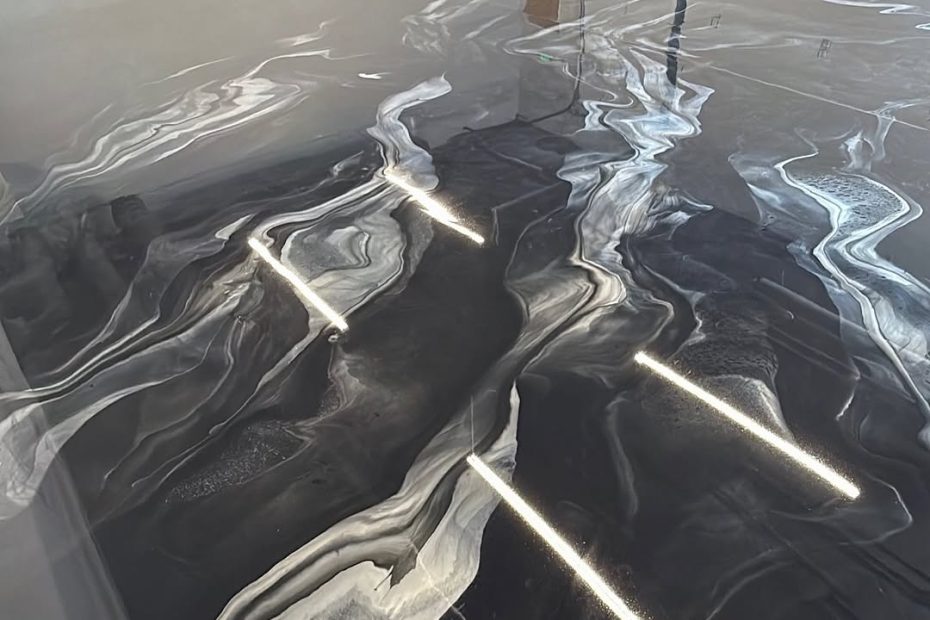
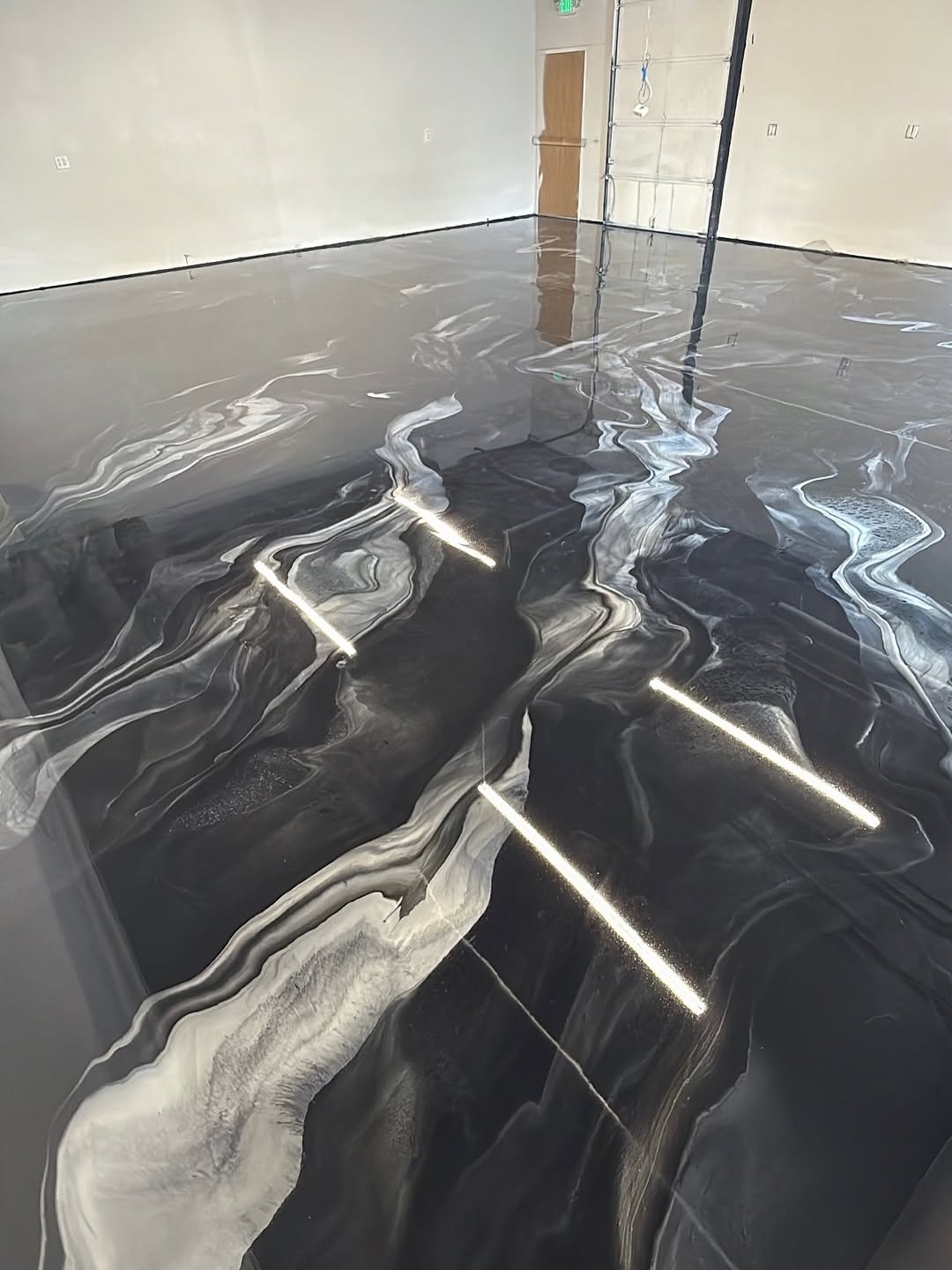
A thin paint-style coating wears through in those lanes fast. For working buildings Johnny builds a thicker system, with a base coat and a broadcast that adds body, then a durable topcoat. A flake broadcast hides tire marks and scuffing, while a metallic can suit a cleaner storage room or office in the same building. Where the floor gets wet or oily, the topcoat can be left textured for grip.
Turning forklifts are the hardest test. Tires twisting under load scrub at one spot, so those turning areas get the most attention in prep and the heaviest build.
After the floor goes in, the wheels matter. A cracked pallet jack wheel gouges a floor that a sound wheel rolls across without a mark, so check the equipment before it comes back inside.
Open doors, wind and harvest dust
Most ag buildings around town keep their doors open for air, and with diesel equipment inside that is not optional. Open doors also let in the fine dust that blows off the fields along Highway 156, worst at harvest, and dust that settles into wet resin stays in the finish as a permanent haze.
That makes scheduling part of the job. Johnny plans the pour around the wind and around whatever is happening in the surrounding fields that week, aiming for calm mornings and steering clear of days when tractors are working the ground next door. Doors close during the coat where that is safe, and openings get taped off. Where the building has to stay open, timing does most of the work.
Right before the resin is mixed, the floor is vacuumed and tacked. A few hours of settling dust is enough to spoil a coat. Trucks, forklifts and pallets come back in later, on a schedule Johnny sets once he sees how the coat is curing that day.
Questions from farm and shop owners
How do you tell the oil is really out after grinding?
Water tells you. Clean concrete darkens evenly when it gets wet and dries evenly afterward. Spots still holding oil stay dark, look blotchy or bead the water instead of soaking it up. Anything that fails that check gets degreased and ground again, and an area that keeps failing is cut out and patched. The coating waits until the whole slab passes.
Does hydraulic fluid need different prep from diesel?
It needs more of it. Hydraulic fluid is thinner than motor oil and travels farther through the slab, so a small leak under a loader can leave a wide contaminated area that does not show on the surface. Johnny degreases and grinds well past the visible stain and checks the edges of that area just as hard as the middle.
Do control joints get filled or left as joints?
It depends on whether the slab still moves there. Settled, stable cracks get filled and leveled before coating. Control joints in a working building often need to stay joints, because the concrete keeps moving along them with heat and heavy loads, and a rigid fill would crack. Johnny decides joint by joint once the slab is ground and he can see how each one behaves.
Gold Coast Resin is based in Hollister, fifteen minutes from San Juan Bautista on Highway 156. Start with the San Juan Bautista page, describe your building and what parks on the slab, or call (650) 797-3040.
Have Johnny read the oil stains first
Tell him what parks on the slab and how long it has been parking there.
Call (650) 797-3040