Choosing a Floor Coating for a Ridgemark Garage Gym
More than a few Ridgemark garages already hold a rack, a bench and a stack of plates next to the cars. Picking a coating for that room starts with what gets dropped on it and dragged across it. Color can wait.
Garages in Ridgemark tend to be roomy, and a lot of them do more than one job. A workout corner on one side, a workbench on the other, and on a summer weekend the grandkids running laps between them. Johnny asks how the room gets used before he talks about systems, because a gym floor and a showpiece floor want different things, and some garages want both.
Start With What Lands on the Floor
A coating is a thin layer bonded to concrete. It handles tires, foot traffic, sweat and cleaners very well. What no garage coating likes is a loaded plate or a heavy dumbbell dropped from overhead onto the same spot, over and over. The concrete underneath does not give, so all of that impact goes into the coating at the point of contact.
The honest answer for a lifting area is rubber. Stall mats or a lifting platform where the heavy work happens protect the floor and your equipment, and the coating covers everything around and between them. That is the setup we recommend, and it means you still see the finish across most of the room.
The rest of gym wear is gentler. Rack feet and bench legs get dragged when you rearrange. Sweat drips during a long session. Cleaner gets sprayed down afterward. A properly bonded coating handles all of that, and it wipes clean far more easily than bare concrete, which soaks up whatever lands on it and sheds dust every time it is swept.
The workbench half of the room brings its own wear. Oil drips off a project, a jack stand gets set down hard, and solvent gets wiped up off the floor. A sealed coating keeps those fluids sitting on top where a rag can reach them, instead of soaking into the slab and leaving a dark stain that never quite scrubs out. A garage split between lifting and wrenching usually does best with one system across the whole floor and mats only where the weights live. Two different finishes in one garage leave a seam right where people walk.
Flake for a Room That Works Hard
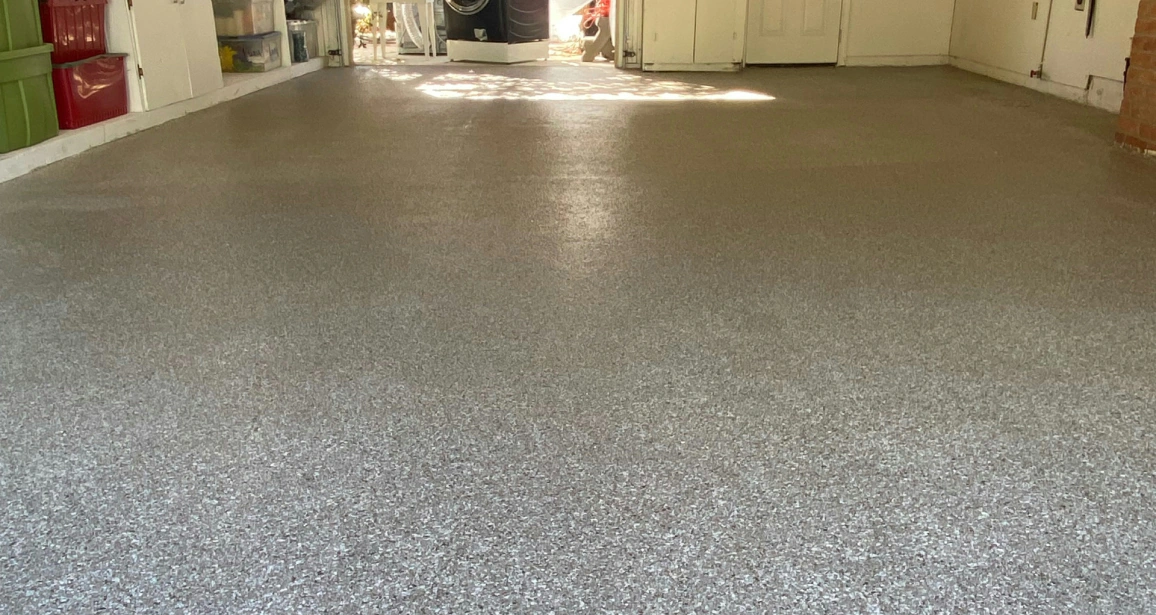
For a garage that is mostly gym and workshop, flake is usually the call. Chips are broadcast into the wet base coat until it will not take another one, scraped flat once cured, and sealed with a clear coat. The finished floor has real thickness, and the chip pattern hides the scuffs from equipment feet and the odd wrench dropped off the bench.
Texture matters in a gym more than most people expect. Sweat on a smooth, glossy floor gets slick under a sneaker in the middle of a set of lunges. The chip edges under the seal give shoes something to grip, and how much texture you get depends on how the seal coat is built. For a working gym we keep more of it.
Flake is also forgiving of the fine foothill dust that finds its way in whenever the door is rolled up on a dry summer day. A mid-tone blend hides it between sweeps, where a very dark floor would show every footprint. The build is laid out on our Ridgemark flake epoxy page.
Metallic When the Gym Doubles as a Showpiece
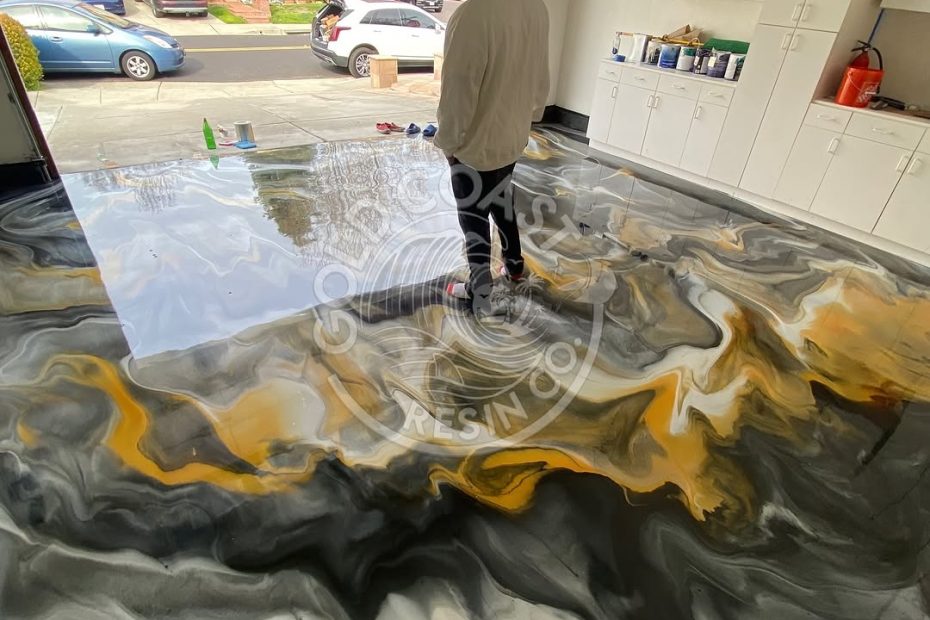
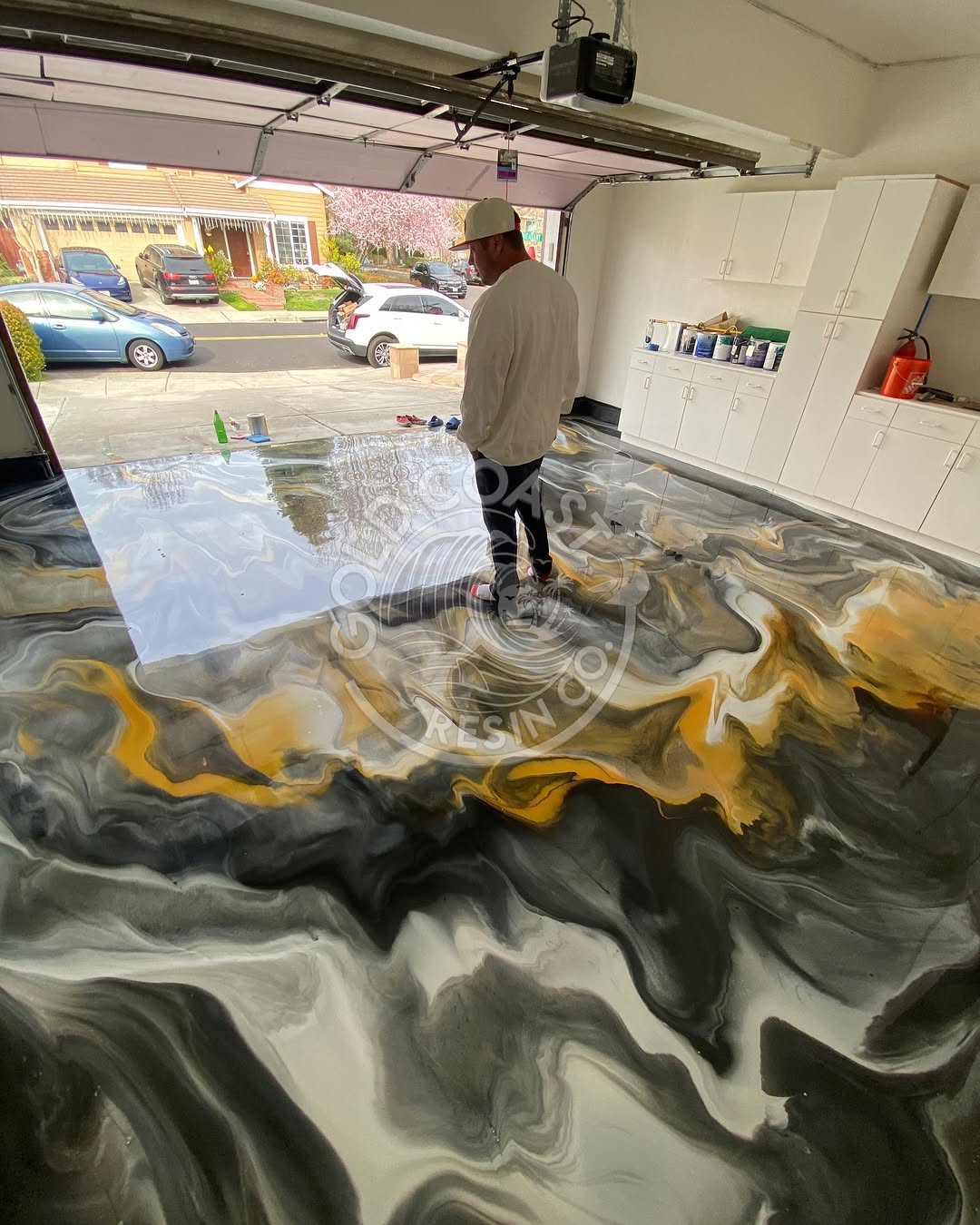
Some garages here are finished out as rooms people want to show off, with cabinets, good lighting and a gym that looks as good as the house. Metallic epoxy suits that kind of space. Pigment moves through the clear resin while it is still open, and Johnny steers that movement with heat and hand tools so the pattern flows with the way the room is laid out.
It is the least forgiving system we install. Once the resin starts to set, the pattern is fixed, so the pour gets planned before anything is mixed. It also photographs poorly. A metallic that looks flat in a phone picture has real depth when you are standing on it under the garage lights.
A metallic is smoother underfoot than flake, so mats in the workout zone matter even more on one, and a towel within reach for sweat is a good habit. More on the system is on the metallic epoxy page for Ridgemark.
When You Want the Room Back Fast
A garage gym often gets used daily, and nobody wants it closed for long. The polyaspartic topcoat we use takes foot traffic the same day it goes down, which cuts the time the room sits empty. It also resists UV, and that matters if you train with the bay door rolled up and afternoon sun crossing the floor.
Summer installs start early, because a slab closed up in a hot garage all afternoon shortens how long the resin stays workable.
Heavy equipment moves back in on the timing Johnny gives you on the day, which depends on the system and the slab temperature. Walking on it that evening is one thing. Rolling a loaded rack back into place is another, so plan on a short stretch before the gym is fully set up again.
Mats, Sweat and Keeping the Finish Clean
Put the mats where the heavy work happens and nowhere else. A platform under the rack and a few stall mats where plates come down cover the impact zone, while the open floor around them stays coated and easy to sweep. Mats laid wall to wall hide the finish you paid for and trap grit and moisture underneath, which is harder on a floor than the training itself.
Sweat is easy on a sealed clear coat as long as it does not sit. Wipe it up after a session, and clean the floor with a damp mop and a mild cleaner. Skip scouring pads and harsh degreasers, which dull a clear coat faster than a year of training does. Lift the mats now and then and mop under them too.
The prep under any of these finishes is the same grind and moisture test, laid out on our Ridgemark garage coatings page. It gets done the same way whether the room ends up flake or metallic.
Questions From Garage Gym Owners
Do we still need rubber mats over a coated floor?
Where heavy weights get dropped, yes. A coating bonded to concrete takes rolling, dragging, sweat and cleaner without trouble, but repeated impact from a loaded plate lands on a surface that cannot give. Mats or a platform in the lifting zone protect the finish and your equipment, and the coating covers the rest of the room around them.
Is flake too rough to stretch or train barefoot on?
Most people find it comfortable. The chips are scraped flat before the seal goes on, so there are no sharp edges, and the texture you feel comes from how the clear coat is built over them. For a room where people spend time on the floor, the seal can be built up smoother while still gripping a shoe better than a glossy finish.
Can the grandkids play on the floor once it is done?
Yes, once the system has cured on the timing Johnny gives you. A coated garage floor wipes clean and does not shed concrete dust onto clothes and hands, and a flake finish gives running feet more grip than a glossy one. Sidewalk chalk and spilled juice come up with a mop, which beats scrubbing bare concrete.
Our shop is in Hollister, minutes from Ridgemark. Start with the Ridgemark overview, tell Johnny how your garage gets used, or call (650) 797-3040.
Show Johnny the Room Before You Pick a Finish
He looks at the slab, tests it for moisture, and talks through flake, metallic and the topcoat with your equipment in mind. The site assessment is free.
Call (650) 797-3040