Your Cupertino Garage Is a Gym, a Shop or a Lab. Spec It That Way
Drive through Cupertino on a weeknight and you will see cars sitting in driveways and light coming out from under closed garage doors. The room behind the door is a gym, a bench, a lab, or the place the second refrigerator hums. What the room is used for should decide the floor spec, and it should decide it before anyone opens a color chart.
The housing stock makes this normal here. The Eichlers and the 1950s through 1970s ranches around Monta Vista and Rancho Rinconada came with modest garages that were never sized for two of today’s vehicles, and the luxury rebuilds that replaced some of them put the square footage into the house. Add a climate with no freeze and thaw cycle and no real reason to shelter a car overnight, and the garage becomes the most flexible room on the property. The floor is the piece that gets chosen last and lives with the decision longest.
The Home Gym
A gym floor takes three things a parking bay never does. Dropped weight, which is a point impact that travels through the coating into the slab. Rolling load, from a rack, a sled or a treadmill that gets shoved into a corner. And moisture, because people sweat and equipment gets wiped down. That last one settles the finish question. A high-gloss surface reads slick when it is damp, so we spec grip: a flake broadcast carries its own profile, and a texture additive can go into the topcoat on top of that. Chipping at the impact zone is a prep and bond question more than a topcoat question, which is why the grind matters here.
The Workshop or Maker Space
A shop floor gets abraded. Sheet goods slide across it, steel stock gets dragged, casters carry more weight than they were sold for. It also catches solvent: acetone, denatured alcohol, brake cleaner, whatever is on the shelf above the bench. And it has a job most people never think to ask for, which is staying readable. Layout lines, tape, a dropped washer and a pencil mark all need to be findable. That points toward a mid-tone satin rather than a mirror. Gloss under bright shop lighting glares, hides small parts in the reflection and shows every scuff.
The Home Lab or Prototyping Bench
Cupertino has a lot of these, and they get treated as garages when they should be treated as work rooms. Here cleanability leads. A seamless resin surface with no grout line and no porous edge wipes down properly, and a coved base at the wall means no seam collecting dust at the perimeter. Chemical resistance is the second question and depends entirely on what is actually on your bench, so bring us the real list. If you handle boards or sensitive components, raise static early. It is a system-level decision made before the base coat goes down, not something added at the end, and it is worth an honest conversation rather than a promise.
Storage, Shelving and the Second Refrigerator
The plainest use has the least obvious demands. Storage means point loads: shelving feet, a safe, jack stands, a stack of tile on a dolly. All of that concentrates weight on a few square inches, which is where a thin roll-on product dents or crazes and a properly built system does not. The second issue is the appliance. A refrigerator or a chest freezer running in a garage generates condensation underneath and around its base, and that steady damp is one of the few places a residential coating gets a real endurance test. Tell us where the appliance is going so it can be planned for instead of discovered.
The Car First Garage
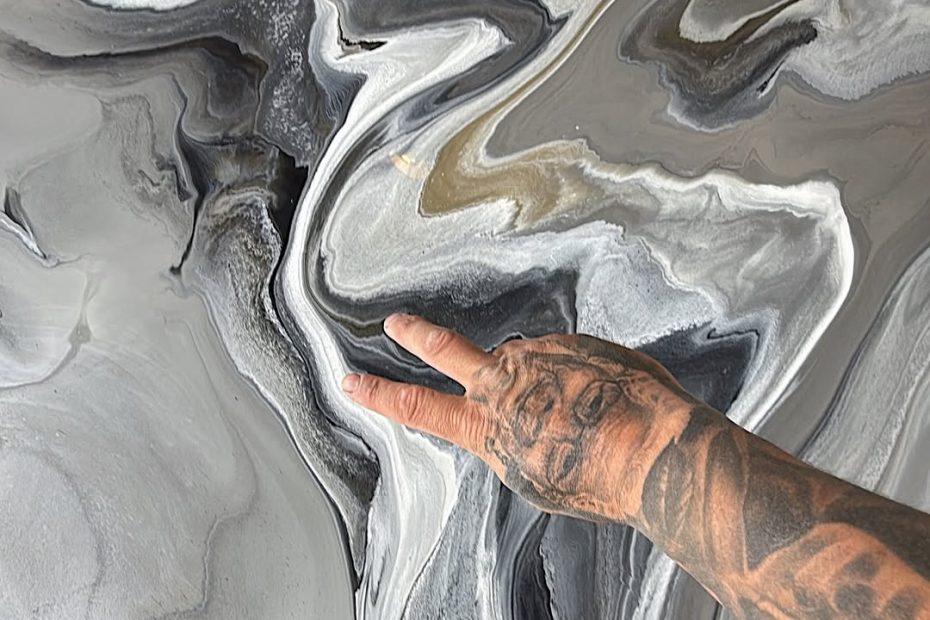
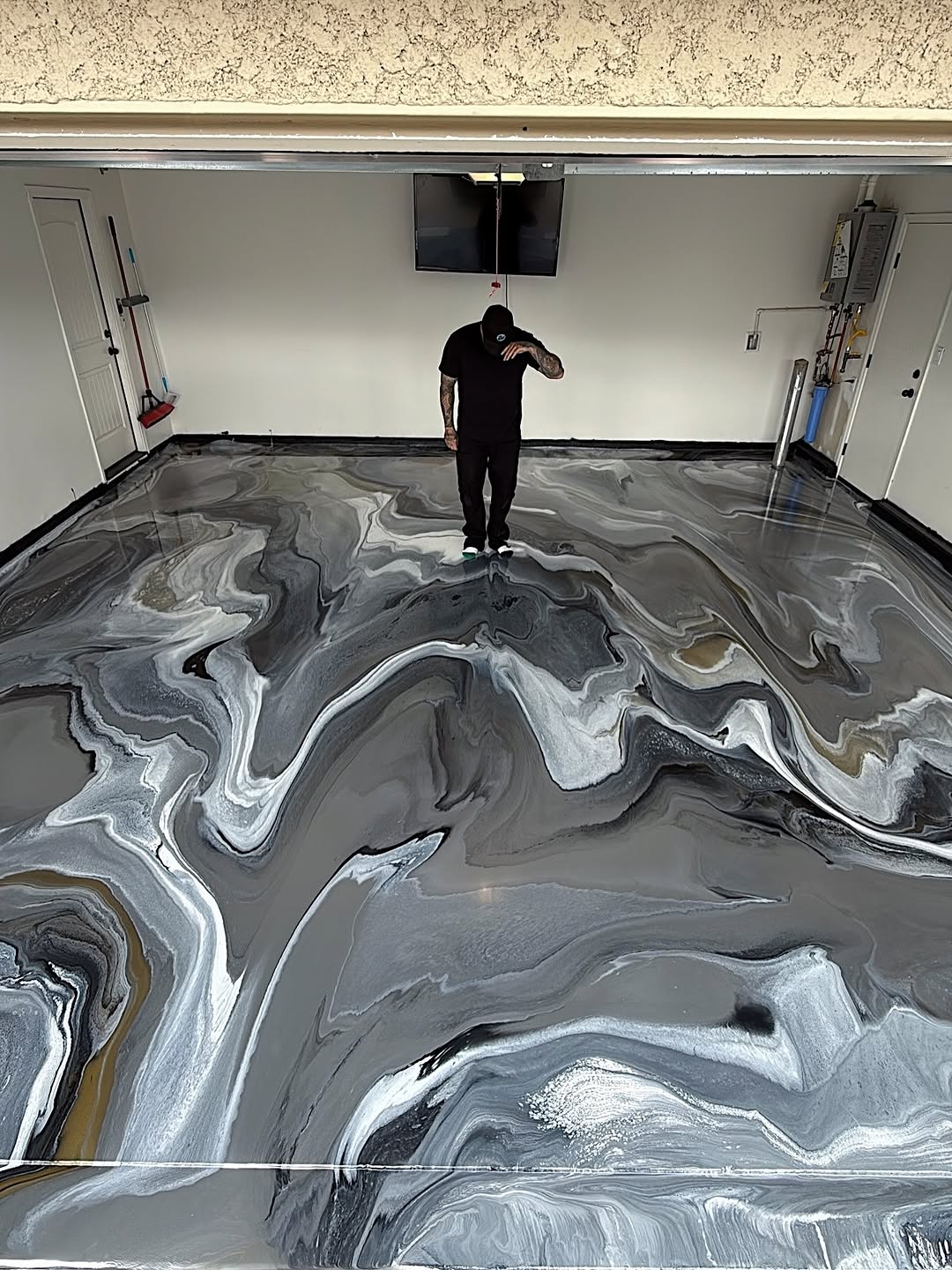
Then there is the garage that really does hold a car. This is the one case where a statement finish earns its place instead of just costing you grip. A metallic pour under good lighting turns the largest plane in the room into the reason people walk in, and a UV-stable polyaspartic topcoat keeps it from ambering near a west-facing door. If the room is a stage, build it like one. If the room is a gym with a car parked in it three nights a week, do not.

What Every Converted Garage Shares
Three things stay true no matter which of those rooms you are building. The first is air. A converted garage spends most of its life behind a closed door with far less air movement than the original design assumed, and that affects install scheduling, cure conditions and how long the room smells like a job site afterward.
The second is moisture, and it gets harder once the room is furnished. Vapor moving up through a slab has to go somewhere. In an open bay it dissipates. Under a rubber gym mat, a cabinet run, a rug or a bench that never moves, it collects, and that is when a marginal slab shows itself. Moisture gets tested before the spec is set, and on an older Cupertino slab poured without a modern vapor barrier, that test is the most useful thing we do all day.
The third is the part that costs nothing. The honest first step is telling your installer what the room is for, not which product you saw online. We would rather hear that you deadlift four mornings a week, that the bench holds solvents, or that the freezer lives in the back left corner, than be handed a product name to match. The use case picks the system. The color comes after.
If you want to go deeper, the Cupertino garage coatings page covers systems by room type and polyaspartic coatings in Cupertino covers the faster-cure option. See the rest of our work across Cupertino or request a free quote and tell us what the room is for.
Cupertino Garage Floor FAQ
My Cupertino garage is a home gym. Gloss or grip?
Grip, and it is not a close call. A gym floor gets damp from sweat and from wiped-down equipment, and a high-gloss topcoat reads slick under those conditions. A flake broadcast already carries some profile, and we can carry a texture additive into the topcoat on top of that. You give up a little mirror shine and a little ease of mopping, and you get a floor you can plant a foot on.
I use solvents at my workbench. Will they damage the coating?
A properly installed resin system handles the acetone, alcohol and brake cleaner that live on a home workbench far better than bare or sealed concrete does, especially if spills get wiped rather than left to sit. Tell us what you actually keep on the shelf before we spec anything, because the topcoat choice changes with the list.
Can I coat the floor before I know how the room will be used?
You can, and people do, but you are choosing a finish blind. If the room might become a gym or a shop later, say so at the walkthrough and we will lean the spec toward the more demanding use. Adding grip and impact tolerance to a floor that only ever holds boxes costs you nothing. Discovering you needed them after the fact means living with the compromise or recoating.
Does an older Cupertino slab need anything different?
Often yes. Slabs from the Eichler and mid-century ranch era were poured under different assumptions about ground moisture, and some were never given a modern vapor barrier. That does not rule out a coating. It means moisture gets tested before the spec is set, and the prep and base coat matter more than the finish you picked from a photo.
Spec Your Cupertino Garage Around What It Actually Does
Johnny walks the space, asks how the room gets used, and gives you an honest read before any resin goes down. Call to start the conversation.
Call (650) 797-3040