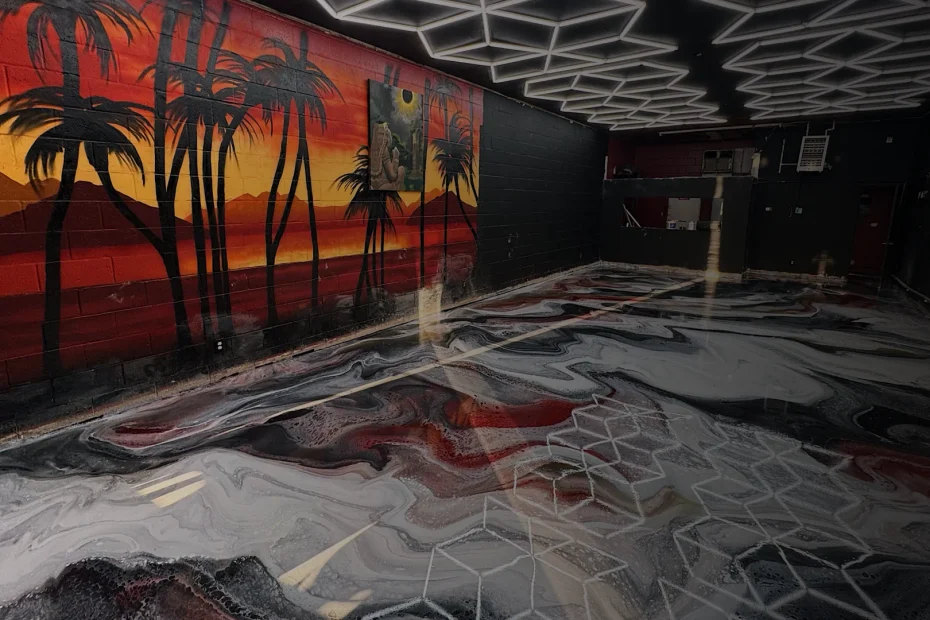
Garage Floor Coatings: Epoxy vs Paint
A garage with a glossy, showroom floor was almost certainly done with professional epoxy. The big-box paint kits that promise the same look are where the peeling, chipping, and fading come from. Here is the real difference, and why it matters for a floor you actually use.
If you have ever walked into a garage with a flawless, glossy floor that looked more like a showroom than a workspace, you were almost certainly looking at a professional epoxy coating. And if you have ever tried one of the big-box paint kits that promise the same result, you already know the other side of the story. The peeling, the chipping, the fading, all of it usually shows up within a few months.
This is one of the most common conversations Johnny has with homeowners in Hollister, Morgan Hill, and Gilroy. A lot of them tried the kit first, watched it fail, and called Gold Coast Resin to do it right the second time. Here is what separates the two so you can skip the failed first attempt.
Why Garage Floor Paint Fails
Garage floor paint, including the so-called epoxy paint kits from the hardware store, sits on top of the concrete. It forms a thin film that looks decent the day you finish it. The trouble is that a garage is a brutal environment for a thin film. Hot tires pull at it, chemical spills eat at it, dropped tools chip it, and constant foot and vehicle traffic wears it down.
Because the paint is only sitting on the surface, it has nothing real holding it to the slab. The first time a hot tire grabs an edge or moisture works under it, it starts to lift. Once it starts, it spreads. People are often shocked at how fast it goes from looking fine to looking ruined, and the answer is that there was never a strong bond there to begin with.
The “epoxy” name on a paint kit does a lot of heavy lifting in the marketing. These products are usually water-based and a fraction as thick as a professional system. They are paint with a small amount of epoxy in them, not a true two-part epoxy floor.
Why a Professional Epoxy Coating Is Different
A professional epoxy coating from Gold Coast Resin is not paint at all. It is a two-part chemical system, a resin and a hardener, that triggers a reaction and cures into a hard, bonded surface. Applied over properly prepared concrete, it creates a genuine mechanical bond down into the slab rather than a film sitting on top of it.
The result is a coating that is several times thicker than paint and locked to the concrete at a structural level. It is built to take the abuse a garage delivers, and it stays put because it is bonded into the floor, not painted over it. That single difference, a real bond versus a film, is why one holds for years and the other peels in months.
What Goes Into a Real Garage System
The reason the professional version lasts is not magic, it is the steps that a kit cannot replicate. A Gold Coast Resin garage floor system includes:
- Diamond grinding to open the concrete and create the surface profile the coating needs to bond. This is the step kits replace with a simple cleaning, and it is the single biggest reason kits fail.
- Moisture-barrier primer where the slab needs it, to keep vapor coming up through the concrete from lifting the coating later.
- A 100 percent solids epoxy base coat, the high-build resin that does the real work, not the thin water-based product on a store shelf.
- Decorative flake or metallic finish options that add grip, hide minor surface variation, and let you choose the look.
- A UV-stable polyaspartic or polyurethane topcoat that seals everything in, resists chemicals and abrasion, and keeps the floor from yellowing in the light.
Every one of those layers does a job. Skip the grinding and the whole thing peels. Skip the moisture barrier on a damp slab and it bubbles. Skip the right topcoat and it scratches and fades. A kit skips most of them, which is why the math never works out in its favor.
Hot Tire Pickup, and Why It Wrecks Paint
If you only learn one term from this, make it hot tire pickup. It is the number one killer of garage floor paint and the thing people are most surprised by. Here is what actually happens. When you drive, your tires heat up, sometimes well past 100 degrees. You pull into the garage and park on a painted floor, and that hot rubber sits on the same spot for hours. Rubber and a thin paint film both soften with heat, and as the tire cools it contracts and grips. The bond between the tire and the paint becomes stronger than the bond between the paint and the concrete. Next time you pull out, the paint comes up with the tire in sheets and strips, right where you park.
A real epoxy system does not have this problem, and the reason is chemical, not just thickness. A 100 percent solids epoxy is cross-linked, meaning the resin and hardener react into a single dense plastic that is bonded mechanically into the open pores of the ground concrete. There is no soft film for a hot tire to grab, and the bond into the slab is far stronger than anything a warm tire can pull. That is why a coated garage shrugs off the exact thing that peels a painted one.
Adhesion and Abrasion, the Two Things That Matter
Every garage floor failure comes down to one of two mechanical properties, and paint loses on both. Adhesion is how well the coating grips the slab. Paint relies on the surface being clean. Professional epoxy relies on the surface being mechanically profiled by diamond grinding, which opens the top skin of the concrete into a texture the resin can key into and lock onto. The grinding is the difference between a coating sitting on the floor and a coating that is part of the floor. You cannot get that profile from the etching acid that comes in a kit. Acid etching roughs up the surface unevenly and leaves residue that actually works against the bond.
Abrasion resistance is how well the surface stands up to grinding wear from grit, dragged tools, dollies, and jack stands. This is measured in the industry with a Taber abrasion test, and a quality polyaspartic or polyurethane topcoat lands in a completely different class than paint. Paint is soft enough to scuff with a fingernail. A finished epoxy and polyaspartic floor takes the wheels of a loaded engine hoist without marking. When you drag a steel toolbox across a painted floor you get a gray streak of removed paint. Drag it across a coated floor and you get nothing.
How It Holds Up in the Real World
California garages put a coating through a lot. Triple-digit summer heat, motorcycle kickstands, dropped tools, oil drips, and daily vehicle traffic all land on the same floor. A professional epoxy system from Gold Coast Resin is specified and installed to take exactly that. Johnny backs the work because he knows the materials and the prep behind it, and he has seen these floors hold up year after year on slabs all over the South Bay and Central Valley.
The honest comparison is not really epoxy versus paint on looks, because on day one both can look glossy. The comparison is what each one looks like a year later, and there the difference is night and day. One is still a showroom floor. The other is a patchwork of peeling and bare concrete.
The Cost Per Year Math
Up-front price is where paint looks like a winner, and cost per year is where it loses badly. Run the numbers honestly. A big-box paint kit runs you a couple hundred dollars on the shelf, but by the time you add a rented or bought floor grinder, etching acid, a degreaser, rollers, the flake, and the topcoat, you are usually closer to four or five hundred and a full weekend of your own labor. Call it a year, maybe two, before the hot tire pickup and the wear have it looking rough. That is a few hundred dollars a year, and that is before you count the redo.
A professional epoxy floor from Gold Coast Resin costs more on day one. But a properly prepped and topcoated system holds its look and function for 15 to 20 years with nothing but sweeping and the occasional mop. Spread the cost across that lifespan and the number per year drops below what the paint kit costs per year, and you never spend a weekend on your knees with a roller. A floor that costs more once and lasts a decade and a half is cheaper than a floor that costs less and gets redone four or five times in the same window.
The hidden multiplier is removal. When paint fails, you do not start from a clean slab. The failed coating has to be stripped or ground off before anything new goes down, and that is dirtier and more expensive than coating bare concrete would have been. People who do the kit twice often pay a pro the third time and wish they had called first.
Do It Once
The cheapest path is almost never the paint kit, because most people who use a kit end up paying again to have it removed and redone properly. Doing it once with a professional system costs more up front and less over the life of the floor. If you are weighing a weekend kit against a real coating, that is the trade to keep in mind.
Want to see the difference for yourself? Browse real garage floors in the project gallery, check what is involved on the garage floor coatings service page, then call (650) 797-3040 or send a message and Johnny will give you a straight quote for doing it right the first time.
Do the Garage Floor Once
A professional epoxy system bonds into the slab and holds for years. Skip the kit that peels. Call Gold Coast Resin for a free quote on a floor that lasts.
Call (650) 797-3040